By Lyonel Doherty
Oliver Chronicle
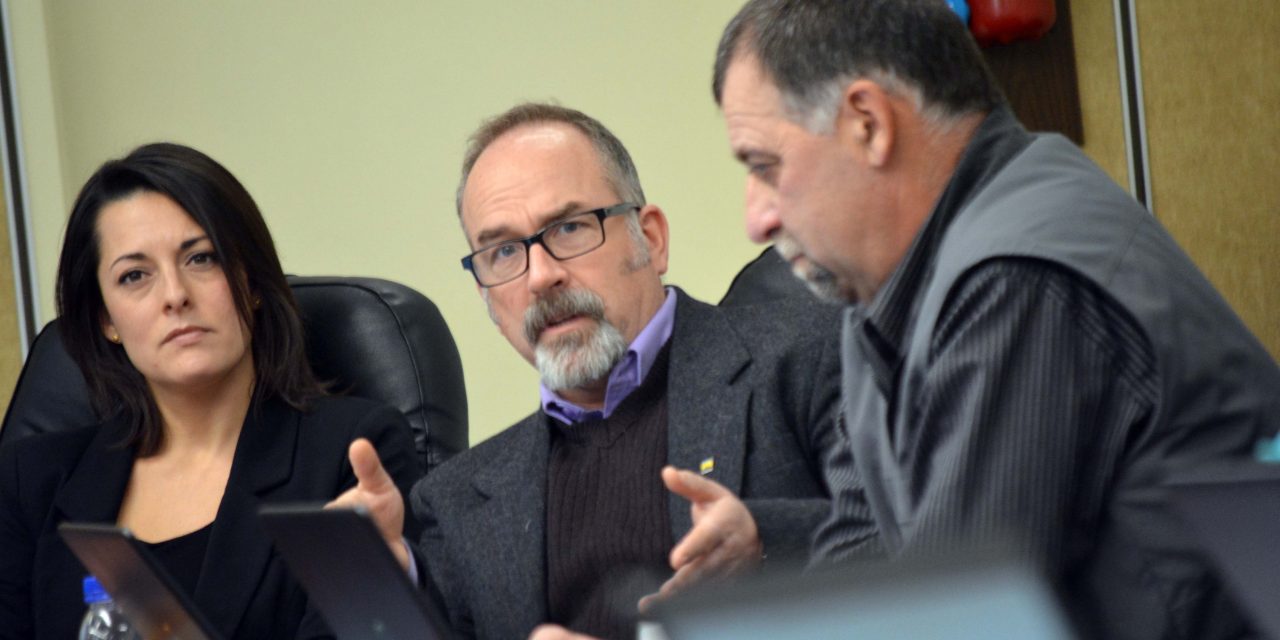
The RCMP crime stat system will be changing in the South Okanagan and across the country in the new year, says Superintendent Ted de Jager.
The commander spoke about the coming changes during his presentation to the regional district last Thursday.
De Jager said most of the calls will be classified as “founded,” which will result in a significant spike in statistical reporting.
“That doesn’t mean crime has risen. That means the way that it’s reported has changed.”
De Jager said this is a refreshing reset that will allow them to directly compare what is going on in local communities. However, it makes it very difficult to compare what happened in previous years.
“It’s an attempt to more accurately reflect the state of crime and what causes crime and how we report it.”
The new system will simplify the terminology and difference between “unsubstantiated” and “founded” and “unfounded.”
He noted when police say something is unfounded, it doesn’t mean they don’t believe someone, it just means they can’t establish that something occurred.
“This new form of statistical reporting is designed to get rid of that ‘grey’ (area) and be very direct.”
• Read more: Municipal candidates address crime problem at forum
Area D director Ron Oberik applauded the new system, saying statistics have been very inconsistent between cities.
“There’s a lot of discrepancies historically in the last 10, 20 years and a lot of unfounded categories or files have come under really harsh critique.”
The superintendent said RCMP staffing is going well, noting they are in the process of finalizing the commander for Summerland and filling vacant positions in Oliver and Osoyoos.
De Jager also pointed out that the RCMP’s Community Active Support Table (CAST) will be rolled out regionally, not just in Penticton. CAST is a program that brings police, Interior Health and social services together to assist the most vulnerable people. For example, instead of arresting and charging someone who causes a disturbance due to drug addiction or mental health issues, that person will be directed to the proper agency for help.
During question period, Penticton Mayor John Vassilaki asked de Jager about RCMP response times that have come under scrutiny lately. A downtown business recently had to wait about 20 minutes before police arrived to deal with an agitated male.
It was discovered that RCMP were dealing with other, more serious calls at the time.
• Read more: Violent crime, domestic violence up in Oliver
De Jager began by saying the South Okanagan/Similkameen is one of the safest places to be.
“That doesn’t mean crime does not happen,” he stated, adding there are concerns that CAST is dealing with.
He noted their focus is on prolific offenders, a small component of society that causes 80 to 90 per cent of the crime in local communities.
“We’re talking less than a hundred people, so that’s who we need to target.”
De Jager said the notion that downtown Penticton is an unsafe place is wrong.
“If someone doesn’t feel safe, I quite frankly take that personally and I want to make sure that they do.”
The commander said the RCMP is making every effort to make sure that the public feels safe anytime and anywhere in the South Okanagan.
“That said, if I know there’s a grizzly bear in the woods, I know I have a right to be in those woods, but I’m not going to go because I have to take some responsibility as well.”
De Jager referred to property crime and the theft of valuables from unlocked vehicles.
“We all need to take accountability.”
With respect to response times, the commander said the police response time to the incident in Penticton was three minutes.
“It was three minutes from the time it showed up on his (officer’s) computer screen to the time he arrived.”
De Jager called the delay to the scene a dispatch delay.
He said if they doubled the detachment strength in the South Okanagan, there would be no guarantee that dispatch times would change. “Sometimes members simply are involved in other files.”
De Jager said they are conducting a study of response times in the South Okanagan/Similkameen region.
“The fact is the majority of our response times in the more urban areas are well under industry standards.”
Area B director George Bush agreed that the Okanagan-Similkameen is a very safe place.
“We have very few criminals but the problem is they’re very consistent.”
He noted that Keremeos and Cawston are no strangers to crime.
De Jager said programs like Block Watch and Citizens on Patrol are vital. While a police officer may not be patrolling a rural area, a volunteer of Citizens on Patrol can be.
It’s neighbours looking after neighbours, he said, noting he left his garage door open one time and his neighbour texted him to ask if he was in there. “So he’s looking out for me and I’m looking out for him.”
De Jager said it would be ideal to respond to every call quickly, but the farther out people live, the longer it will take.
When you look at staffing levels in smaller communities, there may only be one police officer on duty, with another on backup, he said. That’s why it’s important to look out for yourself and your neighbour, he reiterated.
De Jager said he does random surveys of agricultural areas by checking tractors and ATVs and he often finds the keys in them. The commander pointed out they recently hired a new coordinator to help communities set up their own “neighbourhood watch” programs.