By Madeline Baker, Times Chronicle
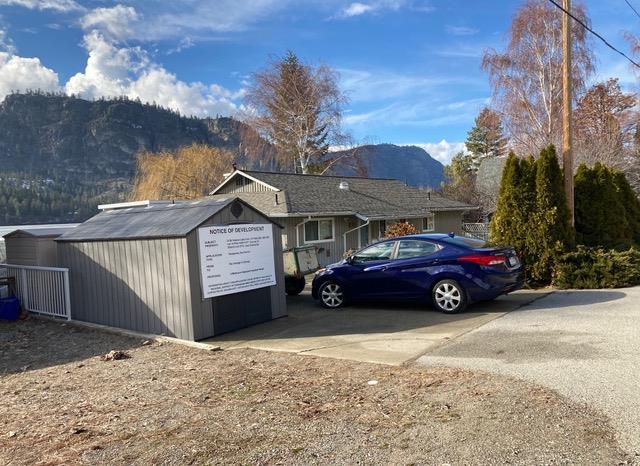
Questions of procedure and precedent dominated the conversation among RDOS directors at their October 6 meeting when Grant Temple finally received his hard-fought approval for a temporary use permit (for a vacation rental) on Vaseux Lake.
The Times Chronicle previously reported in July that Temple won the right to re-apply for the permit at 3136 Vaseux Lake Crescent after he argued that his initial application was subject to “procedural abnormalities” on the part of RDOS office staff. He later had the customary one-year wait period between subsequent permit applications waived due to the staff having been in error.
Costly land use fee waived for vacation rental
Applicant cries ‘procedural abnormalities’
At the October 6 meeting, Temple painted a much more complicated picture of what he considered to be a targeted case against his application, one which was orchestrated by a fellow Vaseux Lake resident and allowed to succeed due to more procedural gaffes on the part of the Advisory Planning Committee (APC) and Vaseux Lake Improvement District (VLID).
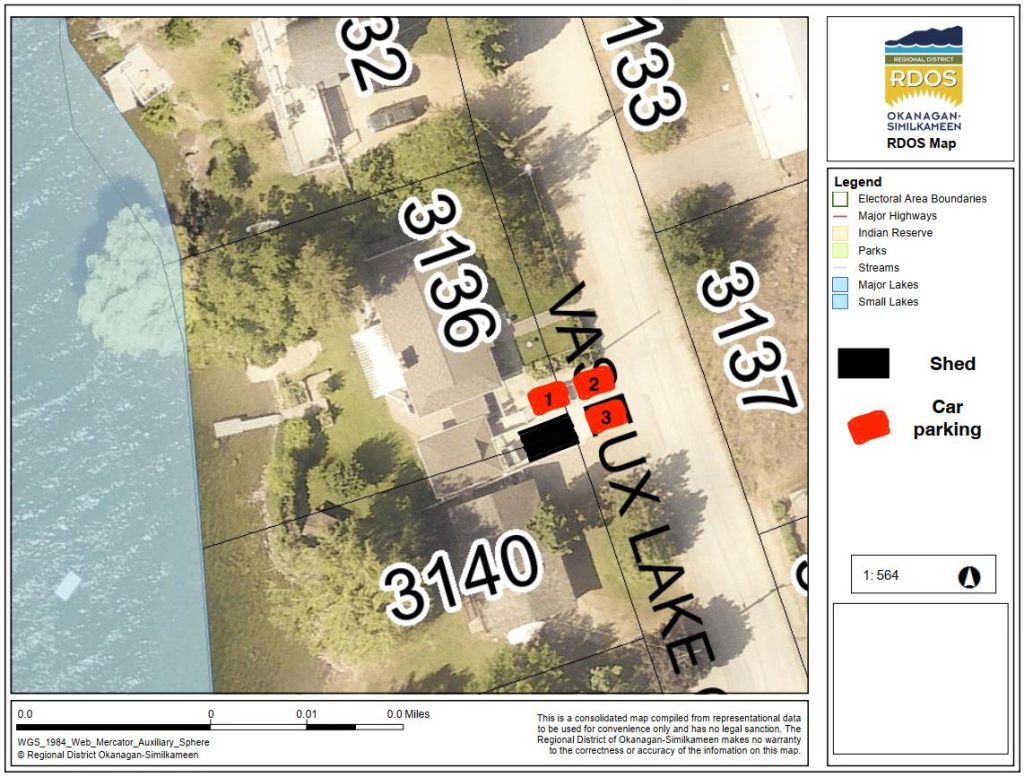
The beleaguered temporary use permit for a vacation rental on Vaseux Lake Crescent has finally been approved by the RDOS.
Contributed illustration
Despite RDOS chair Mark Pendegraft and planner Chris Garrish telling APC chair Doug Lychak that the public should not be allowed to address the committee on matters related to planning applications, this resident was invited to speak and share multiple documents, all of which were withheld from Temple at the time, outlining her grievances against his case.
Under the Freedom of Information and Protection of Privacy Act (FOIPPA), Temple later received the documents and included them in his October 6 presentation. Among them was a letter of conditional approval from the VLID to Temple in which they falsely claimed the power to veto short-term rentals of Vaseux Lake properties in the event of a water shortage.
When asked about the false condition, the VLID’s director said that it had to have been added by an outside party after the fact and was not part of their policy. A study that seemed to back up the aforementioned water conservation concerns was also included but proved to be of questionable relevance. This was not known by APC members who saw it presented as fact.
At least two APC members objected to Lychak’s decision to give the resident a platform. In a scathing email to Lychak and RDOS director Ron Oberik, who supported Lychak’s choice to act against Pendergraft and Garrish’s advice, Alfred Hartvikson said that the situation was “out of hand.”
Hartvikson called the various allegations made against Temple “slanderous and far above and beyond what the APC is charged by the RDOS board to hear and consider,” and pointed out that someone involved with the VLID seemed to be overstepping their authority when they sought to restrict short-term rentals in the name of water conservation.
Finally, he expressed his belief that any further conversation on the matter by either group was likely to be “a gong show and a waste of my time” and excused himself from the coming vote. Former APC member Norm Gaumont also spoke up against allowing public grievances into their decision making process and ultimately chose to resign his position on the board.
Obirek has been a vocal opponent of Temple’s application and previously characterized Temple and his wife, Michelle McCreavy, as inconsiderate community members who feel that “it’s easier to seek forgiveness than permission” when he moved to deny Temple’s application in July on the basis of community concerns.
After questioning Temple about the identities of other Vaseux Lake residents who had expressed support for his application, Obirek appeared to reveal the reason for his tenacious stance against Temple and McCreavy when he called their file “the proverbial canary in the coal mine” for short-term rentals by homeowners.
Obirek spoke at length about “the destruction of community” and the increased strain on local water systems that he believes are occurring due to the proliferation of short-term rentals in the regional district, and he claimed that such fears were shared by anonymous community members who had spoken to him in private phone calls.
“This is a warning of what is to come,” said Oberik. “We’re going to see more of this. The other non-compliant users on this very lake are watching, they’re going to be following this path. They’re going to say it’s a precedent and in a way, that’s true.”
His stance that the RDOS would be better served by setting the opposite precedent with Temple’s case in order to stop what he called a “rollercoaster of entitlement” among homeowners without “the right kind of community support” was not shared by the rest of the board.
Directors Tim Roberts and Karla Kozakevich both said that it was unnecessary to try and anticipate and mitigate any negative result of an application when the temporary use permit process exists as a trial run, which they use to monitor applicant activities for any possible concerns that may prove relevant to future policy making.
Directors Bob Coyne and Subrina Monteith added their own concerns about the erosion of communication and process in both the APC and the RDOS board of directors, to which Director Rick Knodel voiced his agreement.
In the end, Obirek chose to abstain from the vote and Temple was granted his permit with otherwise unanimous approval.
“This process has been unbelievably complex,” said Temple in an email to the Times Chronicle. “We still can only guess why [Obirek] adamantly refused to support our TUP even with huge community support.”