By Lyonel Doherty, Times Chronicle
Town of Oliver officials spoke loud and clear on several issues of concern at the Union of BC Municipalities convention.
Mayor Martin Johansen’s first meeting was with Minister Rob Fleming from the Ministry of Transportation and Infrastructure. They discussed the Town’s priority to re-align the troubling intersection of Black Sage Road, McKinney Road, Tucelnuit Drive and Spillway Road.
“This intersection is just getting more of a safety concern with all the traffic that’s coming up Tucelnuit, Area 27, the new wineries . . . that road is just getting busier and busier.”
Johansen said the Town wants to involve all stakeholders, including the Osoyoos Indian Band, to come up with a design to enhance traffic safety in that area.
Indian Band Chief Clarence Louie agreed, saying this intersection is getting more use from all directions and has been talked about for many years.
“There have been many close calls; anytime you have traffic converging from four different directions.”
He questions if a roundabout would solve the problem.
“I’m not a design expert . . but if something makes things better it is worth investigating.”
Johansen said the other issue is the fact a couple of these access roads cut into locatee (Indigenous) land, which must be resolved.
The mayor said the ministry has identified a roundabout as one option, but he questions where do you access the back of the hospital and the Casa Rio housing development? In any event, he thinks Black Sage Road will have to be moved to some extent.
Johansen attended another meeting with Solicitor General Mike Farnworth regarding the Town’s repeated request for a secondary wine tasting room. The mayor said this facility, as a pilot, would cater to people who want to taste multiple wines from multiple wineries under one roof instead of travelling throughout Oliver and Osoyoos.
But Johansen said there are regulations and complexities to overcome before such a venture comes to fruition.
To that end, the Town will work with the liquor control board to see if this will pan out, Johansen said. If it does, it will set a precedent and Oliver will be the first community in B.C. or Canada to have it, he pointed out.
The mayor’s next meeting addressed housing and emergency shelters.
Town Coun. Aimee Grice introduced a resolution for “tiny homes” during a debate, and it passed.
She also led a meeting with Ministry of Housing staff regarding funding for an emergency cold shelter that advocates in Oliver are working on. She said although BC Housing expressed an interest in working with Oliver, they informed her the funding model won’t change, meaning she must continue discussing the shelter idea with the United Way and Interior Health in supporting the Seventh-Day Adventist Church in this endeavour.
Grice’s second ask was for the province to review the BC Building Code and remove barriers to allow municipalities to zone for tiny homes. She shared Oliver’s story regarding the housing crisis and posed some questions to the Minister of Mental Health and Addictions and the Minister of Housing during a panel discussion.
“I was able to catch the Housing Minister later on at a reception and he believes he has an answer for our cold weather shelter funding. I will be following up with ministry staff to ensure that we are not left behind,” Grice told the Times Chronicle.
Johansen acknowledged that a cold weather shelter brings social challenges that need to be addressed to make it a safe place for everyone.
For Johansen, the biggest meeting at the convention was a 30-minute sit-down with Health Minister Adrian Dix regarding the health care crisis in Oliver and Osoyoos.
The mayor told Dix about the new “integrated solutions table” and how local physicians are trying to help resolve the crisis.
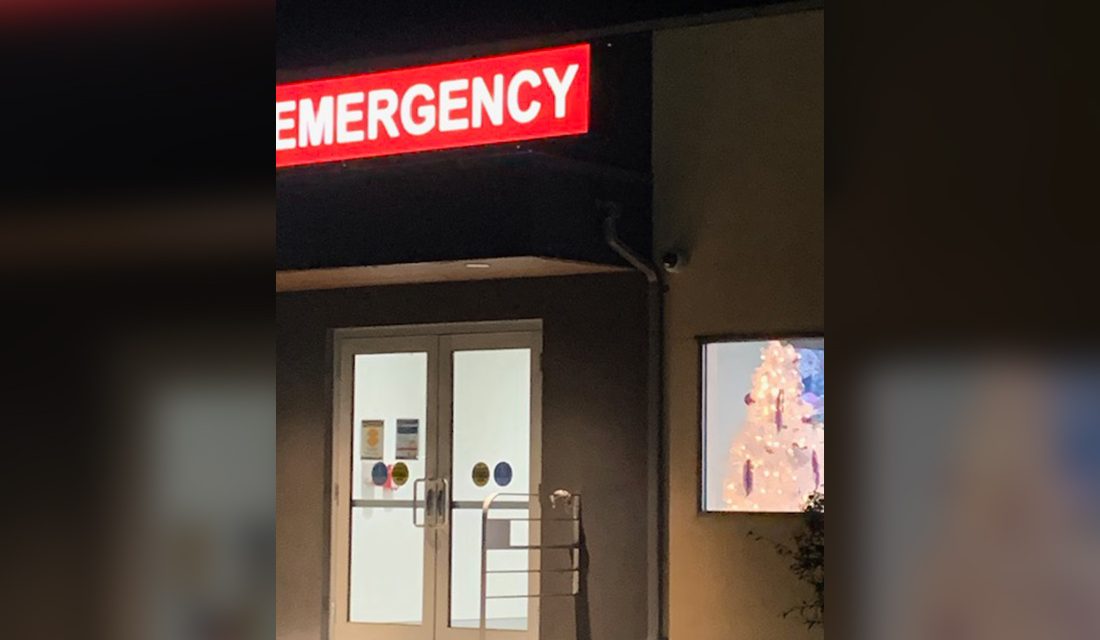
“We want to work on a model to leverage the ER (hospital emergency room) to have locum services in the community for unattached patients (those without a family doctor),” Johansen said.
He noted they are looking at a “pooled billing” program similar to Penticton’s where wage stability is offered.
“If you listen to the minister, fee for service is not going to work anymore.”
Johansen said the big challenge in health care is work-life balance.
The mayor said Dix is planning to meet with the integrated solutions table, which is very encouraging.
“Dix doesn’t have any magic wand that he’s waving, but he’s listening.”
Johansen said access to ambulance services is another concern in B.C. that was discussed at the convention.
“This is a problem that is super critical right now. We are seeing a collapse in some communities, and I’m worried about it here.”
Grice said a presentation from the mayor of Parksville resonated with her as she saw similarities between their communities.
“They have an aging population and need to attract working aged residents to fill gaps in the workforce.”
Grice said the Parksville mayor spoke of incentives, partnerships and other creative solutions to increase the affordable housing stock in his community.