By Sebastian Kanally, Times Chronicle
When it comes to Oliver’s budget, everyone sees a light at the end of the tunnel, the problem is, it’s the light of a train barreling down the tunnel.
“There is a train coming, there’s a light at the end of the tunnel. I don’t know how we are going to afford this going forward, and we are not the only municipality that’s struggling with this as well.”
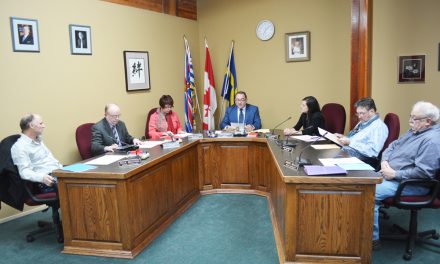
This is how Mayor Martin Johansen explained the situation in Oliver after the town’s first budget talks for 2025 at the Nov. 25 council meeting. A second budget meeting was held on Dec. 2, which focused on the water and sewer budget and corresponding tax rates.
There will be a relatively small three per cent rate increase coming for next year, but what’s on the horizon is unavoidable.
While the financial situation for the town is sitting in the black, there was much discussion over the reserves, large upcoming projects, and how to navigate them going forward.
At the end of 2023, the water capital reserves were sitting at $2.6 million. Now at the end of 2024 they are expected to sit around $154,000 because of large projects taken on in 2024 such as the Co-op Ave project, among others.
John Kurvink, chief financial officer for the town, came back with the numbers for a three per cent increase to council meeting at their December 2 meeting, where council passed the motion that the increase to water and sewer rates will be three per cent for 2025.
Councillors wanted a rate increase that would be just enough for the reserves to not be in a deficit, but no more.
The original model he presented to council at their November 25 special meeting had multiple rate increase options for council to consider, but the main topic of discussion was a six per cent increase for water rates, and zero per cent increase for sewer.
Council did not like this option. Kurvink explained that he worked around a six per cent increase to water rates to maintain the reserves and not allow them to go into the red.
“I was trying to keep the increase as low as possible but still at least keep us in the black. So certainly, any increase less than six per cent on the water side will cause the reserve to go into a deficit, unless we start knocking 2025 projects off the list,” he explained to council.
He went on to further comment that the plan goes until 2029, and in the “out years” (2026-2029), “the reserve does build back up over time. That has a lot of assumptions, that assumes we increase the rates five per cent every year, but it does end up with a projected reserve of $1.8 million by 2029.”
This suggestion comes on the heels of a 15 per cent water tax rate increase and the 30 per cent sewer tax increase last year.
This focus on building up the depleted reserves again is something that water councillor Rick Machial took issue with.
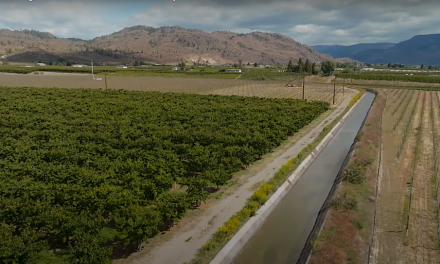
“I don’t think it’s fair . . . this year I don’t want to pad our reserves; farmers can’t afford it. You might argue the people domestically can afford it, we run one water system,” he said.
The overall budget for water is expected to be $823,000. This is down significantly from what council agreed on at last year’s budget discussions, which was $2.1 million.
This reduction in planned spending for 2025 is the result of kicking multiple projects down the road such as Similkameen and Main Street projects which were moved to future years dependent on grants. The proposed domestic pump station testing, and design was moved to future years as well.
All the projects that will be completed in that $823,000 are considered priority one by town staff, which are “must-do’s” to maintain service delivery.
Discussion among councillors and town staff took a more defeated note towards the end of the discussion.
Director of operations, Kelly Mercer explained that for one, there is around $95 million of pipe infrastructure, made of clay and Asbestos cement (AC) pipe that is going to soon need to be replaced.
This is what Johansen’s comment about the train at the end of the tunnel was referring to. “We have bigger problems than what is going to be solved by a few percentage points (rate increases), and we are not the only municipality that is struggling, Osoyoos is kind of going through it right now, and you can see the hit it’s taking down there.”
Just last month, Osoyoos council set to increase their fees by 9.65 per cent, meaning an annual jump of $72.78 for an average single-family residence. Sewer fees are projected to go up 6.63 per cent.
Machial, running with the analogy, noted that “this train just can’t keep going down this tunnel, it’s going to crash”.
Kurvink commented that there are some big expenses coming down the road and noted they are not the only town that is dealing with this.
“All the municipalities, from the colleagues I talk to, the big thing is revenue diversification, but that’s easier said than done. But that’s the theme of the month because everyone is seeing there is not enough money to come into a municipality with the way we do business today. How that is going to change in the future is dependent on the federal and provincial governments.”