By Sebastian Kanally, Times Chronicle
The South Okanagan is now able to support more electric vehicles on the road, with the Regional District of the Okanagan-Similkameen (RDOS) completing 90 per cent of its planned charging stations.
The RDOS has been working for the past year on its Electric Vehicle Charging Infrastructure (ZEVIP) Project which focuses on installing electric vehicle chargers across the region to support the RDOS fleet of vehicles, resident and visitors’ electric vehicles.
When complete, this project will have charging stations throughout the region which would allow the RDOS to expand their fleet of vehicles to full electric or plug-in hybrids.
The charging stations are as follows:
- Two Level 2 chargers at 1655 Reservoir Road, Penticton (RDOS Fleet);
- One Level 2 at Tulameen Fire Hall (Fleet and Public);
- One Level 2 at 1109 Willow St, OK Falls (Fleet and Public);
- Two Level 3 chargers and Four Level 2 chargers at Similkameen Recreation Centre, Keremeos (Fleet and Public);
- Two Level 2 chargers at 300 Railroad, OK Falls (Fleet);
- Six Level 2 at 101 Martin Street, Penticton (Fleet) – to be moved to new corporate office if successful;
- Two level 3 chargers at Willow Street, Okanagan Falls (Fleet and Public);
- Two Level 2 at Manitou Park, Naramata (Fleet and Public).
There are three different types of electric vehicle chargers: level 1, level 2, and level 3. The higher the number, the higher the electric output and the faster a vehicle will charge.
Level 1 charging uses a standard 120V electrical outlet and is often the choice for residential use. But it is impractical for people who drive a lot as it can take up to 24 hours to fully charge the vehicle.
Level 2 charging stations use a 240V electrical outlet. This means they charge a vehicle much faster than a level 1 charger because of higher energy output.
Level 3 chargers are the superchargers of the electric vehicle world, they use direct current (DC) to charge vehicles very fast, some can fully charge a vehicle in under an hour.
The project has been paid for through substantial grants through the province to support Sustainability and Climate Action Projects.
Natural Resources Canada contributed $290,000 towards the project, the province contributed $112,000 through CleanBC, and the RDOS covered the remaining $132,000.
Along with the electric vehicle charging stations, the Smart Renewables and Electrification Project which the RDOS is calling their flagship project has been underway for six months and is reviewing the energy efficiency of RDOS buildings.
They have reviewed over 400 RDOS assets for their efficiency and are deciding how to prepare and organize for a net zero pathway for 2050. This project will be completed in late June 2025, which will result in a capital plan to “improve energy efficiency, save money and demonstrate climate action to the community.”
Another update provided by the RDOS is that they are continuing their FortisBC partnership and the Local Government Climate Action Program Funding which has gone towards developing a Climate and Energy Hub Website for RDOS residents, efficiency studies for the Naramata Water System, and acquisition of a second full electric fleet vehicle for the RDOS among other projects.
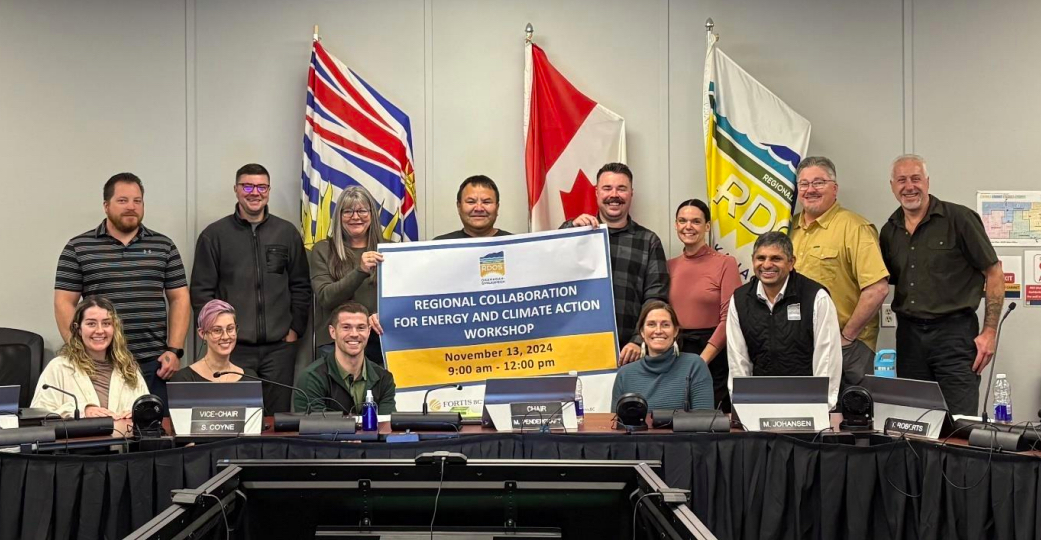
The Regional Climate Action Working Group also had its first meeting in November 2024. A workshop was held to discuss regional collaboration for energy and climate action. Representatives from the RDOS, City of Penticton, Town of Oliver, Town of Osoyoos, Town of Princeton, Penticton Indian Band and FortisBC all attended the event.
“This working group will bring representation from all communities in the Okanagan-Similkameen, and bring a truly regional lens to the energy, sustainability and climate action work being undertaken now and into the future,” The RDOS report on Climate Action and Sustainability explained.
For more information on climate action resources, and further plans by the RDOS visit its climate action webpage.