By Madeline Baker, Times Chronicle
This is part one of a series on the Okanagan Nation Alliance Water Forum. Part two can be found here.
Indigenous environmental activists from opposite sides of the globe shared their successes and strategies at a recent Okanagan Nation Alliance Water Forum, where representatives from among the eight member communities that compose the alliance learned about the first river to be legally recognized as a person.
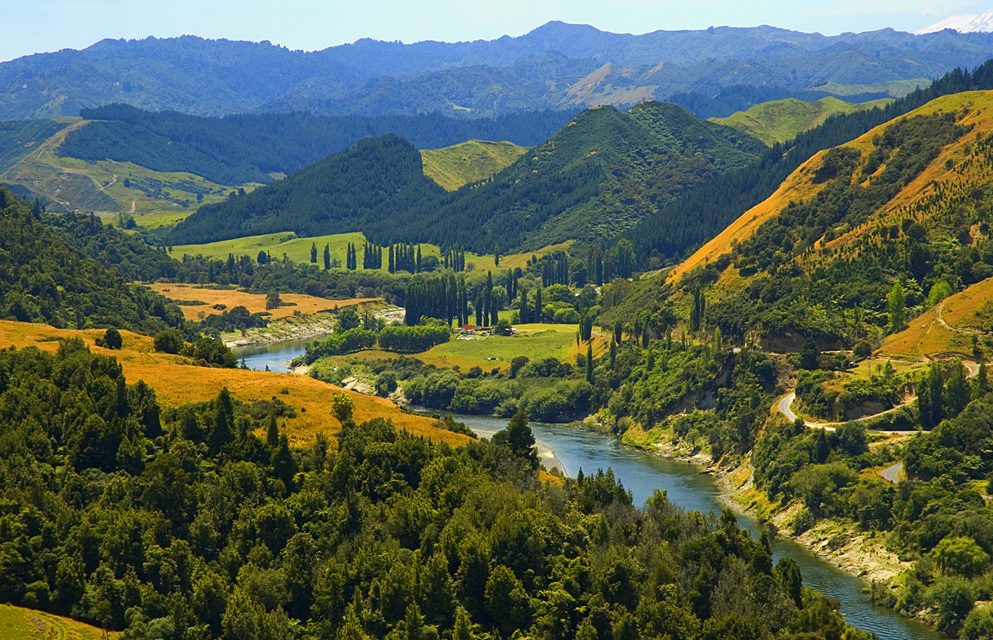
In 2017, New Zealand Maori tribes revolutionized existing environmental protection precedents for Indigenous peoples by obtaining legal personhood for the Whanganui River in the Te Awa Tupua bill.
Negotiation team members Nancy Tuaine, a member of the Iwi tribe, and Jamie Ferguson spoke to members of the Okanagan and Syilx nations via Zoom about their experiences during and after the fight for Whanganui’s rights as an ancestor. For the Okanagan alliance, who are among hundreds of other Indigenous nations in Canada seeking to protect the land and water, the relevance was obvious.
The talk opened with a short film about Te Awa Tupua, in which Gerrard Albert, another team member who could not attend the forum, told a very familiar tale: the Waitangi Treaty of 1840, in which Britain officially annexed New Zealand, quickly drew the Indigenous Maori peoples into a series of disputes over land usage and protection rights.
“It stems from the first interactions,” said Albert. “If the first missionaries, traders, settlers, had thought to understand the innate relationship of Indigenous peoples with their environment instead of foisting their particular viewpoints onto that Indigenous community, we wouldn’t be having this conversation today. We wouldn’t have to.”
“All of their actions undermined our way of life. Those actions said: ‘We can’t deal with your spiritual and emotional relationship with this river, we can only deal in tangibles … the way you live is not a valid and relevant way to live.’”
Despite the treaty’s originally stated intent to protect Maori rights, the ongoing dispute around the Whanganui River remained in stalemate for 150 years before it entered the legal courts with the Te Awa Tupua bill proposal.
Treaty lawyer Jamie Ferguson joined their cause as, in Tuaine’s words: “somebody who could navigate the legal system and achieve the aspirations of our people through that mechanism”
He identified four vital tenets of the Indigenous peoples’ relationship with their river that had to be respected in any legal agreement: “The river is the source of physical and spiritual sustenance,” “The great river flows from the mountains to the sea,” “I am the river, and the river is me,” and “The small and large streams flow into one another and form one river.”
Taken together, said Ferguson, these four tenets explain how the water systems of New Zealand are seen as the capillary system that feeds a living land and the health of that system will always be linked to the health of the people who live on the land. They represented the “fundamental paradigm shift” he hoped to introduce into the legal system of New Zealand.
In the short film, Albert described this landmark case as “the first time that an Indigenous law system was recognized in this country” and said that it “established the framework within which human rights can exist” for Indigenous peoples worldwide.
Ferguson agreed, but was more cautious in his wording: “This is the start of the journey rather than the end of the journey.”
Tuaine agreed that their work has really just begun, saying that they “have been constantly challenging the impacts of land use on the water,” but also identified positive changes on the part of New Zealand’s government when it comes to land protection and stewardship.
One such government initiative, “Jobs for Nature,” aims to discount the idea that environmental protections have to come at the expense of the economy by creating new jobs within the restoration efforts on Maori-protected lands.
This support from the federal government is vitally important, said Ferguson, to ensure that conflicting policies don’t clash at the regional level and bring future plans to a standstill. His recommendation to local nations was to create, as they did, “a melding rather than a separate standing alone of two separate systems in competition with each other.”
In fact, the Iwi tribe, who were at the centre of Te Awa Tupua’s development, were not only in talks with New Zealand’s Crown government. They also had to work with seven other tribal nations that originated in the Whanganui River catchment, as well as four territorial governments within the national borders.
Ferguson also felt strongly that members of the public, both Indigenous and non-Indigenous, should be given their seat at the table during key parts of any policy negotiation. He argued that this was the only way for everybody to feel included and represented, which was the secret to minimizing dissent.
“This is our time, and they need to get on board,” was Tuaine’s joking response to those who disagreed with the Te Awa Tupua decision, but she agreed that involving a wide circle of people in the process, not just those with legislative power, led to a mostly positive response.
She said that non-Indigenous people often come to their tribal offices now and ask how they can help with the revitalization of the river catchment, as they have a better understanding of the Indigenous viewpoint and no longer feel something is being taken from them.
In the second part of this ongoing feature about the Okanagan Nation Alliance Water Forum, local projects in service of their own water systems by the Syilx Okanagan Nation and its various communities will be spotlighted.