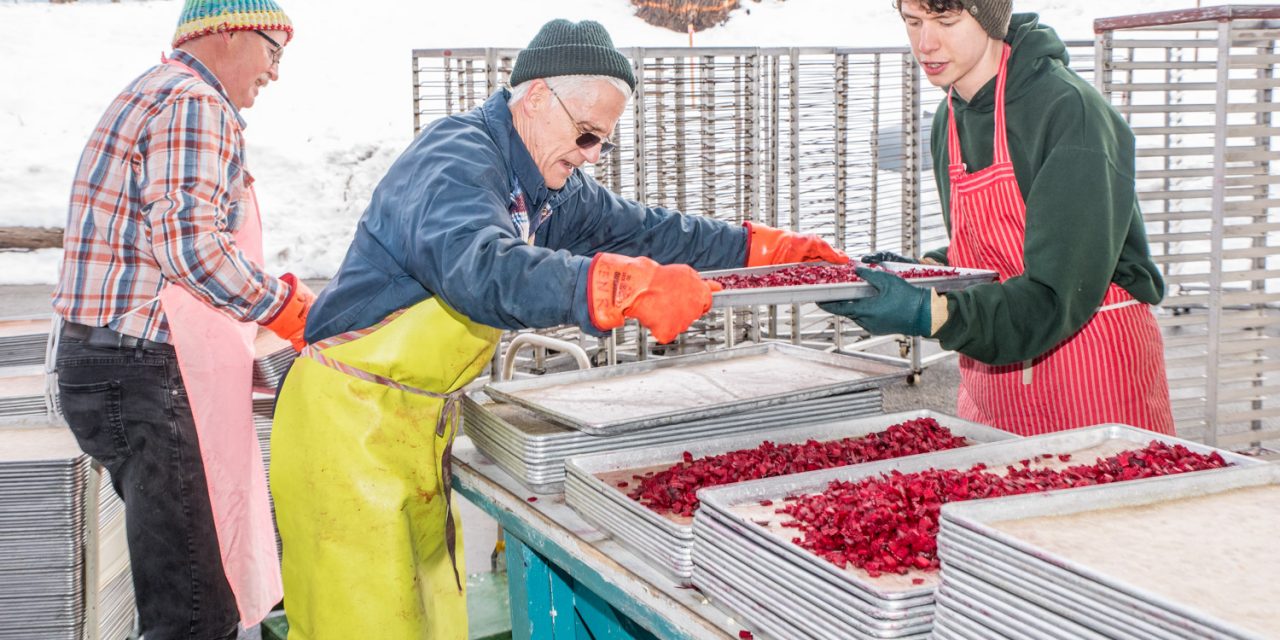
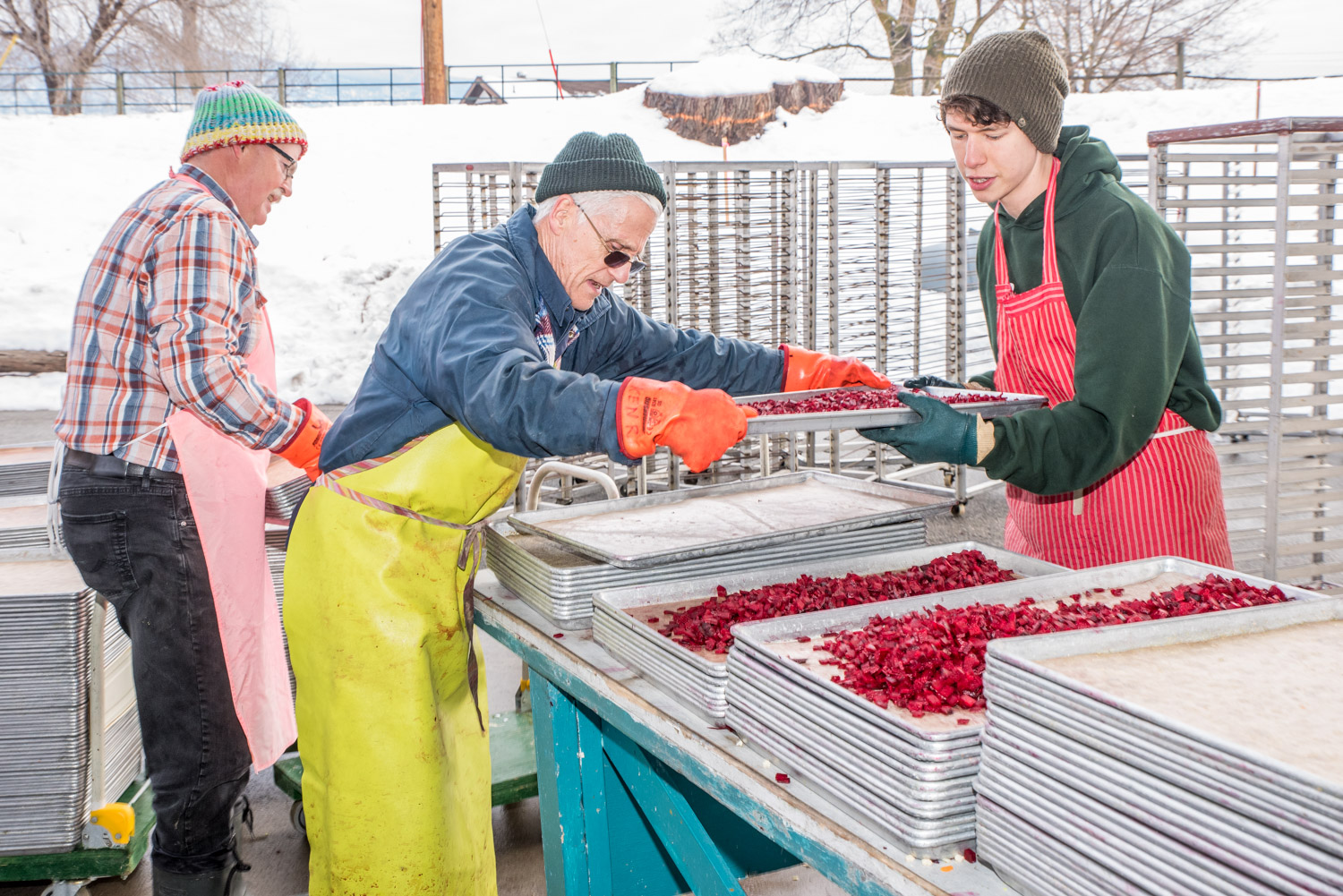
Manager Greg Masson calls it the best-kept secret in the valley, but all year round volunteers are busy at the Okanagan Gleaners between Osoyoos and Oliver turning surplus food into dried soup that gets sent around the world to feed the hungry. After hearing Bill Saul, a volunteer and director with the Gleaners, speak to the Rotary Club of Osoyoos about the interdenominational Christian project’s work, we stopped by to see them on Friday as they worked on beets and green beans. Pictured here, Ken Richardson of Oliver (centre) and Ian Jackson of Osoyoos (right) prepare beets for drying on trays. At left in the background is Masson. (Richard McGuire photo)
People driving north from Osoyoos to Oliver sometimes notice a cryptic sign as they pass Road 3 simply saying “Gleaners” and pointing to the west.
“We are probably the best-kept secret here in the valley,” says Greg Masson, who manages the Okanagan Gleaners, a Christian-based volunteer operation that provides more than five million soup meals a year to hungry people around the world.
“Most people don’t have any idea,” admits Bill Saul, a volunteer and director with the Okanagan Gleaners, who was guest speaker at the Rotary Club of Osoyoos last Thursday.
Saul told Rotarians how the Gleaners take surplus vegetables and fruit that might otherwise go to waste, often donated by growers and packers by the tonne.
Then they turn it into a dried soup mix that is sent by the barrel through Christian aid organizations to destinations around the world.
The morning after his talk to Osoyoos Rotary, Saul, from Osoyoos, was back at the Gleaners sorting frozen green beans in preparation for drying. Another 15 or so volunteers, some of them Prairie snowbirds and some of them locals, were also sorting or chopping beets and beans.
Masiu Fine, originally from the Pacific island nation of Tonga, but in Oliver for the past six months, was pouring buckets of large beets into a potato-peeling machine that spits them out minus their skins.
Inside the old tobacco barn that the Gleaners took over after they started in 1994, Carolyn Ellis from Oliver and John Hildebrand from Edmonton, are among the volunteers chopping peeled beets.
“It’s a great mission for feeding the hungry,” said Ellis, who has been active with the Gleaners since she finished home schooling her children a few years ago. “It’s a fabulous atmosphere. It’s a lot of fun. There’s lots of people coming and going all the time so you meet people from all over the place, which is really exciting.”
Hildebrand has been coming for about 12 years and in the past would stay over with his wife on their way to or from Arizona. He’s now grieving the loss of his wife, who died in August, but he’s come back to Oliver this year for the first time on his own.
“I want to stay active,” said the retired truck driver, 76. “Even now having lost my wife, I have to be active. Everybody here said to me, ‘Come back because this is your family as well.’”
Hildebrand is not the only Prairie snowbird currently volunteering at the Gleaners. Others come from such places as Prince Albert in Saskatchewan or Duchess and Olds in Alberta.
“I’m here now for three months to get away from the Edmonton winter,” said Hildebrand. “You meet people from all over – from Manitoba, Saskatchewan, B.C and Alberta. We all come here and we’re all friends.”
Although the Okanagan Gleaners is a Christian-based organization, which sees itself as distributing God’s love to the hungry of the world, others are also welcome to volunteer or donate.
“If somebody came here who wasn’t Christian, we wouldn’t close the door,” said Ellis. “We’re very open and it’s interdenominational, so that’s something that’s really interesting. You can have the gamut from Catholic to Baptist. It’s not just one denomination.”
Next to the converted barn, the Gleaners provide RV hookups year round and tent space in the summer free to those who volunteer each morning.
“I think there’s going to be a new buzz phrase and it’s going to be ‘voluntourism,’” said Masson, adding that when people go on vacation, it is an alternative to lying on the beach all day.
Masson became the manager last April, just in time for the annual mixing of the dried soup ingredients, the culmination of a year’s work.
“We take all our ingredients and we store them,” he said. “Then, once a year in April we will set aside three weeks to mix all our product into a soup mix. That’s the fruition of what we’ve done all year. Yes, it’s nice to have barrels and barrels of dried beets and onions and peppers, but after the end of April all that will be mixed into soup.”
During his talk, Saul passed around a plastic bag of the dried soup mix to show the Rotarians.
One bag with 25 litres of water makes 100 servings of soup. These are packed into drums holding about 65 to 75 bags each.
Last year, the Okanagan Gleaners gave out 859 such drums.
While most of what they produce is the soup mix, they also dice and dry apples, often including a bag or two of it with the soup.
“They are like candy,” said Saul.
The apple chips often go to orphanages, said Masson.
“They’re handed out as a treat,” he said. “The nice thing is there’s nothing added.”
In fact, the dried soup mix also has no additives such as seasoning either, Saul explained.
“We don’t know where they are going and all of the countries they go to have different ideas of what seasoning is,” said Saul. “For most of them seasoning is something they grow and they can put their own seasoning in it.”
When the Gleaners first started out, they made the mistake of putting in seasoning and people in some countries couldn’t eat it, he said.
The Gleaners have tried drying such fruits as cherries and apricots, but the high moisture content and the need to pit them made them difficult to prepare. Apples have worked best, Saul said.
After the vegetables and fruits are prepared by cleaning and chopping, they are put into 30 trays at a time and placed into two dryers. With most vegetables taking about seven and a half to eight hours to dry, this means that 180 trays can be dried over a 24-hour period.
The concept of gleaning comes from the Bible, Saul explained. The Israelites were told to leave behind food from the harvest for the poor to glean and gather.
“We expanded that a little bit,” he said. We pick up and have delivered to us fruit and vegetables. Some of the growers are tremendously supportive of our operation and actually bring us the vegetables in bins.”
The Gleaners also have two refrigerator trucks and a five-ton truck and they go to growers and packers picking up surplus food, both fresh and frozen.
“People aren’t willing to buy vegetables with a mark on them,” said Saul. “We have become fussier as consumers. That’s not good from a price standpoint for the growers, but it’s really good for us from a Gleaners standpoint because the growers give us more vegetables than ever before. The more fussy we get as consumers, the more product we get at the gleaners.”
Meanwhile, Masson was hoping to finish up with the beets so he could start into the 32,000 pounds of apples the Gleaners have on hand.
Then he planned to pick up 14,000 pounds of potatoes from a generous regular donor in Grand Forks.
“I should have done this years ago,” said Masson, who comes from a background in corporate advertising with Bell Media. “This is where I should be. I just love working with the people. As a Christian, I feel it’s my responsibility to follow the instructions that we have been given to look after the needy and look after the widows. They are always going to be with us, so this is a way I can give back and help a person who is struggling.”
More information on the Okanagan Gleaners can be found at www.okanagangleaners.ca or by phoning 250-498-8859.
RICHARD McGUIRE
Osoyoos Times
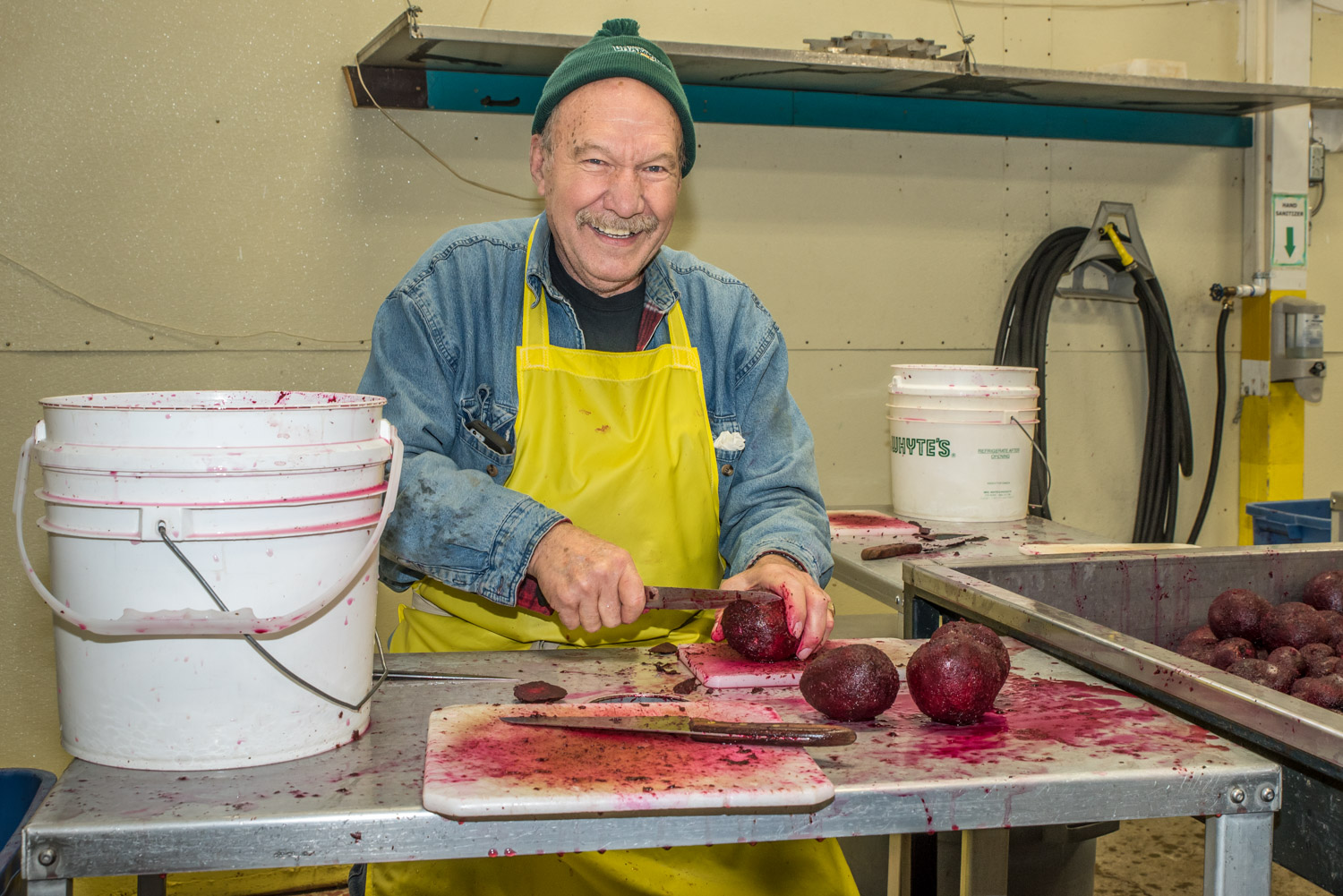
John Hildebrand of Edmonton slices beets inside the old tobacco barn used by the Okanagan Gleaners to prepare food. Hildebrand has been coming to Oliver for about 12 years on his way to and from Arizona as he escapes the Edmonton winters. (Richard McGuire photo)
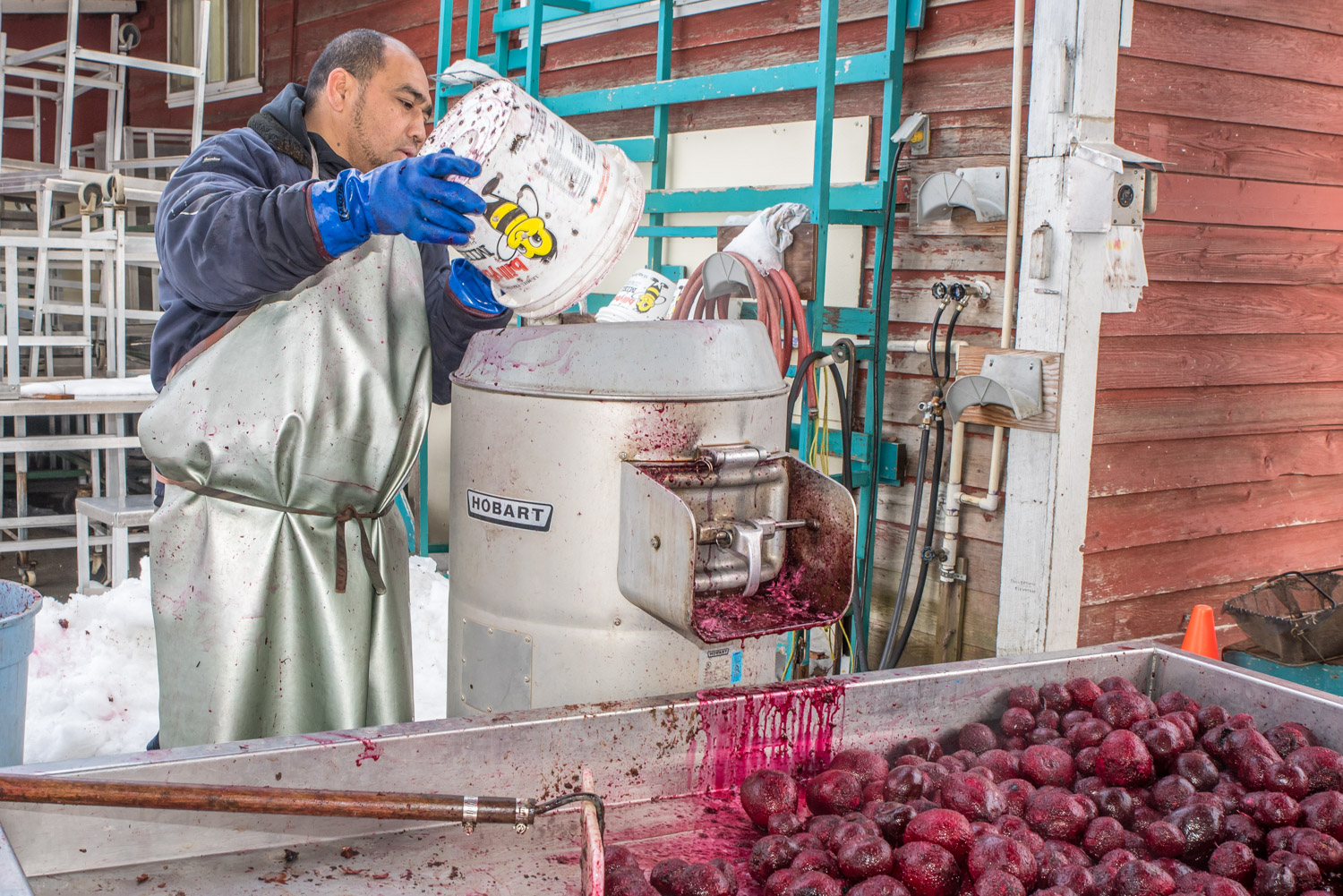
Masiu Fine, who came from the Pacific island nation of Tonga and has been in Oliver for six months, pours a pail of beets into a potato peeling machine. The machine removes the outer skins of the beets. (Richard McGuire photo)
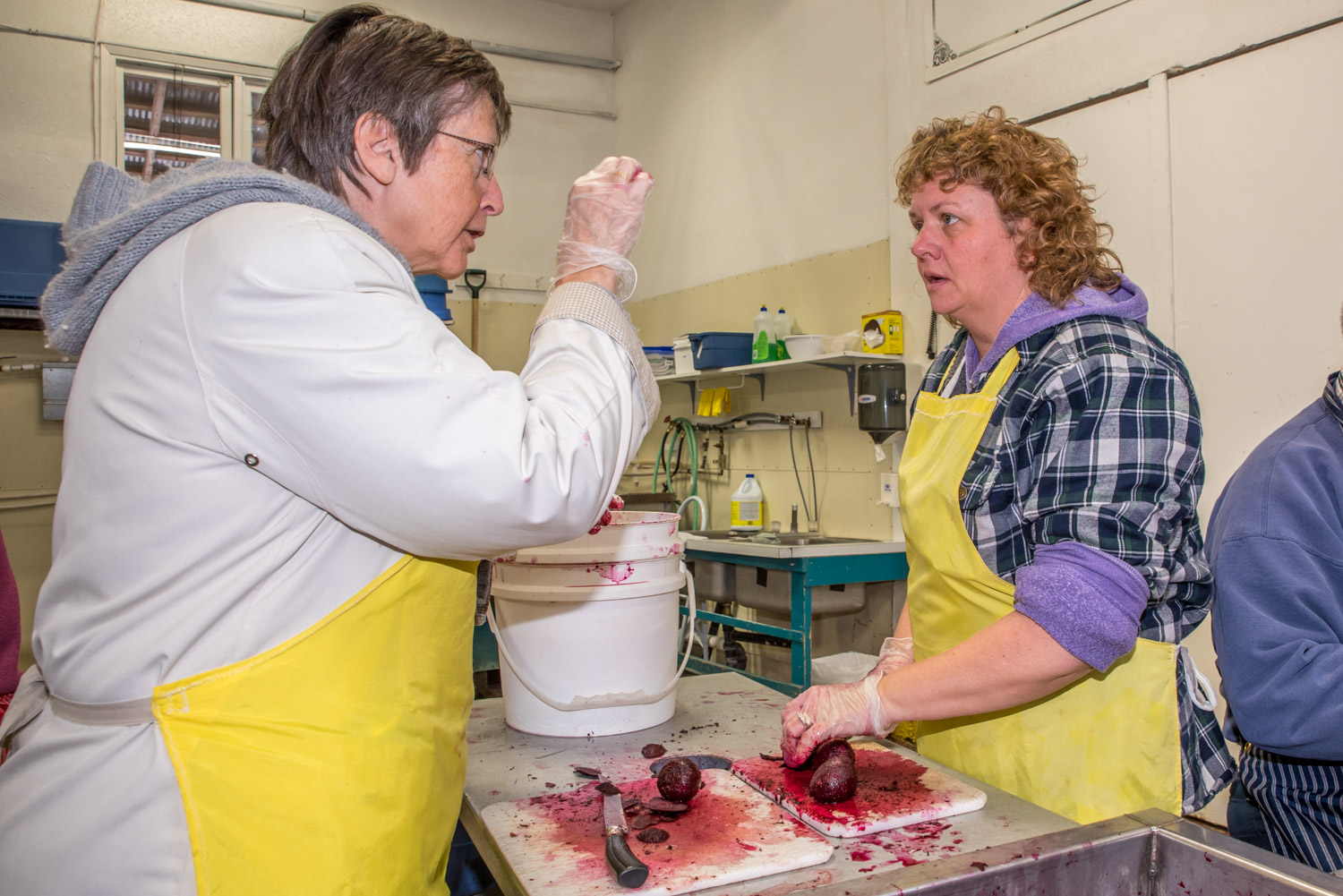
Brenda Saul (left) of Osoyoos, the wife of Okanagan Gleaners board member Bill Saul, chats with Carolyn Ellis of Oliver as the two of them slice beets. (Richard McGuire photo)
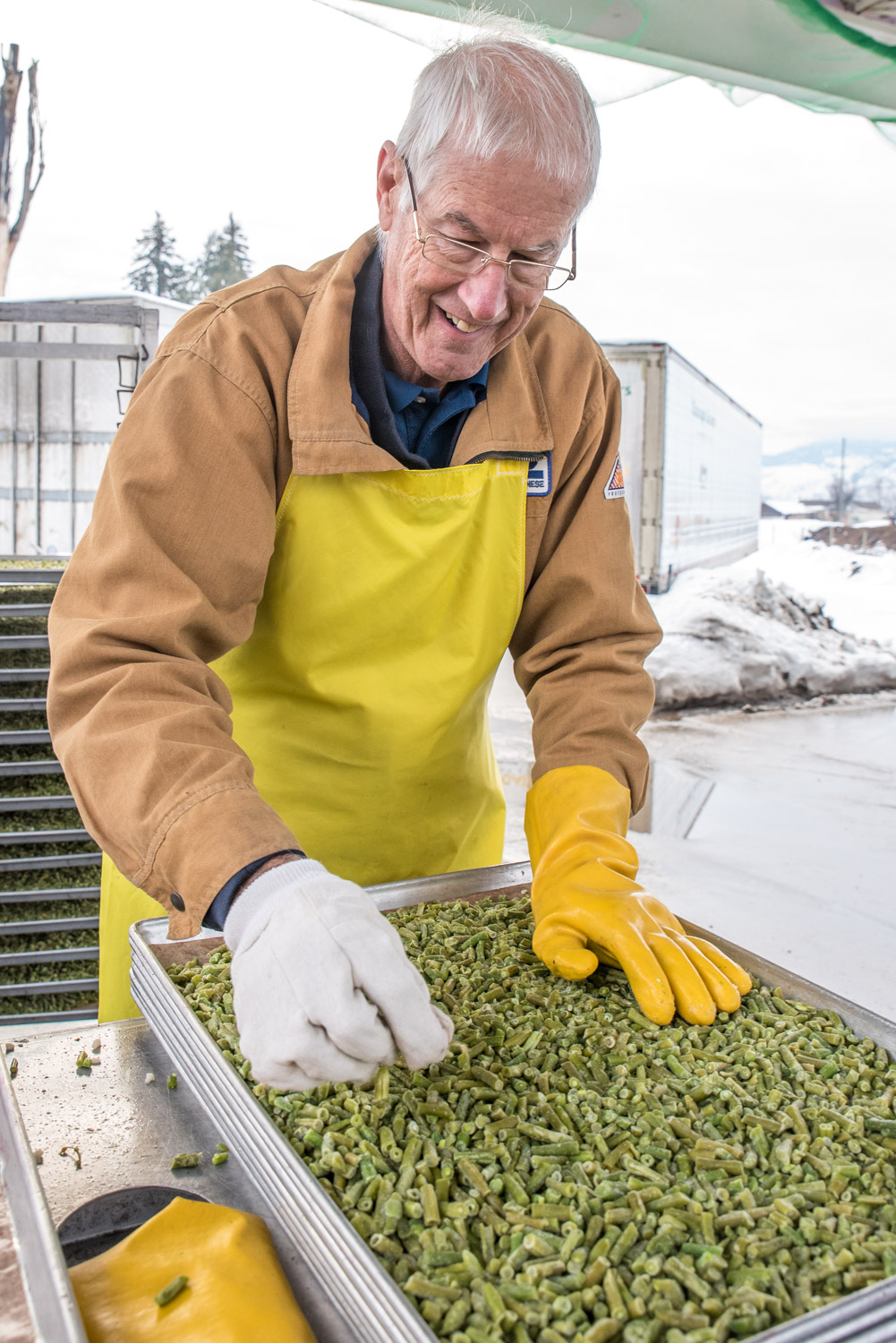
Bill Saul of Osoyoos works on a tray of frozen green beans, preparing it for drying. (Richard McGuire photo)
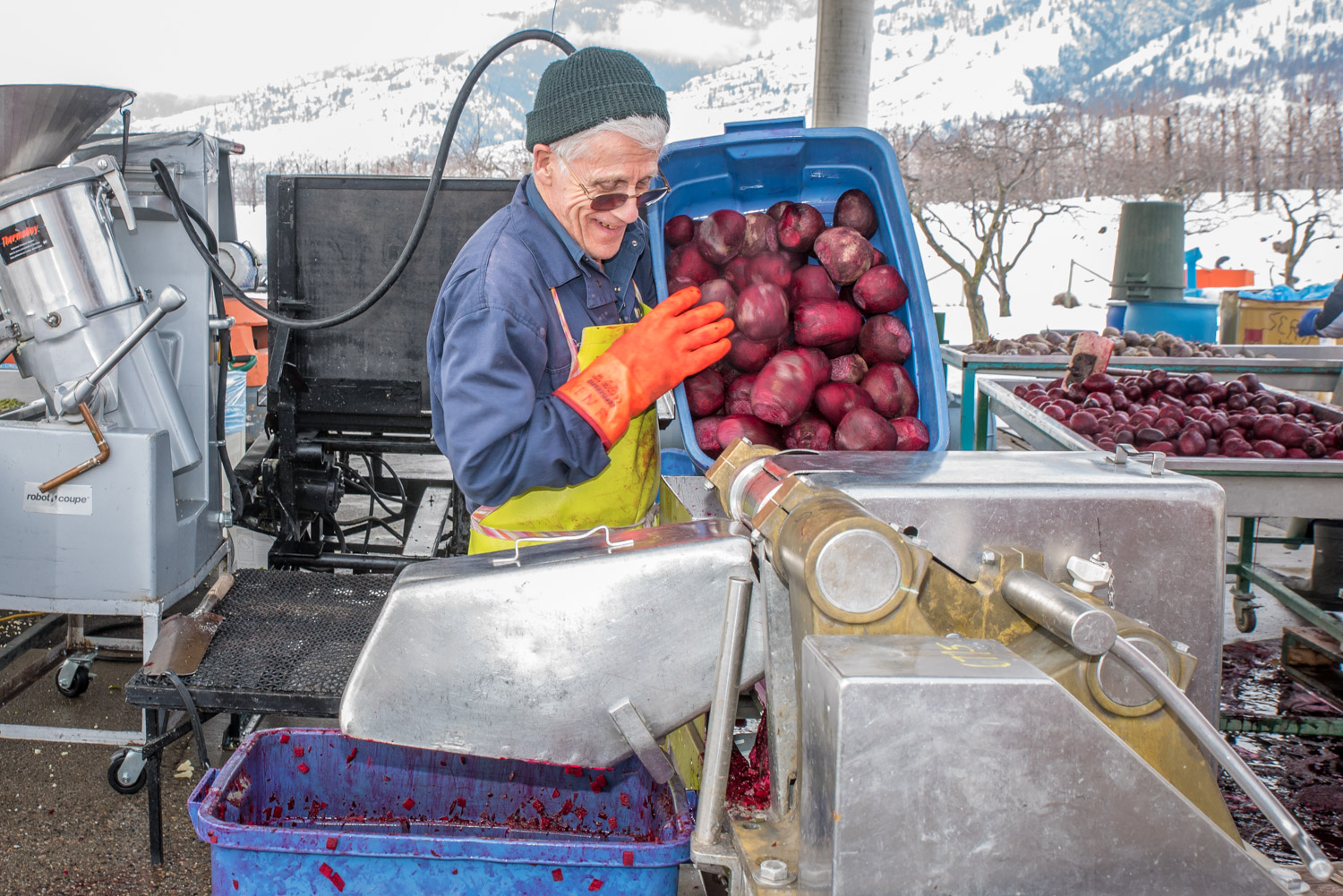
Ken Richardson of Oliver empties a bin of beets into a chopping machine.(Richard McGuire photo)
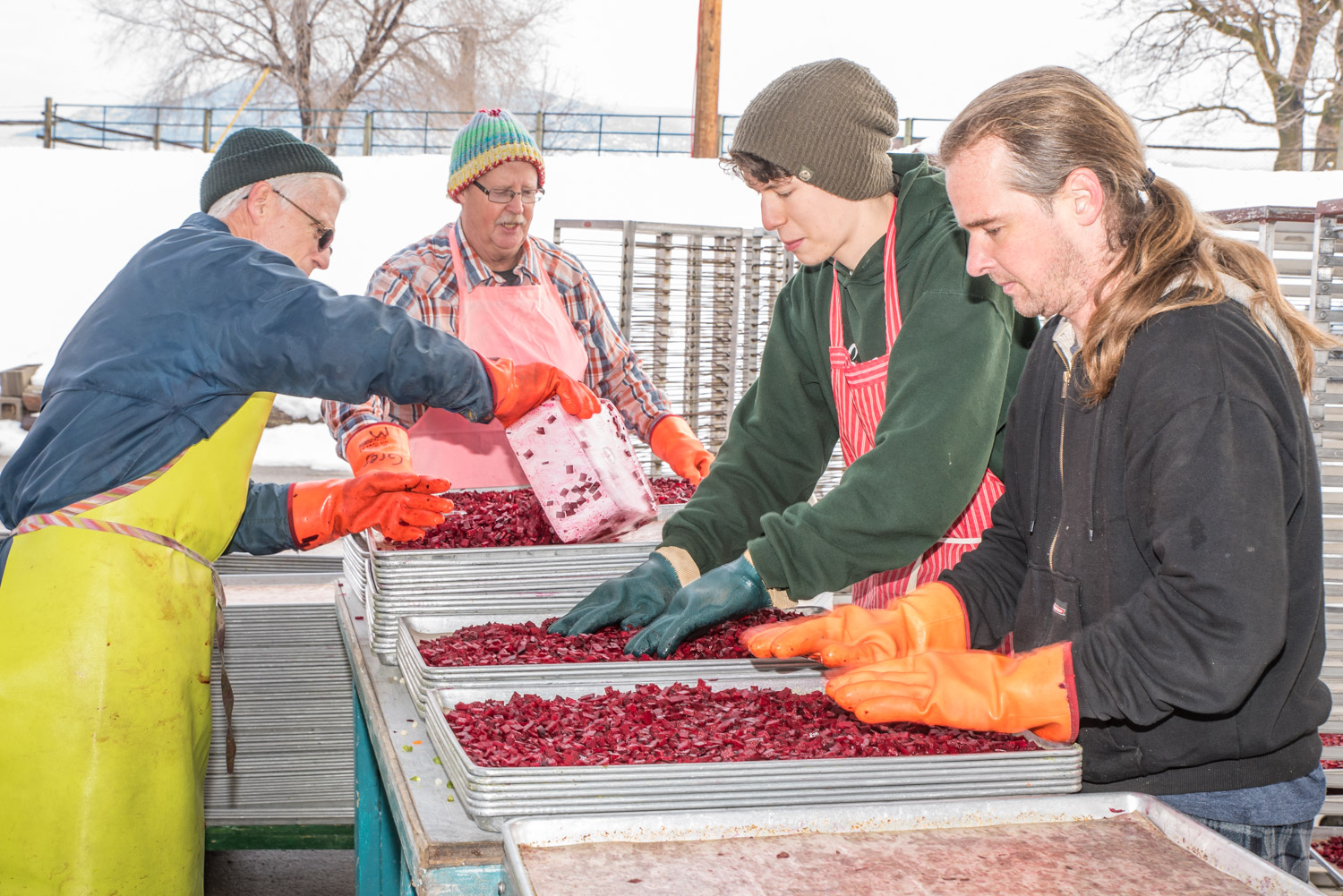
Volunteers work on beets to prepare them for drying at the Okanagan Gleaners. Second from left is manager Greg Masson. (Richard McGuire photo)
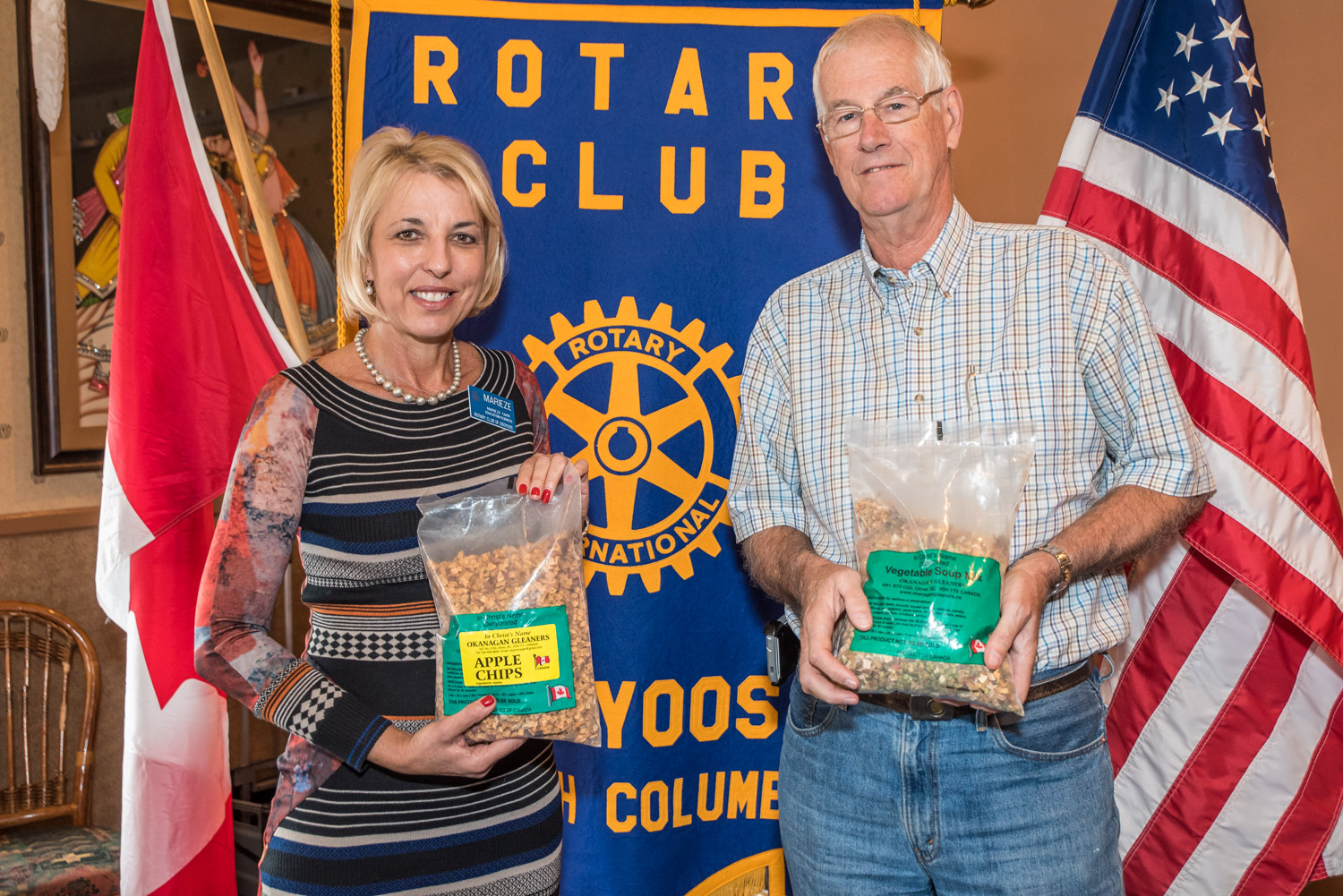
Bill Saul (right), a board member with the Okanagan Gleaners, was guest speaker at the Rotary Club of Osoyoos last week. He shows off a bag of vegetable soup mix made by the Gleaners while Marieze Tarr, Rotary president, holds a bag of apple chips, which are a treat for children overseas. (Richard McGuire photo)