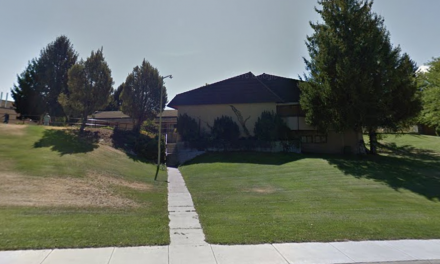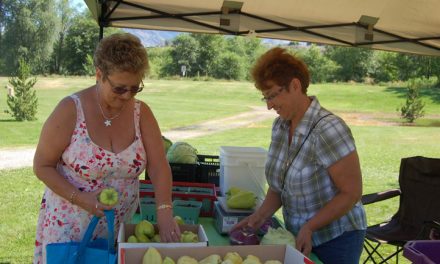
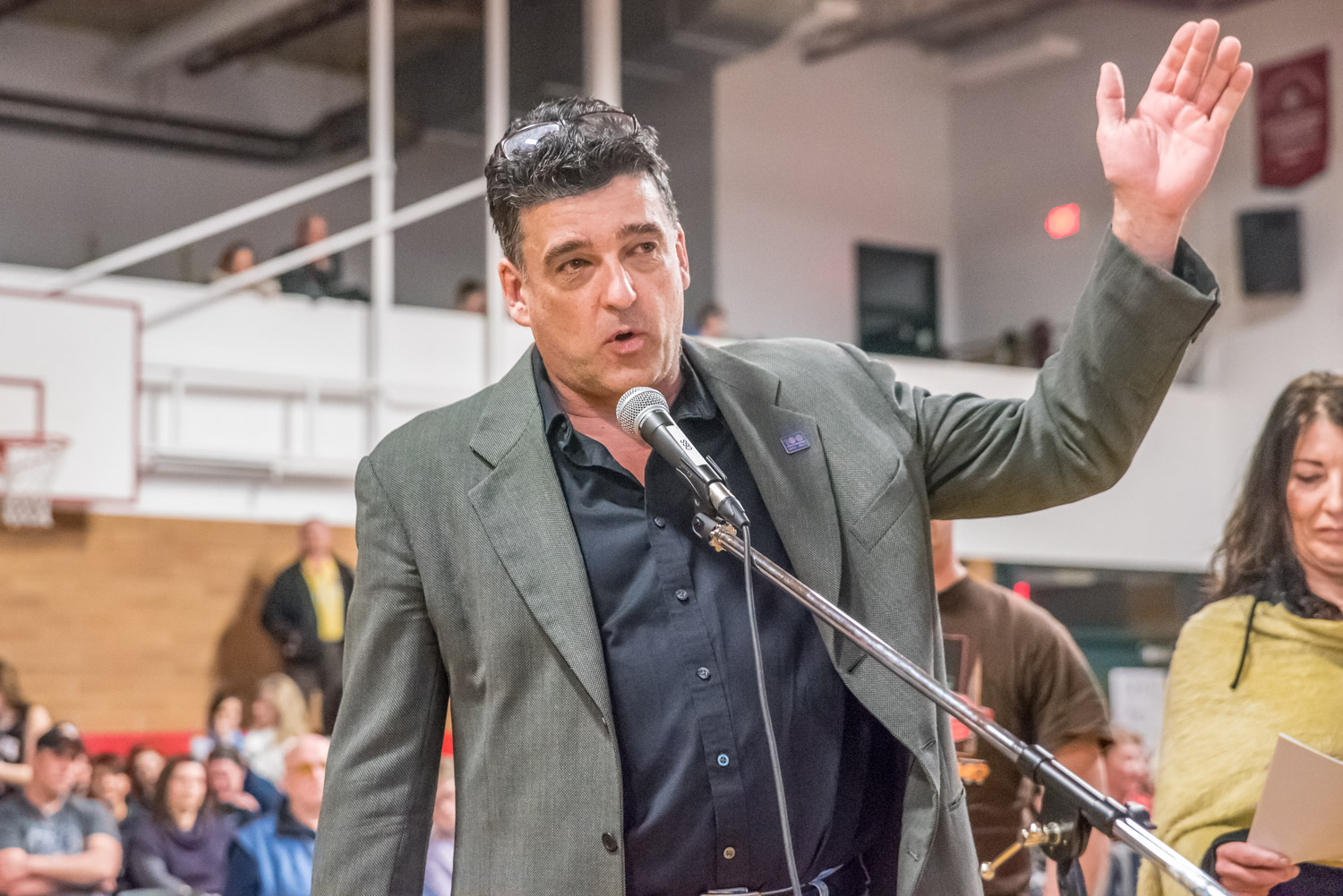
Local developer David Perehudoff wanted to bring affordable housing to Osoyoos, but the town has ended the six-month talks about the remainder of the Richter Property. The town has not shut the door completely on Perehudoff developing housing on private property in Southeast Meadowlark, but they want him to deal with a town-controlled affordable housing authority that doesn’t yet exist. (Richard McGuire file photo)
Six months of negotiations between town council and a local developer to develop affordable housing west of Highway 97 have ended in failure.
Last Friday Barry Romanko, Town of Osoyoos chief administrative officer, sent a letter to David Perehudoff informing him that council has decided “not to continue these negotiations further.”
Perehudoff and his company Canadian Wetlands Inc. have been working as project managers for Prestigious Properties, an Alberta-based company investing in multi-family rental properties throughout Alberta, B.C. and the U.S.
The broken-off talks pertain only to the remainder of the Richter Property, 3.23 acres of land purchased by the town in 2009 for $2.3 million for the new fire hall.
The town hasn’t closed the door completely on Perehudoff’s subsequent proposal to develop 35 affordable units on privately owned land in the Southeast Meadowlark subdivision.
But they have made it difficult and Perehudoff has shifted his attention to Oliver.
“Near-market” affordable housing, which Perehudoff proposed to build, depends on modest government incentives through the waiving of development fees.
This subsidy is provided to buyers, typically modest-income working families, through an affordable housing authority, which determines buyers’ eligibility.
The problem for Perehudoff is that despite the town announcing such an authority in May 2014, it never got off the ground.
As a result, Perehudoff took steps to form his own non-profit authority that would match town subsidies two to one, but the town doesn’t want to work with it.
“Any application for negotiated subsidies would be considered in light of council policies,” wrote Romanko. “And in the case of direct assistance to affordable home purchases, our preference (is) for delivering those through our own affordable housing authority.”
That authority, Perehudoff points out, doesn’t exist.
“We cannot wait around for the town to set up an affordable housing authority,” Perehudoff wrote in an email to Alain Cunningham, the town’s planning and development director, pointing out that this authority was to have been formed in 2008. “Please let me know if the town ever gets one set up and we may consider looking at Osoyoos again.”
Romanko, however, said the town wants to have its own housing authority because public money would be involved.
One of the town’s priorities, he added, is to put this authority in place, but the background work on this has already been done.
“We don’t think it’s going to take that long,” he said. “It’s not like we’re starting from scratch.”
A sticking point in the Richter property negotiations was that Perehudoff wanted to develop all 40 units as near-market housing.
A call from the town in early 2015 to developers for an “expression of interest” specified that the Richter remainder would be planned for 40 units. Developers weren’t interested.
Romanko, however, said this number was subsequently reduced to 20 units when the size of the property was reduced to allow a training area for firefighters.
In order to remove the land from the agricultural land reserve (ALR), a minimum of 15 per cent must be developed as near-market housing.
Romanko said this means the town only needs to subsidize three units.
“A particular sticking point was your continuing insistence that council increase their support for near-market affordable housing beyond our established policies,” Romanko wrote to Perehudoff.
Perehudoff said the price of the land would be worth about $350,000 if it were developed for affordable housing, while it’s probably worth about $450,000 on the open market.
Perehudoff believes the town may be balking because it paid too much for the Richter land in the first place and so it wants to recoup more from its sale.
Romanko, however, said the town is aiming to provide newer homes in the $300,000 to $350,000 price range through techniques such as smaller lots.
“The whole design of this future subdivision is targeted at being more affordable housing in the community,” he said, adding council wants to create more such homes in the market.
Romanko added that Perehudoff’s approach to affordable housing and subsidies was complex, and this caused problems for council.
Meanwhile, Pastor Phil Johnson, of Osoyoos Baptist Church, said he met with Perehudoff, who had expressed interest in purchasing land from the church for housing.
The church’s board, Johnson said, has not actively pursued this idea, but hasn’t ruled it out either.
Johnston said he chaired a community task force on affordable housing in 2008, but he found the experience frustrating because nothing happened as a result.
“They wrote this report and then for 10 years nothing happens,” he said.
Johnson took issue with a statement from Mayor Sue McKortoff in last week’s Osoyoos Times questioning whether this is the right time to develop affordable housing for young families.
“Well, you know, 10 years ago was the right time,” said Johnson. “And then maybe they wouldn’t be having this question about if the school is going to close. They didn’t do anything for 10 years and now what are you going to do? Do nothing for another 10 years?”
RICHARD McGUIRE
Osoyoos Times

Barry Romanko, Town of Osoyoos CAO, says affordable housing must stick to town policies. (Photo supplied)

Pastor Phil Johnston of Osoyoos Baptist Church says the town has done nothing to develop affordable housing in the years since he chaired a community task force in 2008. Will the town also do nothing for the next 10 years, he asks. (Richard McGuire file photo)