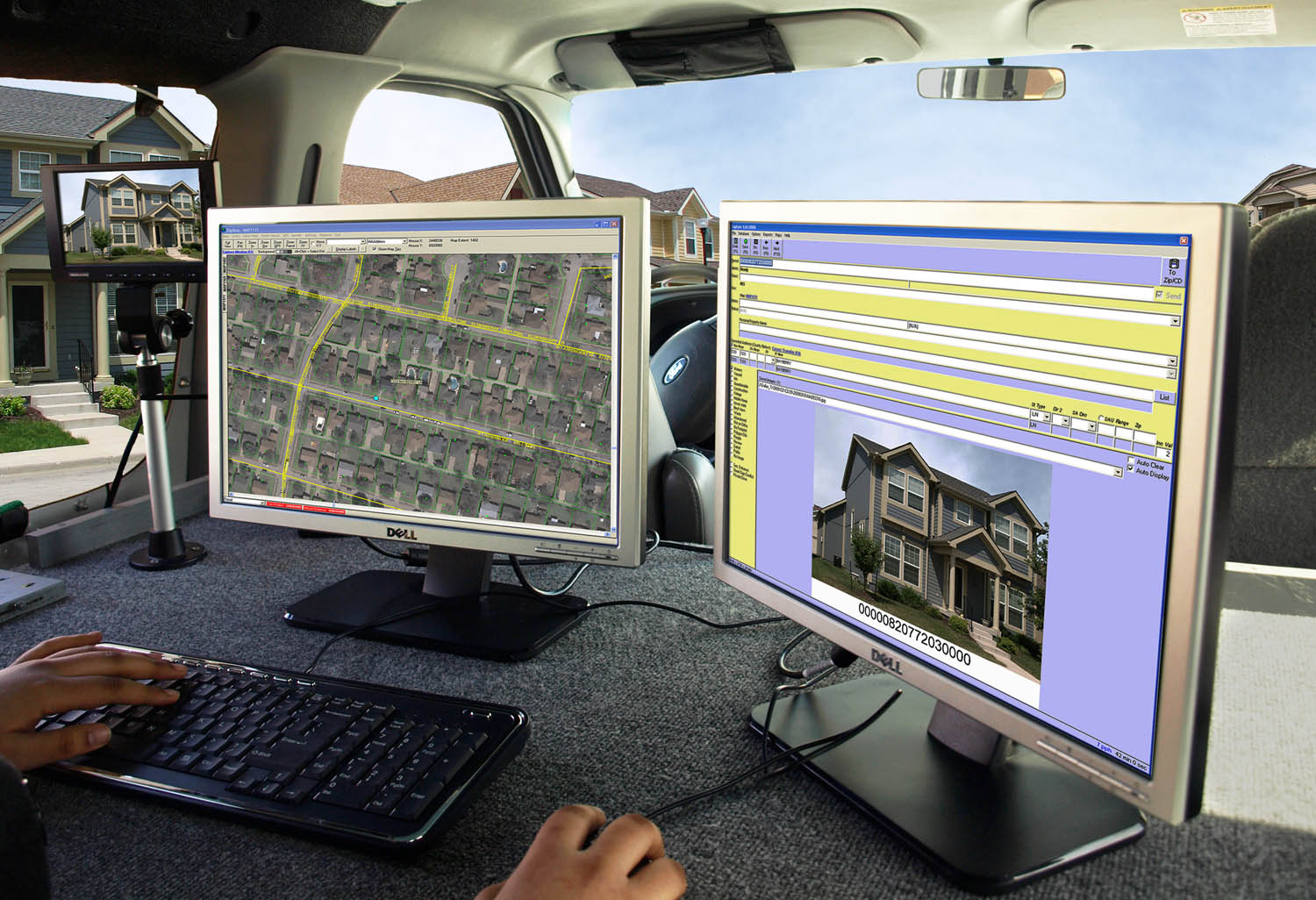
Last June BC Assessment used a specially equipped van to digitally photograph homes in Osoyoos for assessment purposes. Those photos were not used to prepare this year’s assessments, but they will be used for a reassessment project taking place later this year, said Tracy Wall, deputy assessor. (BC Assessment photo)
Residents of Osoyoos and Oliver may have noticed an increase in their assessments when they received their notices earlier this month.
A typical home in Osoyoos saw a 4.42-per-cent increase, while a typical home in Oliver saw a 2.56-per-cent increase.
“The majority of residential homeowners within the (Okanagan) region can expect a modest increase in value compared to last year’s assessment,” said Tracy Wall, deputy assessor with BC Assessment.
The increases here are not as high as in the Central Okanagan, which saw jumps of 9.63 per cent in Kelowna and 7.93 per cent in Penticton. Even Keremeos, which has among the lowest home prices in the region, saw a jump of 6.55 per cent.
The value of a typical home in Osoyoos on the 2016 roll is $377,700, while it’s $320,300 in Oliver.
Wall explained that figures for a typical home are obtained by averaging properties on lots of less than two acres in order to exclude larger properties such as acreages that would skew the numbers.
In larger cities like Kelowna, Penticton and Vernon, BC Assessment reports strata properties separately showing that their values have not increased by as high a percentage as for single-family homes.
Wall said figures for Oliver and Osoyoos don’t report strata properties separately, but she expects the trend of smaller percentage increases would be the same here.
This is the second year in a row that home prices have increased in Osoyoos and Oliver, suggesting the market is improving from the downturn experienced in the recession of 2008-09.
Only Princeton and Sicamous saw a decrease in assessments for a typical home.
In B.C., like most other provinces, assessments are based on market values. The value is based on July 1, 2015, while there are adjustments based on physical condition as of Oct. 31, 2015.
Residents who believe their assessment is in error are encouraged to speak first to one of the appraisers at BC Assessment. Most cases can be resolved without the need for an appeal.
“If a property owner is still concerned about their assessment after speaking to one of our appraisers, they may submit a Notice of Complaint (appeal) by Feb. 1 for an independent review by a Property Assessment Review Panel,” said Wall.
More than 98 per cent of property owners typically accept their property assessment without proceeding to a formal, independent review of their assessments, BC Assessment says.
Although assessments are used to set municipal taxes, an increase in assessment doesn’t mean an increase in property taxes unless the increase is disproportionate to other properties in the community.
That’s because municipalities adjust the mill rates they charge on assessed property values to raise the levy they need for budgeted expenses.
If assessments increase and the budget stays the same, mill rates go down. The mill rate is the tax charged per $1,000 in assessment.
If assessments increase disproportionately to other properties, due to improvements for example, homeowners may see a tax increase.
BC Assessment provides an online tool called eValueBC on its website at www.bcassessment.ca which allows people to compare their property’s value with their neighbours’ and to see prices that houses have been selling for recently.
The site also gives details about properties including numbers of rooms, a photo of the front and last year’s assessment value.
There is also a map of each neighbourhood allowing users to click on a lot to obtain that home’s information.
Wall said this tool has been available for about the past five years, but there have been improvements this year.
“It’s a very useful tool and this is why we have it,” she said. “Our goal of course is to be transparent for taxpayers. Anybody who is interested in property valuation can go there and have a look. We’re not perfect. We do make a few mistakes, so if there’s any incorrect property data, you can click on the link and advise us.”
Overall, there are 222,000 properties in the Okanagan portion of BC Assessment’s Thompson-Okanagan region. Total assessments in the Okanagan portion increased to $94 billion this year from $88 billion last year.
A total of almost $1.7 billion results from new construction.
This past summer, a BC Assessment vehicle drove around neighbourhoods of Oliver and Osoyoos photographing fronts of properties for assessment records. Wall said this information has not been used for the 2016 assessments, but it will be taken into account during a reassessment project being done this year.
During January, the BC Assessment office in Kelowna is open from 8:30 a.m. to 5 p.m., Monday to Friday. Property owners can contact BC Assessment toll free at 1-866-825-8322 or online at www.bcassessment.ca.
RICHARD McGUIRE
Osoyoos Times