By Lexi McFarlane, Times Chronicle
Familiar, pervasive and unfortunately invasive, the South Okanagan is riddled with non-native tree species from far and wide, but a new project will soon be underway in Oliver to take down these arboreal interlopers and replace them with native species.
The Okanagan and Similkameen Invasive Species Society (OASISS) is beginning work in three communities to remove invasive tree species as part of a three-year project that includes the creation of deomonstration sites on municipal land in Penticton, Oliver and Summerland.
The aim is to replace these trees with what its describes as “ecologically suitable species” and encourage home owners to do the same. The goal of the project is to enhance habitat and resources for native wildlife and increase species diversity, OASISS says.
Funding for this project is being provided by the South Okanagan Conservation Fund, and the Regional District of Okanagan-Similkameen (RDOS).
Oliver is one of the three featured communities, along with Penticton and Summerland, and OASISS is working closely with the Town of Oliver in completing work in the area.
OASISS project lead Lisa Scott says there’s certain types of trees that are their focus.
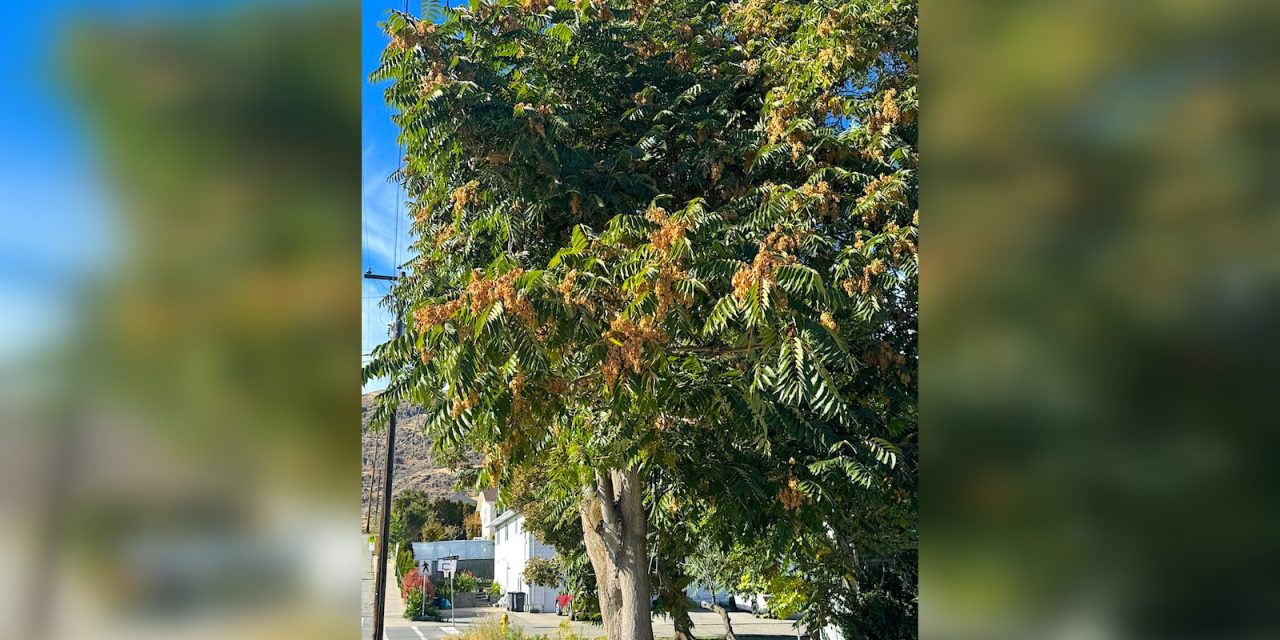
“There’s four species that we are targeting for the project specific to Oliver right now,” Scott says. “The Hospital Hill site (tree species) is Siberian Elm, the other three are Russian Olive, Tree of Heaven, and Black Locust.”
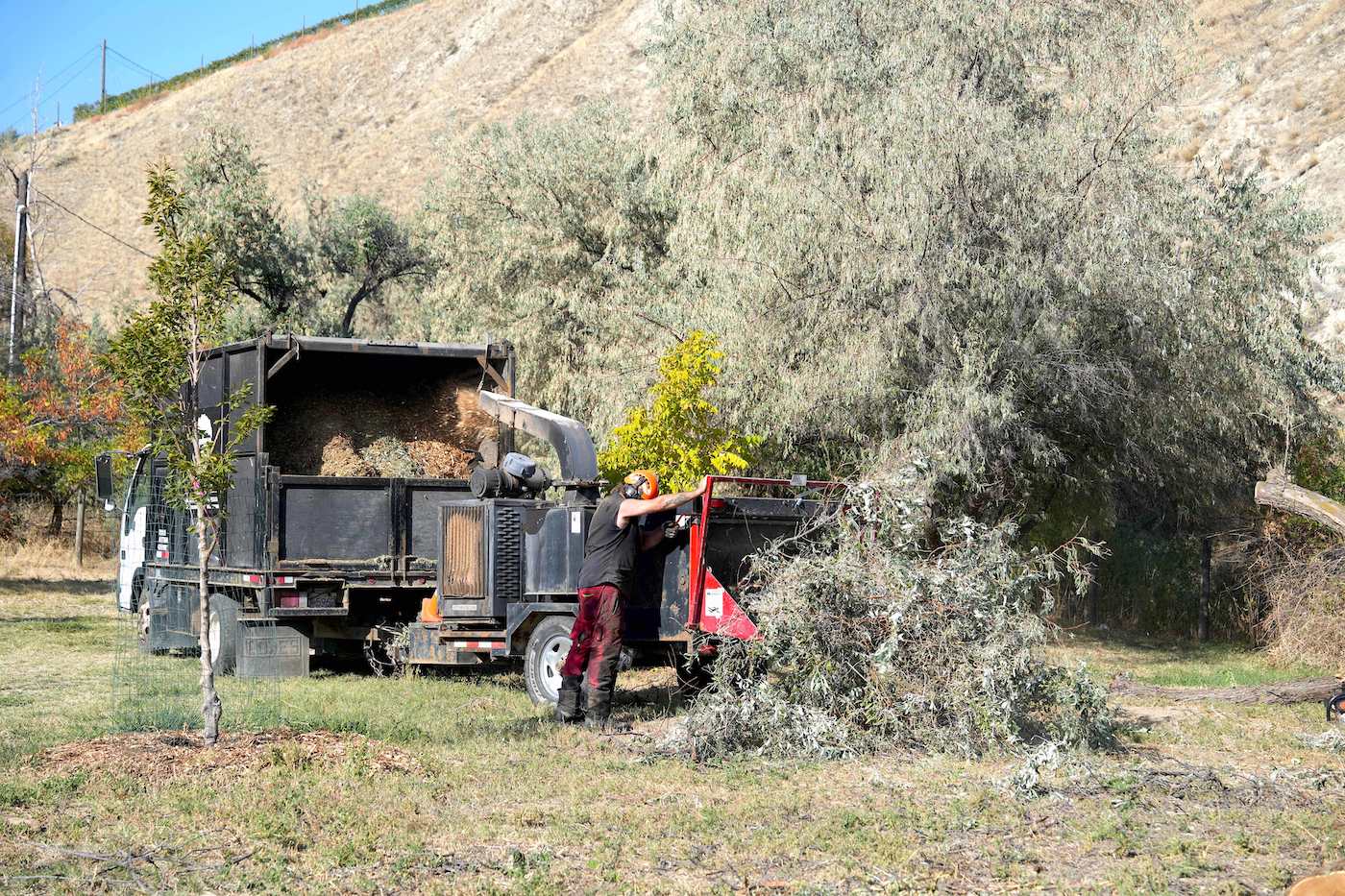
Russian Olive tree removal.
OASISS photo
Pointing to their impact on the local ecosystem OASISS says the four species grow rapidly, produce an abundance of seeds and out compete native plants. This can result in loss of wildlifehabitat, reduced biodiversity, altered hydrology, soil degradation, altered fire cycles, and loss of traditional food and medicinal plants. Invasive trees can also be the preferred host for invasive insects.
Replacing them with trees and shrubs native to the South Okanagan is the paramount objective of this project. Those varieties of plants that exist on the given sites, with one example being Ponderosa Pine trees, will be worked around, and then added to population-wise.
“We’re going to take the Siberian Elm trees down, and then we’re going to replace them with similar native plants that are already growing there,” Scott explained.
Work that has occurred so far on this project has been preliminary, but the actual removal, or felling, of the trees is slated to begin next week, according to Scott, who cited October 19 and 20 as the dates where tree felling will begin.
“It’s an ongoing project in and of itself,” she confirmed, further noting it’s good to put the word out there “this week, in advance of that starting to happen, to give people a heads up”.
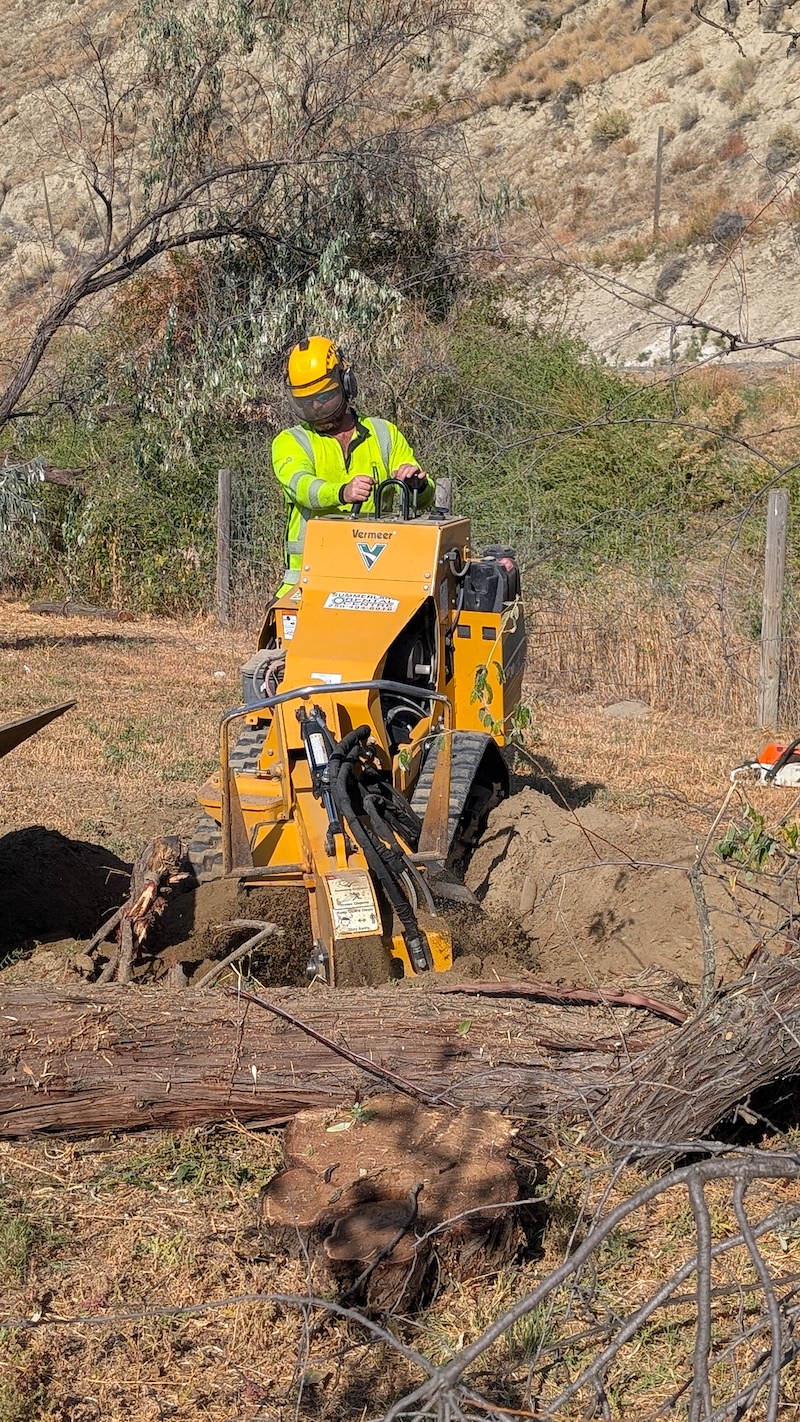
Stump grinding following the removal of a Russian Olive tree.
OASISS photo
In regards to how long the entire project will take, Scott says it will take a while, given the scope of the project, and just how many trees are being replaced.
“We’ve counted 230 mature Elm trees… that’s our pretty close estimate. So we are going to complete this project over a couple of years; we’re going to try to get close to half the site done.”
The one thing OASISS hopes the project can achieve is to inspire property owners to do the same, and use the project as a reference for how to undertake the tree replacement process. “We hope to inspire private property owners to follow the same process on their land,” she said.
“Eventually we’ll have a sign on-site,” Scott says. “We are going to do a call-out to the public to come join us on the (future) planting day, and we can explain how the trees were removed, what the (public’s) options are for tree removal, and answer their questions and provide information.”
The intent is also to create a better natural habitat for the South Okanagan wildlife, one tree replacement at a time.
“The reduction of invasive trees in high-value habitats and replacement of these trees with native plants
will benefit environmental and societal values in the South Okanagan,” OASISS said adding that the project also aims to create more resilient ecosystems that can better withstand the negative impacts from climate change.
The Invasive Tree Management in the South Okanagan project was enabled through funding and support from the South Okanagan Conservation Fund (SOCF) and the Regional District of Okanagan-
Similkameen (RDOS).
With files by Don Urquhart