By James Rose, Special to the Times Chronicle
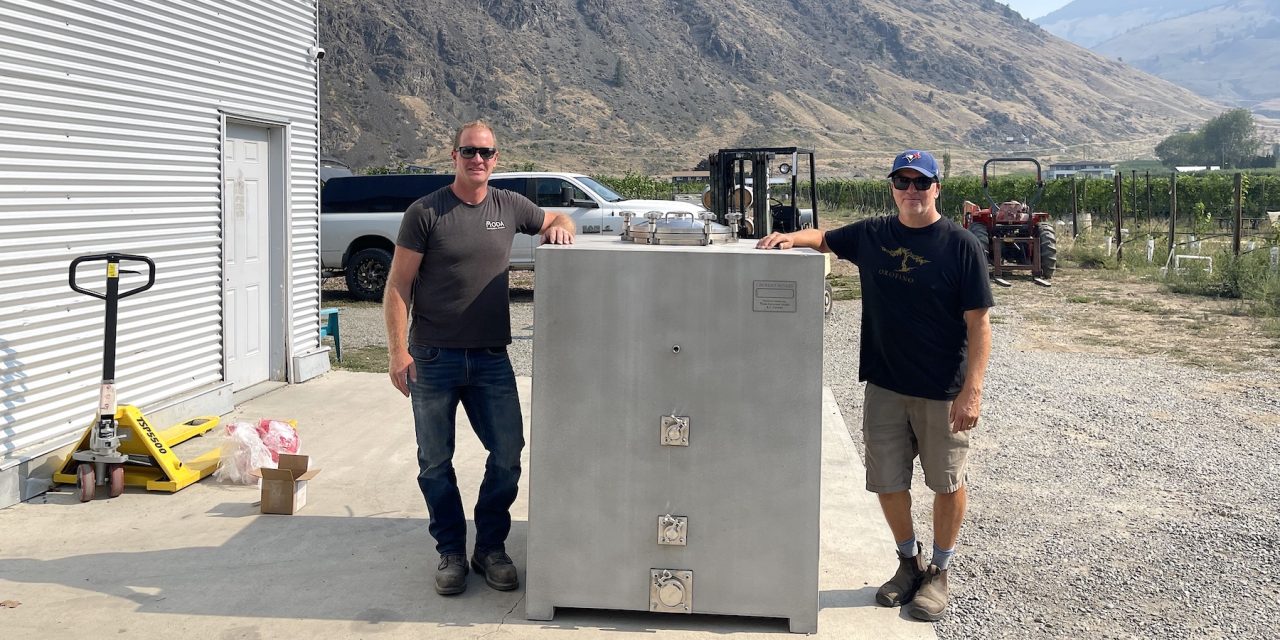
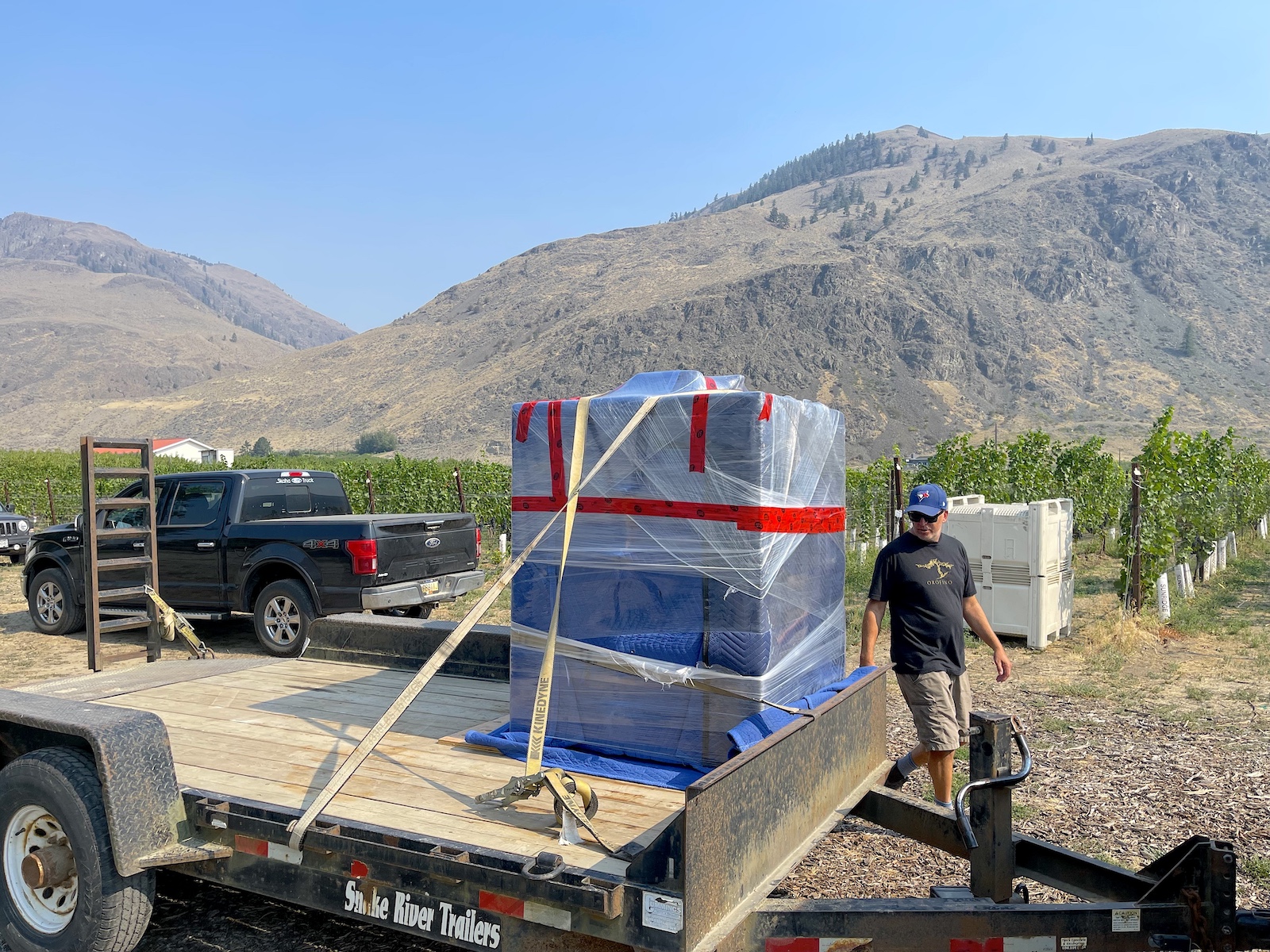
On September 3, John Weber, cofounder and winemaker of Orofino Vineyards, received a special delivery. On the bed of a trailer towed by Brent Indenbosch’s pickup truck was a wrapped and strapped 635 kg concrete fermentation tank.
Weber designed the tank with Indenbosch, principal of Chilliwack-based Moda Concrete Studios. Indenbosch, a Concrete Countertop Institute graduate, spent three weeks carefully executing the vision Weber had for a tank that could hold over nine hundred litres of grape juice.
The two first met after Indenbosch and his wife enjoyed a wine tasting at Orofino the previous summer. “That’s when I pitched my idea to him,” said Indenbosch. His idea included the use of sand taken from Weber’s property for use in the tank’s building materials.
Weber was quick to jump at the opportunity to support a made in BC product. To him, buying local is important. “I can’t stand shipping concrete across the ocean. The industry norm for BC wineries is to purchase concrete tanks from either France or California.”
Importing goods from the US or Europe involves long-distance shipping which generates significant carbon emissions. When BC businesses buy from other BC businesses, money circulates within the local economy, creating a multiplier effect.
Studies suggest that for every dollar spent locally, two to three times that amount is reinvested in the community through wages, local suppliers, and services. This strengthens small business, creates jobs, and boosts tax revenues for public services like infrastructure and healthcare.
For Indenbosch, the project was yet another effort on his firm’s part to expand into more creative fields of artisanal concrete.
“Concrete is in my bones. Our expertise is built on decades of experience. We believe in the transformative power of concrete and strive to push its limits with every project,” he said. To Indenbosch, Moda does not just build concrete pieces. “We’re creating a part of a customer’s story, something unique and personal that stands the test of time.”
In the wine industry, fermentation tanks play a critical role in shaping the wine’s flavour, texture, and overall character. The choice of material – wood, stainless steel, or concrete – impacts the fermentation process and the final product due to differences in thermal properties, oxygen permeability, and interaction with the wine.
Each material offers distinct advantages, and many wineries use a combination of these tanks to achieve desired outcomes across their wine portfolio. For example, a winery might ferment Sauvignon Blanc in stainless steel for freshness, age Chardonnay in oak for richness, and use concrete for a textured Syrah.
Concrete is largely neutral but can impart subtle mineral or earthy notes, especially in unlined tanks such as the one Indenbosch made for Weber. Unlined concrete allows minimal oxygen exchange, similar to the traditional wood barrel, but less pronounced.
This micro-oxygenation can soften tannins and add texture, benefiting both reds and whites. Concrete also has excellent thermal inertia, maintaining stable temperatures without rapid fluctuations. “It keeps wine cooler than wood but lacks the precise control of stainless steel,” said Weber.
Orofino Vineyards, a family-owned boutique winery located in the Similkameen Valley is renowned for its focus on terroir-driven wines that reflect the unique microclimates of the region.
Nestled on a sunny upper bench overlooking the Similkameen River and surrounding mountains, the winery benefits from the valley’s desert-like conditions: Hot summer days often exceeding 30°C, cool nights, low rainfall, and strong winds that reduce disease pressure and concentrate flavours.
The valley’s diverse soils, ranging from sandy loam over gravel to angular granite rocks, create varied micro-terroirs, ideal for a wide array of grapes. This place-based philosophy ensures wines that capture the valley’s minerality, fruit intensity, and structure.
The name Orofino draws from the Italian word for fine gold, symbolizing the high-quality aspirations of the Webers, who left careers in teaching and nursing in Saskatchewan to pursue their passion for wine after a visit to the valley. WineAlign recently ranked Orofino as the ninth best small winery in Canada.