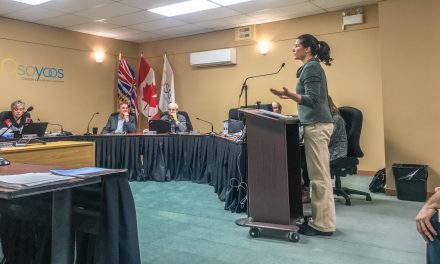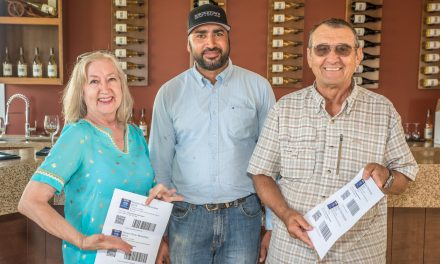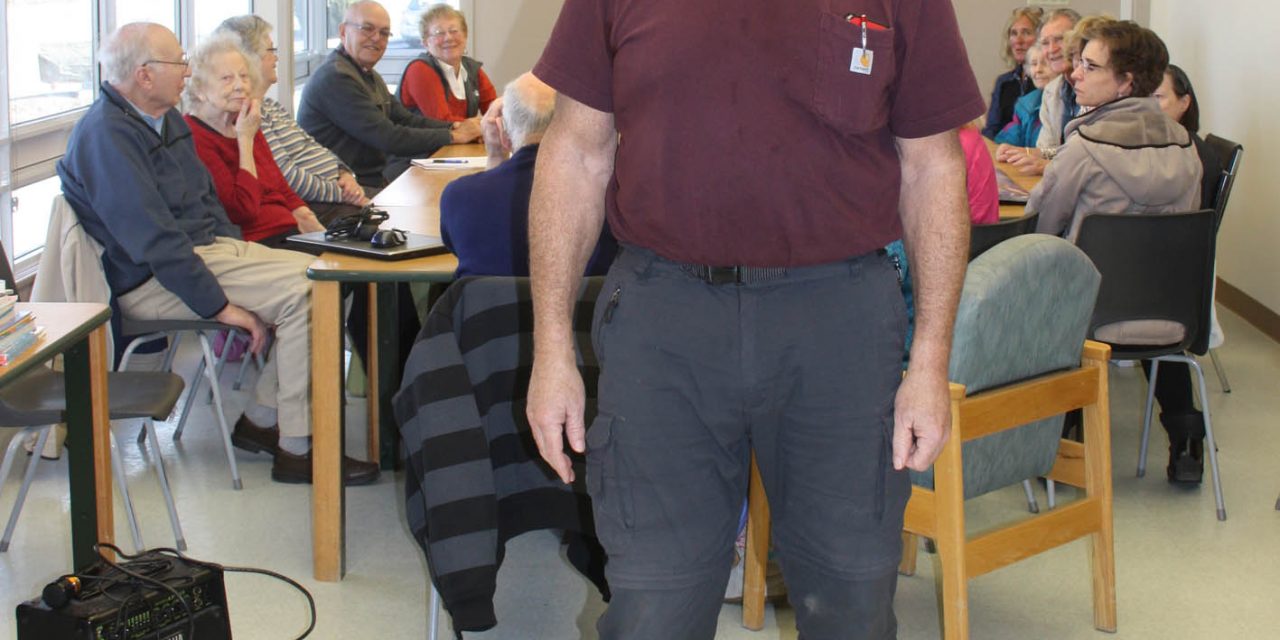
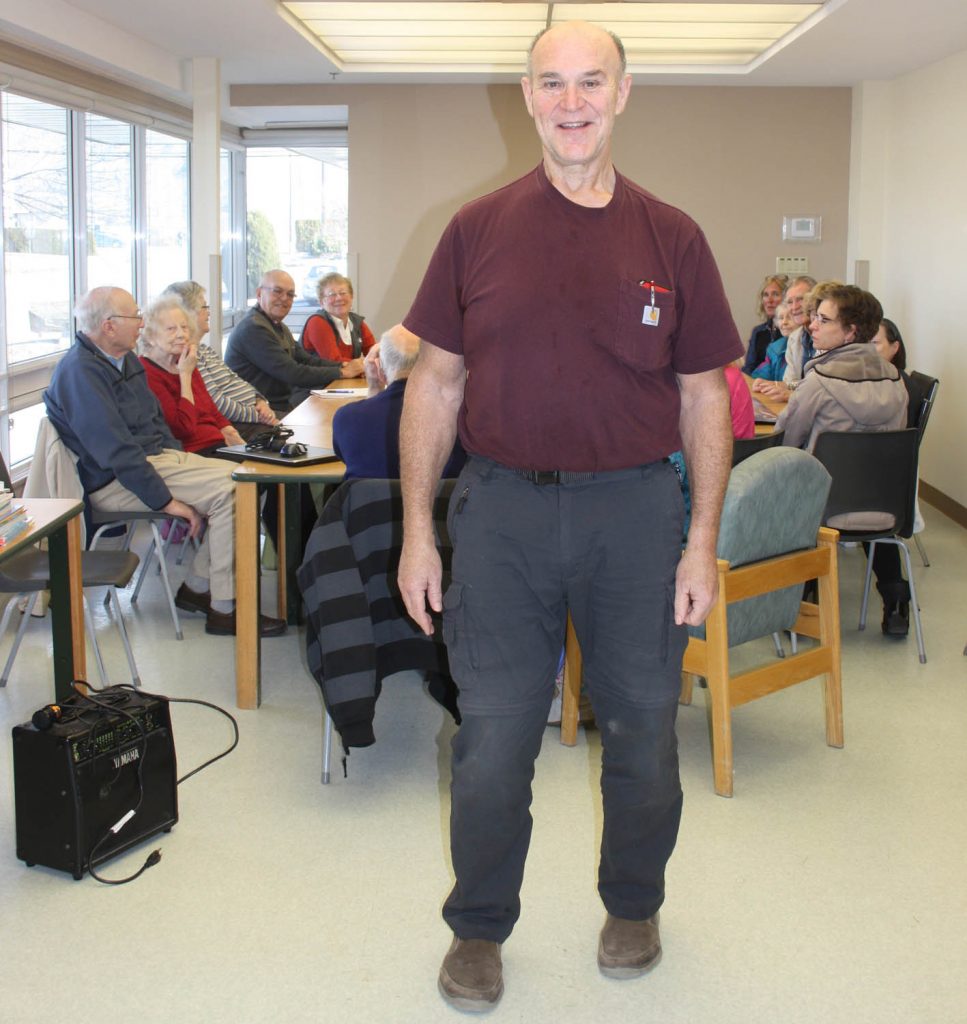
Members of the Osoyoos Brain Injury/Stroke Support Group meet every second Friday morning, starting this month, in a meeting room at the Osoyoos Health Centre on 89th Avenue. Dan Lyver, whose wife is a stroke survivor, is the facilitator for the group. Members include not only stroke and brain injury survivors, but also caregivers and loved ones. The local group is all about providing support to loved ones, sharing information about new advances in treatment and sharing successes and failures in a friendly and supportive environment. (Keith Lacey photo)
Recovering from a severe stroke or brain injury is almost always an overwhelmingly difficult and lonely journey, but that journey is being shared by a large group of Osoyoos residents.
They belong to the Osoyoos Brain Injury/Stroke Support Group.
The group is made up not only of those who have suffered a Stroke or brain injury, but also their caregivers, be it a husband, wife, other family member or friend.
The group, that was established in Osoyoos over two years ago, is affiliated with Brain Injury Services, South Okanagan Division, which was formed after the South Okanagan-Similkameen Brain Injury Society disbanded back in 2012.
A group that usually ranges between 15 to 20 local residents who are recovering from Stroke and brain injuries and their caregivers gather every second Friday of the month between September and June in a meeting room at the Osoyoos Health Centre (formerly Sagebrush Lodge residential care home) on 89th Street in Osoyoos.
The sessions last 90 minutes.
Dan Lyver, whose wife Marie suffered a serious stroke two years ago, is the group’s facilitator.
As he explained during a recent regular meeting, the Osoyoos group is all about providing support to loved ones, but sharing information about new advances in treatment, talking about successes and failures and basically being surrounded by people who are struggling through the same issues in a supportive and friendly environment.
“Stroke and brain injury affects people in different ways and it doesn’t only effect those who suffer the stroke or brain injury, but also their loved ones and caregivers,” said Lyver. “We’re a support group for each other. We try and share information in a positive light and let everyone know there is a light at the end of the tunnel and everyone has their own story to tell.”
The effects of stroke and brain injury among group members in Osoyoos ranges from those who have suffered only short-term memory loss to more severe cases that result in extreme mobility issues, hearing loss and long-term memory loss.
If a new member joins, the meeting will commence with everyone in attendance announcing their first name, when they suffered the Stroke or brain injury and how they are feeling on that particular day.
Each member is asked to rate how they feel on that particular day on a score from 1 to 10, with 10 being a great day.
At the recent meeting, almost everyone in the group of almost 20 reported scores of 7 to 10 because the sun was shining and everyone appeared to be in great spirits.
Besides meeting in Osoyoos every second Friday, group members are invited to participate in group sessions in Penticton the last Tuesday of each month where special guest speakers are often lined up.
A large group from Osoyoos had planned on attending a seminar by renowned neuro-psychologist Dr. Nick Nichols in Penticton a few days after their meeting.
The first speaker told the group how she suffered a mild stroke on New Year’s Eve a few years ago and quickly recovered. However, she had low blood count and suffered a second and more severe Stroke days later, resulting in short-term memory loss.
“But it’s getting better bit by bit,” she said.
The wife of a man in his 70s who was diagnosed with brain cancer told the group how happy she is to still have her husband.
Even though his brain cancer is inoperable, she insisted doctors perform radiation and they did and he’s now cancer free, even though “his memory is shot.”
The support she and her husband receive from group members is incredible, she said.
“This group really helps us,” she said. “The ideas we share and the overall support just really helps. It’s amazing.”
One member who suffered a serious brain injury at age 17 and is about to turn 47 in late March, said she’s happier in her life now than she has been in a very long time and says the support group is a big part of her long road to recovery.
“I’m a total 10,” she said beaming a beautiful smile. “Things are going so good for me that I’m sort of expecting something bad is going to happen again. I sure hope it doesn’t, but I’m feeling great.”
Another member who suffered a severe stroke while on vacation in Europe three years ago, also said she’s feeling so much better with the passage of time and credits the support of family and loved ones for much of it.
“I’m making great progress by leaps and bounds,” she said. “Having friends is so important and this group is a wonderful group of friends.”
An elderly gentleman who suffered a serious stroke in 2014 told the group how severe hearing loss has been the most difficult issue to deal with over the past three years.
“Besides that (hearing issues), I’m doing pretty good,” he said.
He’s experimenting with different medications because he doesn’t like being forced to take pills everyday, he said.
Near the end of the meeting, Lyver played an online video he had downloaded he felt would benefit group members.
The short video by Licensed Clinical Professional Counsellor Carl Benedict – who called himself Counsellor Carl – dealt with “The 12 Suggestions for Dealing With Grief Over the Loss of A Loved One.”
His counselling advice can be found at www.serenityonlinetherapy.com.
Lyver said he tries to share information he finds online with group members whenever possible.
Even though the support group has been around for more than two years, there are many Osoyoos residents who know nothing about it and he encourages anyone who has suffered a stroke or brain injury to come out, said Lyver.
All it usually takes is one visit to a regular meeting and survivors and their family members quickly observe how friendly and supportive members are and they want to return, said Lyver.
They can show up every second Friday beginning at 10 a.m. at the Osoyoos Health Centre or can contact him at 250-495-8055.
KEITH LACEY
Osoyoos Times