By Natalie Bruckner, Special to the Times Chronicle
Volunteers with the Osoyoos Lake Water Quality Society (OLWQS) celebrated World Rivers Day on September 28 by taking part in the annual Yellow Fish painting campaign. The bright yellow fish beside Osoyoos storm drains serve as a subtle reminder to keep pollutants out of local waterways.
“Our rivers and lakes are all interconnected, so it seemed an appropriate day to gather volunteers and head out into the community to repaint the fish and add new ones by drains we had previously missed,” said Birgit Arnstein, president of the OLWQS.
“We do this gesture annually to remind residents and visitors to Osoyoos that what you put into the storm drain can affect wildlife such as fish.”
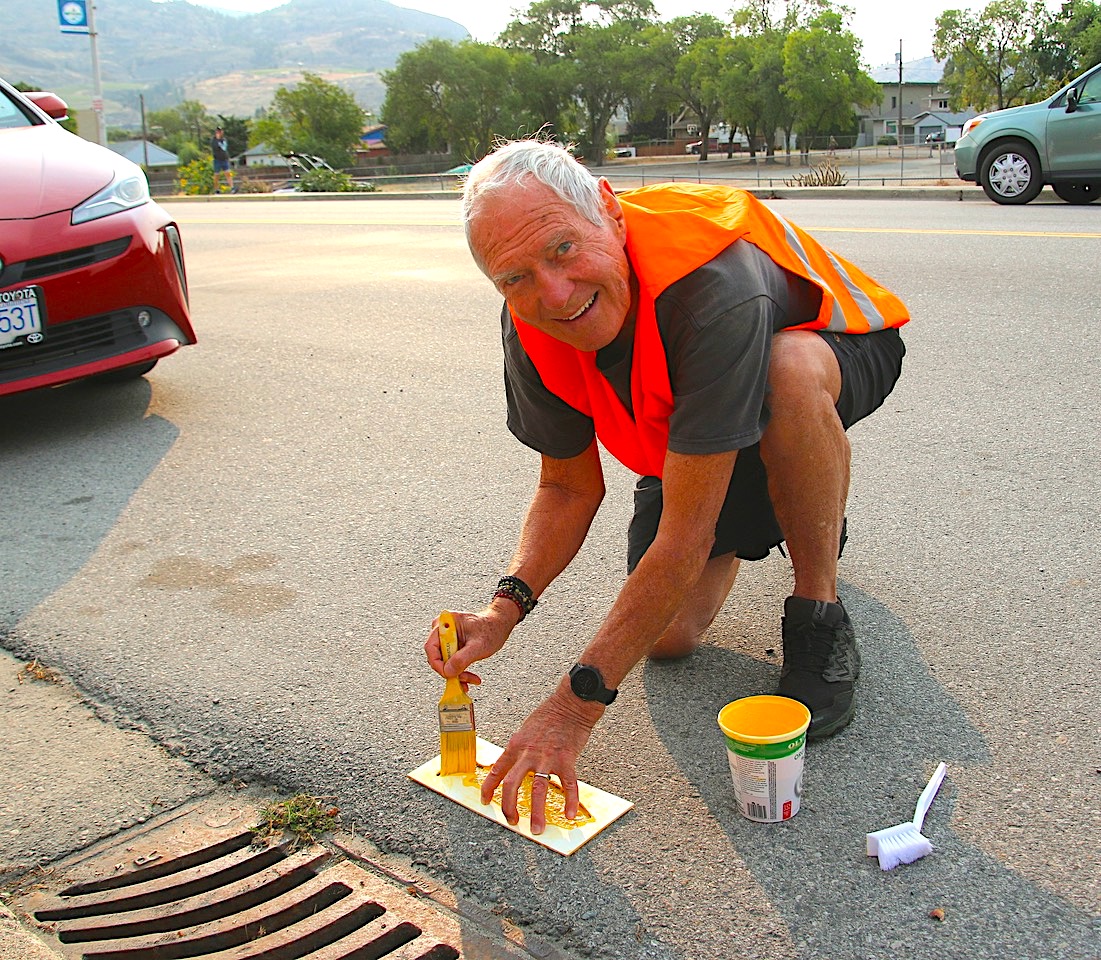
Bob Sherwood working on a stencil on Hwy. 3 just west of the Osoyoos Trestle Bridge.
Neil Bousquet photo
There are about 150 storm drains in Osoyoos. These drains collect rain, melting snow and other runoff that flows into storm sewers that empty directly into nearby creeks, rivers and the lake. Along the way, the water can pick up motor oil, fertilizers, heavy metals, litter and other pollutants harmful to fish and aquatic habitats. Runoff from storm drains is considered one of the major causes of pollution in Osoyoos Lake.
“We’ve held this volunteer event every fall for many years,” said Arnstein. “It’s best to do it before it gets too cold, but after the summer rush. Safety is our top priority, so we choose a quiet Sunday. This year, four teams repainted old markings and added new ones — more than 100 storm drains in total.”
She said it’s a simple but powerful way for residents to help protect local waterways.
“With more extreme weather events and the effects of climate change, it’s more important than ever to do our part to keep our lake healthy,” Arnstein said.
Painting storm drains is just one piece of the society’s efforts to safeguard Osoyoos Lake. On Friday October 3, Arnstein and a team of volunteers carried out their final water sampling of the year as part of their 2025 research.
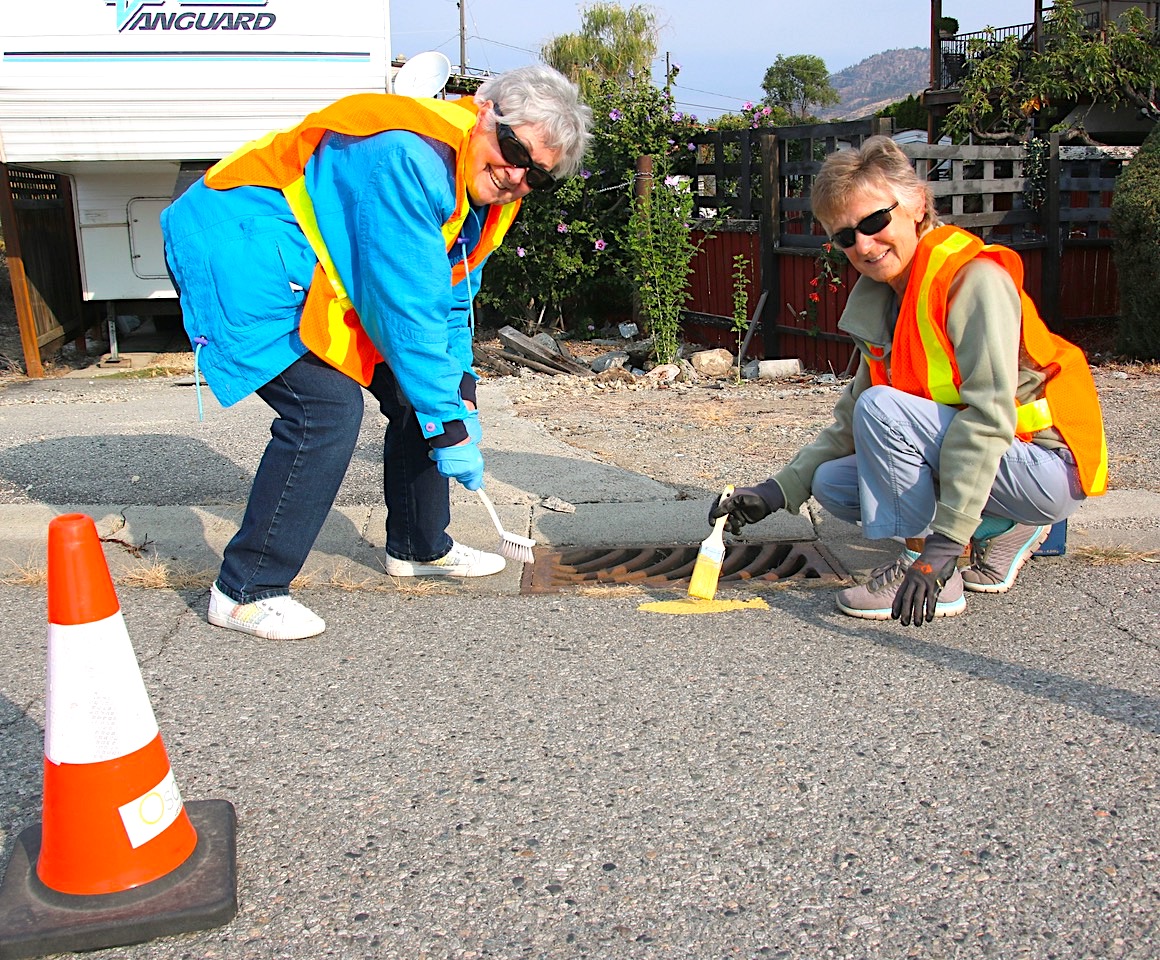
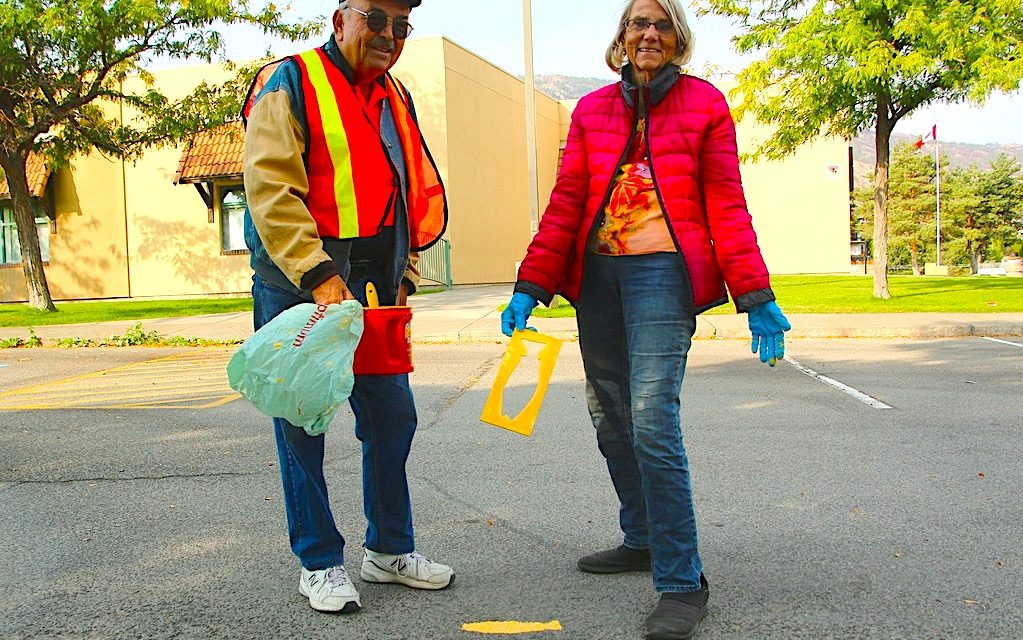
Darlene Hovind and Verla Anderson.
Neil Bousquet photo
A crew of society volunteers tests the water for temperature, depth, dissolved oxygen, pH, specific conductivity and clarity using a Secchi disc. Sampling locations include the South Basin, Central Basin, White Sands and Packing House areas of Osoyoos Lake.
“We were shocked to find the temperature at the north end of the lake was 18 degrees Celsius, which is warm for this time of year. The dissolved oxygen in some parts of the lake was also very low,” she said.
According to the B.C. Ministry of Environment, young sockeye salmon thrive in water below 17 C with at least four milligrams of dissolved oxygen per litre. When oxygen levels fall beneath that threshold, the amount of livable habitat in the lake shrinks dramatically for both young salmon and returning adults.
Data from the OLWQS on October 3 showed oxygen levels at the lake’s deepest point had fallen to just 0.09 mg/L. Levels that low are considered unsuitable for most fish and aquatic life, according to provincial water-quality guidelines. Low oxygen makes deep parts of the lake uninhabitable, forcing fish into shallower, warmer water where survival becomes more difficult.
“Our lake tells us how we’re doing as a community,” Arnstein said. “If we take care of the water, we’re taking care of everything that depends on it, including ourselves.”
The society is also looking for volunteers to take part in its annual shoreline cleanup, happening this month. Arnstein said it’s a great way for residents of all ages to get involved in protecting Osoyoos Lake.
The OLWQS is a volunteer-driven organization that works to protect Osoyoos Lake through public education and ongoing water-quality monitoring. To get involved or donate, visit osoyooslake.ca or contact Arnstein at 250-408-5460.