By Sebastian Kannally
The Town of Oliver is charting a new era of its five year capital plan as the draft presented to council is a product of new people “taking the reins” and has a heavy focus on water projects.
Kelly Mercer, director of operations for the town and John Kurvink, the town’s new chief financial officer presented the draft plan to council on November 8. This draft plan included a general outline of the top priorities for the town and their estimated costs. A more detailed plan will be in front of council on December 4.
The current plan for infrastructure spending for 2024-2028 totals $26,495,000 with an average capital spend of $5.3 million per year. The plan is broken down into three categories: water, sewer, and general infrastructure.
The spending is heavily focused on water projects. The infrastructure plan estimates the town to spend $16,799,000 on water projects over the next five years. This is followed by general infrastructure projects totalling $3,957,000 and sewer projects expected to cost $3,957,000.
Some of the big ticket projects in the plan are the new proposed domestic pump station currently priced at $5,795,000 and planned for 2026.
Talk around a new pump house as a contingency plan for Oliver’s domestic water supply has been ongoing and saw Mercer ring the alarm bells in a report to council back on September 11 of this year.
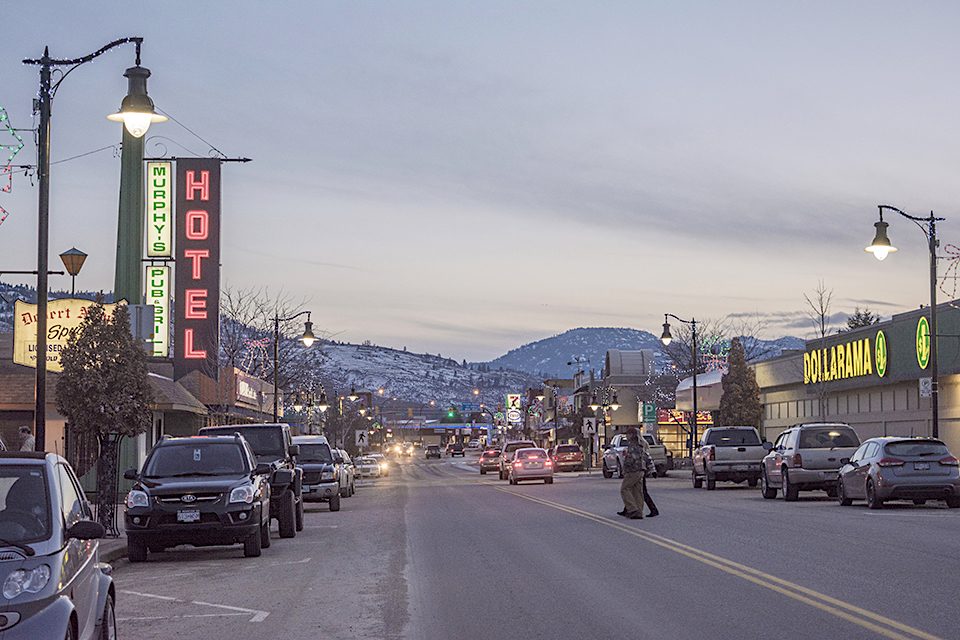
Other large projects include plans for Kootenay Street upgrades, which include water, sewer, and road work, currently planned for 2027 at a cost of $3,865,000. The plan also includes the Main St. revitalization project planned for 2025 with a price tag of $2,536,000.
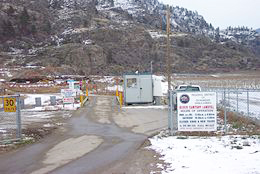
One large project that will be upcoming in 2024 is the Co-op Ave. project. This project will see curbs and gutters, as well as storm and black water drainage installed on the North side of the road.
The project will also see a three-way stop installed at Station St. and Co-op Ave. due to all BC Tree Fruit’s trucking routes being redirected down Co-op Ave.
Of the $1,370,000 that the project will cost, $450,000 of it is being paid for by BC Tree Fruits.
Councillor David Mattes expressed some discontent with not having a clear comparison to last year’s plan indicating what exactly has been changed, added or removed this year.
Mercer explained that more detailed information will be included at the Dec. 4 meeting.
Wayne Anderson, chief administrative officer, explained that “we just wanted to highlight what we think are some critical projects, these are kind of the ‘p-ones’ and ‘p-twos’ out of the priorities, we don’t have any fluff in this budget for the five years.”
Mercer explained that 60 per cent of the town has aged-out infrastructure. Further noting that around 60 per cent of the water infrastructure is Asbestos Cement (AC), “which is basically all aged out”.
He continued to say that “there is a lot of infrastructure that needs to be replaced. Is it absolutely critical yet? No. But it is definitely approaching and there is a lot more work to do.”
Mayor Martin Johansen praised Mercer for the work he put into the plan.
“Kelly is our new director of operations and I think he has taken the reins on our operations and he has looked at what the projects are and is providing some excellent feedback and input on this and I think he needs kudos. I think that’s what we needed as well, a reset on our five-year capital plan and this is a start.”
Mattes agreed with Johansen’s sentiment, saying that he is in agreement with the list provided while adding “now it just becomes a question of where the funding comes from”.
During the discussion, points were raised about how often these plans change over the years, and in particular the cost of projects.
Councillor Petra Veintimilla explained that during her tenure it seemed like they were looking at a different version of the plan every 18-24 months.
Kurvink explained his philosophy behind the five-year plan, saying that “in my opinion, it really has to be a living document, and the pricing has to be rejigged every year . . . I think council is going to see that those prices are changing.”
The plan presented to council included the guiding principles of mayor and council which Kurvink explained was taken into consideration when deciding on priorities.
These include principles such as Oliver being “open for business”, “downtown is more healthy through revitalization”, and “council decisions will be based on business cases” to name a few.