By Don Urquhart, Times Chronicle
Osoyoos now has in place scheduled fire and life safety inspections for local businesses, public buildings and motels/hotels, a situation that previously may not have been fully meeting provincial requirements.
These inspections are a requirement of the Fire Services Act (FSA), which states: “A municipal council must provide for a regular system of inspection of hotels and public buildings in the municipality.”
This requirement is also stated in the Community Charter but really gets its teeth from the FSA.
The Times Chronicle understands that previously, fire inspections were carried out in a more ad hoc manner which may not have fully satisfied the requirements of the Act.
These efforts to fully comply received a boost with Robert Huttema joining the department as Deputy Fire Chief of Fire Prevention effective June 27 this year. Huttema filled the position vacated by Tyler Hilland.
In presenting the proposed policy to town council, Osoyoos Fire Chief Corey Kortmeyer noted that efforts to get to this point have been “ongoing,” hesitating before adding, “I don’t like to look in the rearview, I like to look at the front windshield.”
Kortmeyer stated: “It’s been an ongoing effort and this sets the goal posts moving forward and now all the public buildings identified within the Town of Osoyoos will have this frequency and this is just the minimum.”
If deficiencies are identified, Kortmeyer said Osoyoos Fire Rescue will work “collaboratively” with those owners to make sure they achieve BC Fire Code compliance. Again alluding to the previous situation, he said, “historically I can’t speak to that because I wasn’t here but this is something mandated by the Fire Services Act.”
The policy was unanimously adopted by council.
Out-of-area coverage
Osoyoos now has an official policy for fire and rescue response when the department is called to an incident out of its defined service area.
This area covers not only the Town of Osoyoos but some contractual areas such as parts of Osoyoos Indian Band and areas within the regional district.
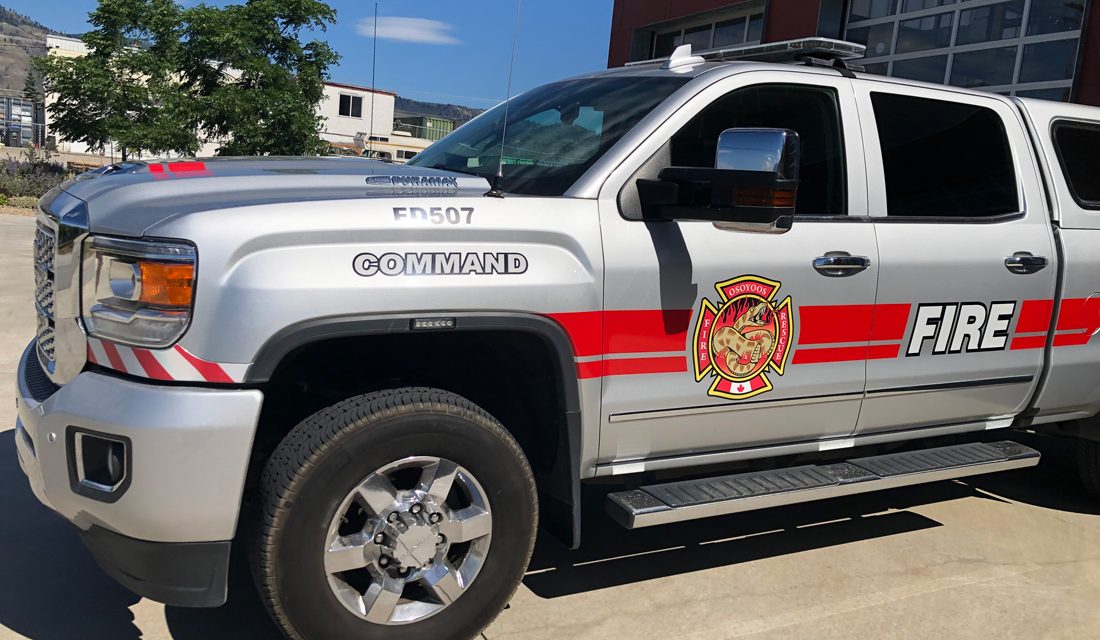
Kortmeyer noted that Osoyoos Fire Rescue has available resources and personnel to provide life safety services (EMBC Road Rescue), mutual aid responses, and initial attack for a wildfire or interface fire in areas outside its designated fire protection and rescue areas.
But the fire department has not had a formal approval process for leaving its boundaries to fulfill mutual aid agreements, contractual agreements and other life safety emergencies.
Historically, approvals meant calling the CAO or acting CAO for information, direction, or even seeking mayoral approval. This approval process can cause delays in emergency response, potentially reducing operational effectiveness. There are times when “seconds or minutes really count,” Kortmeyer added.
The fire chief also cited last summer’s intense wildfire activity including the Nk’Mip Creek wildfire which directly impacted Osoyoos and exemplified many of the problems associated with not having such a policy in place.
“A policy provides a regular system for emergency responses outside of our protection areas,” he pointed out.
To allay any concerns that these out-of-area responses might diminish the department’s coverage of Osoyoos, Kortmeyer said: “Our finite focus, 100 per cent, is on the protection of taxpayers and residents. So if ever equipment and personnel go out-of-area we are making sure we have the personnel that is available to respond within the town, for town emergencies, prior to anything leaving.”
Kortmeyer added that in general when OFR leaves the community, “it’s with our Engine 193 which is our reserve engine and this does not affect things like our pumping rates or anything our fire underwriters would consider a threat to the town.”
While there has not been a specific policy, the ability to go out-of-area has been governed by the requirement to be given a specific control number for road rescues, known as an EMBC number, or similarly from the B.C. Wildfire Service.
“Without these numbers, we do not leave our boundaries,” he said, adding that with the issuance of these numbers liability and work safety issues are automatically covered.
He also noted that when fire departments offer their services for wildfire activity the BCWS prefers participation of up to 10 days at a time and not simply a day or two. Any out-of-area activity lasting longer than 48 hours requires approval from the Town’s CAO and/or the mayor, he added.
The policy was unanimously adopted by council.