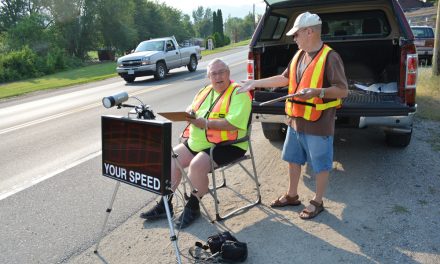

Town of Osoyoos council has sent a letter to Naomi Yamamoto, Minister of State for Emergency Management, about their concerns about proposed changes to the province’s Emergency Programs Act, specifically provisions that would allow the Minister to arbitrarily alter local emergency plans and allow police to forcefully remove citizens during declared states of emergency. (Richard McGuire file photo)
Town of Osoyoos council is upset with proposals that would give the provincial government arbitrary control and allow police to forcefully remove residents from their homes during declared states of emergency.
Council voted Monday for Mayor Sue McKortoff to send a letter voicing their concerns to Naomi Yamamoto, the Minister of State for Emergency Management, objecting to the two proposals in a recent discussion paper on changes to B.C.’s Emergency Programs Act.
Proposed changes would give the minister the right to arbitrarily order a local authority to change its emergency plan and allow police the right to apprehend anyone who resists an evacuation order during a declared state of emergency.
McKortoff and members of council also objected to the province’s timeline for responding to the discussion paper, saying they received Yamamoto’s proposed changes the second week in January and must respond in full by this Friday.
Naomi Yamamoto issued a Discussion Paper on the Legislative Framework for Emergency Management in British Columbia on Jan. 11.
In a staff report to council on Monday, it was revealed the discussion paper has been sent to all local governments across the province so they can provide feedback through an open consultation process.
After reviewing the discussion paper, town staff suggested the two proposed amendments to the current legislation may have significant impact on the town and its citizens and warrant further questions to the province, said Janette Van Vianen, the town’s director of corporate services during a presentation to council on Monday.
“Firstly … ministerial authority to direct emergency planning. It is being considered that the Act be amended to provide the addition of authority for the Minister responsible for the Act to make an order requiring a local authority to change its local emergency plan where the Minister has reviewed the plan and recommend modifications,” she said. “This is quite concerning.”
The reasons for concern are that most, if not all local government should have their own emergency plan already completed based on the needs of the area and what the risks and hazards are for that community, said Van Vianen.
The proposed amendment to give the Minister authority to require a change to the local government’s emergency plan does not give specific reasons as to when or why this requirement can be made so basically it appears to give “arbitrary empowerment”, she said.
A change to an emergency plan could be costly and take significant staff time depending upon the changes being required, which could be very taxing on smaller municipalities, she said.
There is also no mention of an opportunity for appeal or further consultation with the local government before an order to change the emergency plan is made.
“It appears the province does not have faith in the local governments to have plans that are specific to the needs of their communities,” she said.
Currently, the Minister has the authority to review and recommend changes to a local emergency plan.
The concern is that the Minister does not have authority to require that a local authority make changes to their plans in situations where a co-operative approach has not been productive to address a significant issue with the plan.
“If the province insists on having this authority, there should be clear guidelines as to when the order can be made and giving timelines that are reasonable to comply with these orders,” said Van Vianen. “For instance, it would be unreasonable for the Minister to order a change to the plan to be completed in a two-month period, especially for a small municipality. It would also be a budgetary issue, which would mean an order should give the local government at least one more year to comply.”
The second concern relates to evacuation orders.
The proposal by the Minister is to consider adding authority for police to apprehend any person who refuses to comply with an evacuation order issued under a declared state of emergency for the purpose of taking the person to a place of safety.
This includes giving police the right of entry and use of reasonable force to enforce the evacuation order and limit the period of apprehension to be no longer than reasonably required to take a person to a place of safety and authority for the province (in provincial emergencies) to order a person who was apprehended to pay the costs incurred by police in taking the action to enforce the evacuation order, she said.
Reality is some people prefer to stay near their homes to tend to animals and livestock to ensure security taking on the risk that they may not be able to get out, she said.
“If the action is taken, what are the resources required to ensure the security of all properties affected and how will this impact the liability of local government should there be a breach of security of the properties during an evacuation and a person was forcibly removed from their property?” she asked.
“How will the province or local government collect the costs that are to be paid by the person apprehended?”
There is also no clear explanation if mental health issues were the cause of having to apprehend someone rather than them leaving on their own accord, she said.
“There seems to be some legal implications that were not addressed and likely warrant further review,” she said. “This makes sense if there was immediate peril to the resident not wanting to evacuate, however, if this apprehension can be made before there was immediate peril to the person, at what point should it be done?
“The other changes being proposed to the Act do not appear to have enough affect to address in this report. The two items being brought forward are for council information and consideration as to whether it wishes to provide comment on either the proposed new Minister powers or to the proposed evacuation order changes.”
Council voted unanimously to send the sharply worded letter to Yamamoto voicing their concerns.
“We hope that you will take these concerns into consideration and further review the two issues we have commented on,” says the letter signed by McKortoff.
KEITH LACEY
Osoyoos Times