By Don Urquhart, Times Chronicle
This is part two of a two part series on the battle to keep invasive mussels out of B.C. waters.
B.C.’s Invasive Mussel Defence Program was tested to the extreme this summer when a massive barge laden with invasive zebra mussels made its way from mussel-infested Ontario waters to the Lower Mainland.
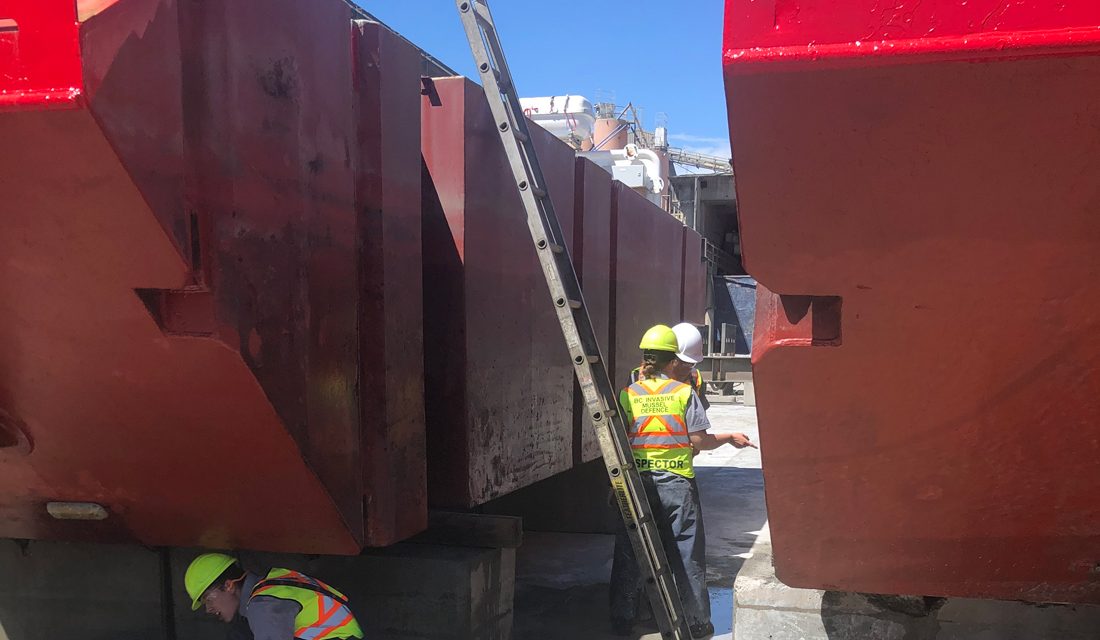
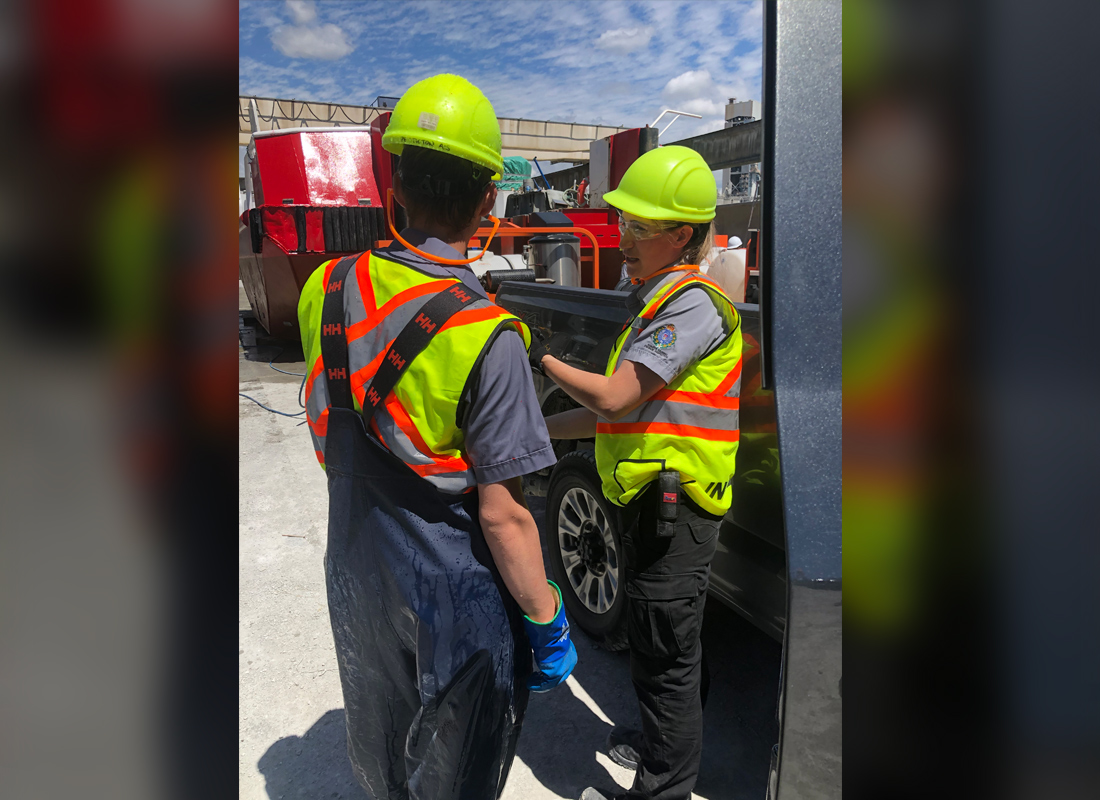
“It’s the biggest one I’ve ever dealt with,” said Rebecca Benham, Aquatics Invasive Species Inspector with the Conservation Officer Service, Ministry of the Environment and Climate Change Strategy. “Three days, seven inspectors blasting with three power washers,” she said of the nearly 10-hour days that went into the decontamination.
Indeed when the two 12 metre barge pieces were finally identified, corralled and redirected to a Richmond warehouse for full decontamination it was apparent that extra resources were needed. This saw Benham and Sgt. Josh Lockwood, NCO North Okanagan Operation, Conservation Officer Service, Ministry of the Environment and Climate Change Strategy, both based out of Penticton, travel to Richmond to assist.
Lockwood adds: “it was the biggest decontamination I think that anyone in the western states and western Canada has done.”
“It was a big, big job,” Benham said, and “we started out by doing a pressure wash on the outside getting all the little ones we could.” But there were complications.
Parts of the barge were like a radiator, she said, and when the hot, high pressure water was used it just pushed the mussels further and further back out of reach and out of sight.
Heating coils that were part of the barge were turned on reaching temperatures of 104°C and this killed a great number, she said, adding the dead mussels littered ground under the barge.
“We had to be sure the barge had no live mussels on it and in order to accomplish that we had to get inventive,” Lockwood notes.
Because the barge could handle very high temperatures the invasive species inspectors turned to a “tiger torch” which is a large propane blow torch which had never been done before.
And because they could not visually confirm that the barge was clear of mussels, it was quarantined for a further 10 days, just to be sure.
On the front lines of the invasive mussel war
Lockwood highlights that the decontamination was “a big cost to the government” and it’s still under investigation he said, elaborating that it may be forwarded to prosecutorial services.
“It should’ve been decontaminated at the point of origin,” Lockwood said. “Once it came out of the water in Ontario it should’ve been done, that’s the law for all boats coming out of Ontario.”
He explains that even though watercraft may be on dry land, there could be an accident on a highway that sees the watercraft going into a river or a lake, with disastrous results.
He also adds that its illegal both federally and provincially, to transport mussels between provinces.
One thing Lockwood foresees is licensing for watercraft. Currently there is federal registration but no fee and no annual provincial license requirement. He notes that Washington State, for instance, requires a license for their boats, with the fees going to fund their invasive species programs.
“If it gets to that situation where we don’t have the money to hire staff, it may be necessary to look at licensing like we do for motor vehicles,” where fees go to maintaining roadways.
The natural question for the two is whether it’s just a matter of time before the mussels make it into B.C. waters?
“I believe we will keep them out,” Benham said. “This program has been around for six or seven years now and we still don’t have any mussels and there’s a lot more people moving boats around
As for Lockwood: “We’re doing what we can and I don’t think it’s a matter of time if we can maintain the standard pre-COVID. If we get the staffing, if we can maintain our 2019 staffing levels I think we can do it.”
Ironically it’s not about the funding, it’s just “hard to find people to work,” he added.
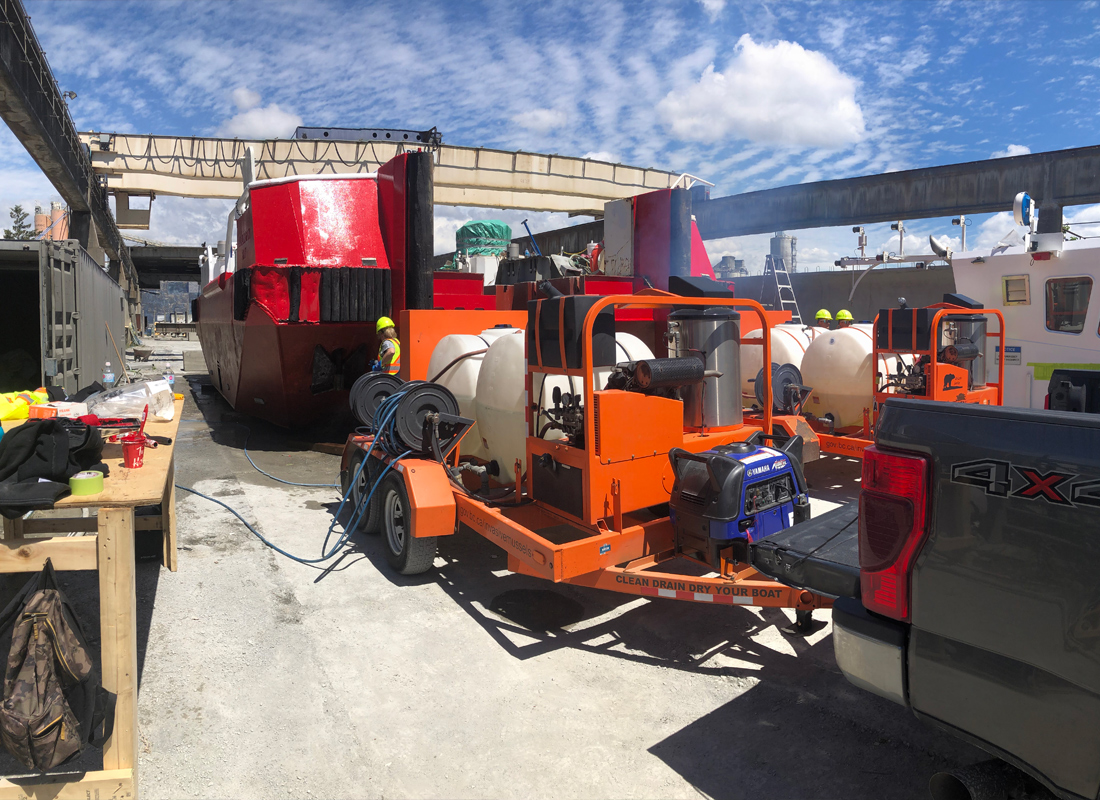
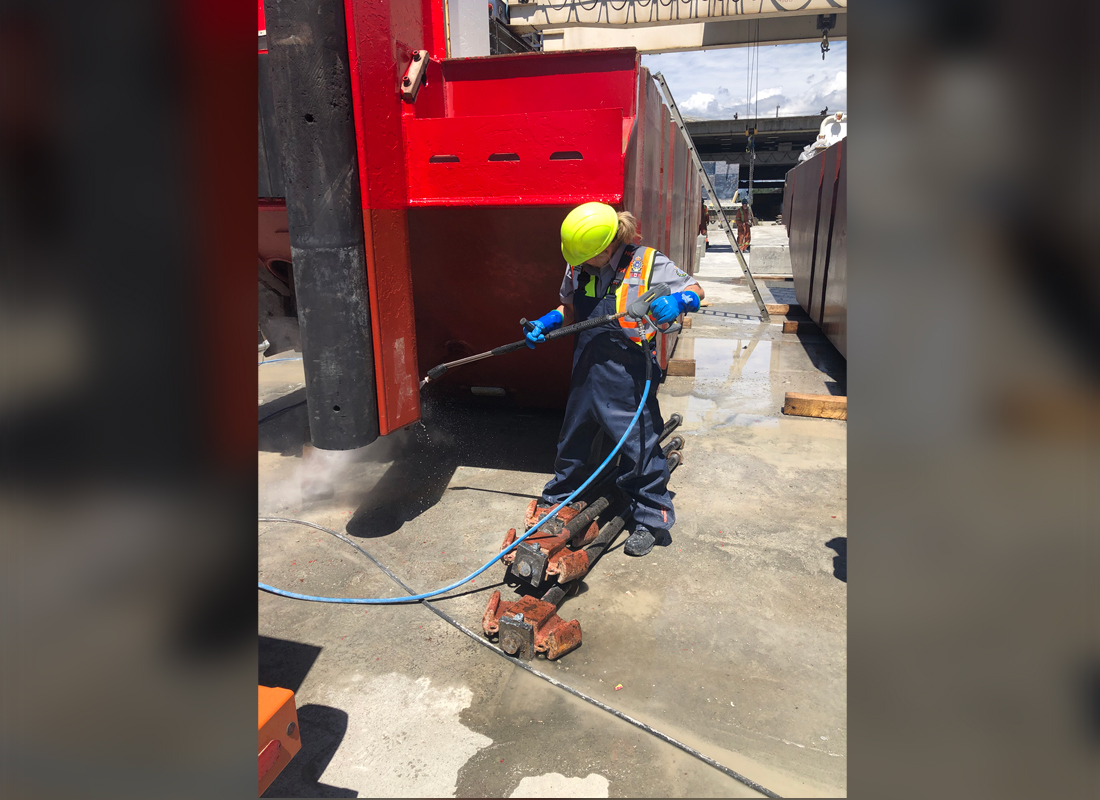
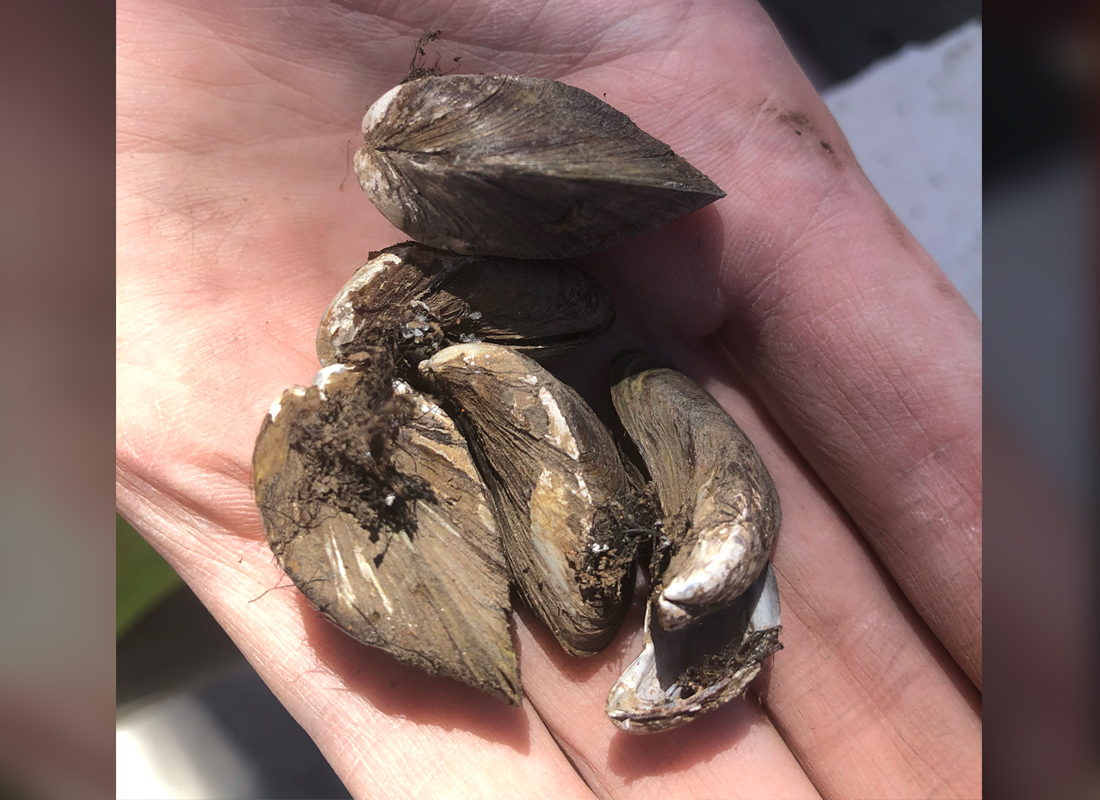
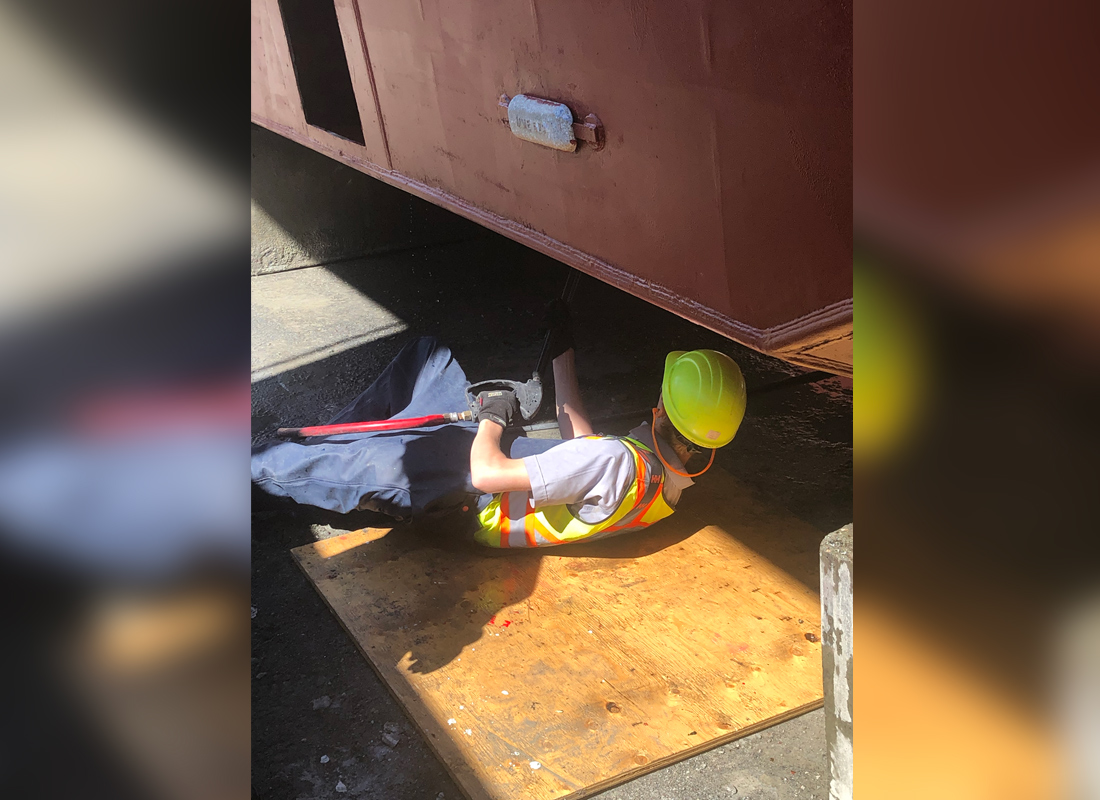
The barge, in two sections, was contaminated with thousands of invasive zebra mussels after being transported from Ontario without proper decontamination at point of origin.
Submitted photos