By Madeline Baker, Times Chronicle
Nearly $100,000 of emergency preparedness funding has been granted to the South Okanagan region by the provincial government to improve and update Emergency Operation Centres (EOC) in the area.
The funding is part of a larger $3.2 million “building back better” initiative, according to a statement from the provincial government. This money will be shared between 84 First Nations and local governments “to strengthen defences to make sure people across B.C. are protected from future disasters.”
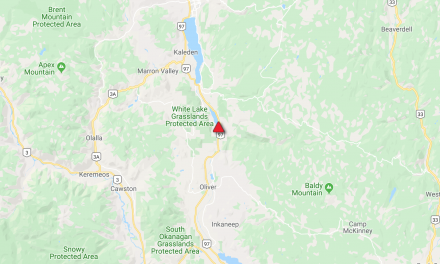
Locally, the Regional District of Okanagan-Similkameen (RDOS) joins Summerland, Keremeos, and Oliver in sharing $99,130 for joint training and updates to their equipment and communications technology.
In terms of equipment, Oliver’s corporate officer Diane Vaykovich told the Times Chronicle that dedicated landline phones are the top priority for the Town’s EOC, along with headsets and any necessary wiring upgrades.
“For Oliver’s EOC it has been clearly identified that communication is compromised without a dedicated telephone system,” said Vaykovich. “Currently staff are relying on cell phones … and the noise volume increases with so many people in a room talking at once on their cell.”
Vaykovich also pointed to TVs or Smart Boards as possible future investments for the Oliver EOC, which would be used to display up-to-date provincial and regional emergency dashboards during times of multiple disaster events.
Along with these technological improvements, the funding will also be put toward training initiatives requested by Emergency Support Services (ESS) volunteers. “There are EOC refresher training sessions, cultural safety and cultural humility training sessions, and a full-scale multi-jurisdictional exercise planned,” said Vaykovich.
The RDOS applied for this funding to support new training initiatives after volunteers specifically requested cultural humility training in 2020, as they felt they were not equipped to offer the best possible emergency services to victims from a wide variety of cultural backgrounds.
In addition to that concern, the online evacuee registration platform (ERA) that was added to the EOC registration process in 2020 as part of a massive modernization effort proved complicated to operate, leaving many volunteers trying to direct disaster victims through software they barely understood themselves.
Vaykovich celebrated the Town’s current 15-member team for their hard work and dedication in recent training sessions, calling it a “momentous feat to update their tremendous skills … in a very short turn around to be ready for this upcoming wildfire season” when ERA 2.0 was developed.
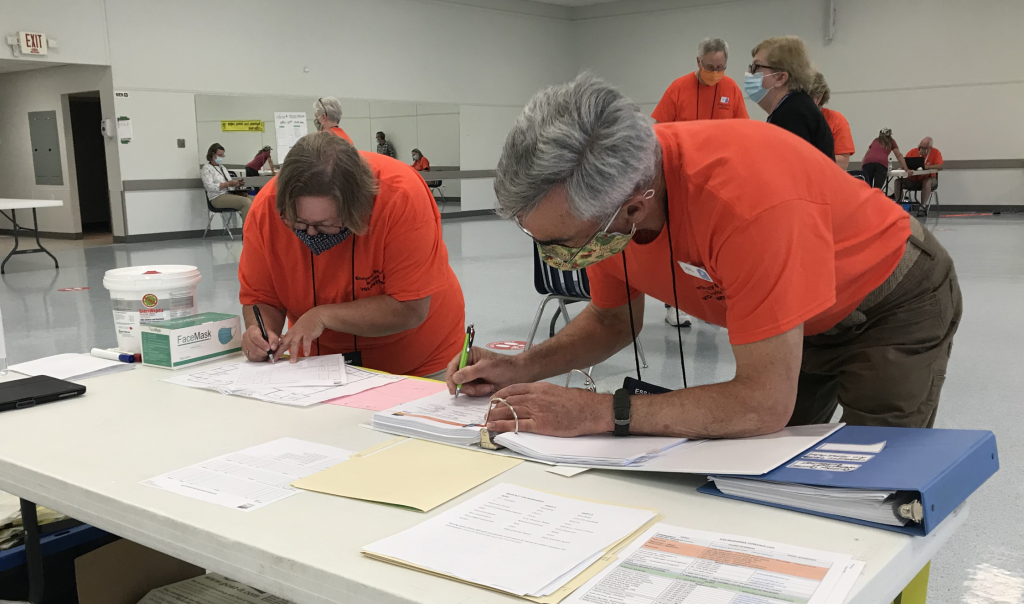
ESS volunteers during training.
She also invited Oliver residents to join the ESS team, describing them as “the first front- facing people that support people ordered from their homes” during an emergency and calling the work a “rewarding and challenging volunteer role.”
Osoyoos, along with Princeton, will also receive $25,000 for upgrades to their EOC computer network, which Director of Operations Jared Brounstein said will “improve the [Osoyoos] EOC’s readiness, by being able to activate an EOC in a timely and efficient manner.”
Boundary-Similkameen MLA Roly Russell was pleased to hear about the funding that has been allocated to his constituents, though his optimism was understandably tempered by the gravity of many past events that led to its necessity.
“Over the last few months, we have all been clearly reminded of the importance of reliable safety infrastructure,” said Russell. “This funding will help lower our risk from future disasters by providing dedicated equipment, technology, and training, in order to ensure that people and their families have the resources needed to stay safe.”