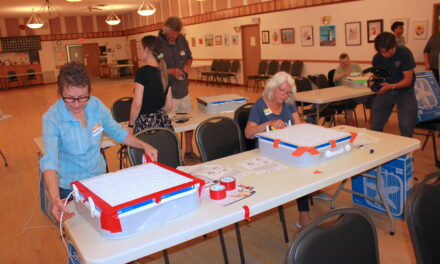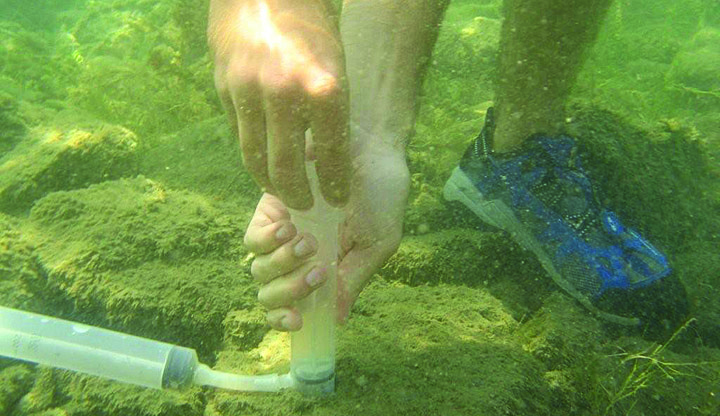
Researchers collected water and algae samples from Osoyoos Lake last July as part of an effort to study how the planned Northwest Sewer Project affects the health of the lake. Photo submitted - Click on picture for larger image
OSOYOOS TIMES-January 6, 2010
By Laurena Weninger – Osoyoos Times
A study of algae in Osoyoos Lake is designed to provide a “before and after” look at the impact of the new Northwest Sewer System on the quality of the lake water, explained Mark McKenney, president of the Osoyoos Lake Water Quality Society.
“The purpose of this study in part is to take a snapshot in 2009 of certain locations of Osoyoos Lake,” McKenney said, adding the society is mostly curious about the part of the lake that will be most directly affected by the sewer extension. “Our interest was the north basin.”
The B.C. Ministry of Environment, the Okanagan Basin Water Board and the society have partnered together to do the study, for a total cost of $13,500.
It involves the chemical and visual analysis of algae collected from the water.
Samples of lake water were taken in July by the ministry and the University of Waterloo.
The bottom line is that studying the algae can offer information about the health of the lake.
“You can use algae, that scummy green stuff we see around lakes, to determine if high nutrient seepage is getting into the water,” McKenney said.
Nutrients in the water come from several sources, including agricultural bi-products like fertilizers, as well as seepage from septic systems that were built previous to current standards.
It all contributes to poor water quality.
“Lakes age naturally,” explained McKenney. “If there were no people, there would be a natural progression of the lake’s aging.”
That would mean it would gradually, over millions of years, get cloudier and there would be more plant life growing.
But when you introduce people into the situation, the health of the lake is more dramatically affected.
Nitrogen and phosphorus levels increase more quickly, as do the algae levels.
The primary priority of the Okanagan Basin Water Board is to reduce such nutrient levels in the Okanagan basin lakes, McKenney explained, and the number one method, so far, of reducing those levels is with municipal sewage treatment plants.
Several lakes in the Okanagan water basin are having their algae tested, including Skaha, Okanagan, Kalamalka and Wood Lakes.
A report on the study is expected later this spring and the data will be kept for comparison to future studies.
[email protected]