By Sebastian Kanally, Times Chronicle
The Regional District of the Okanagan-Similkameen (RDOS) is still considering how strong the wording should be on discouraging the development of private water and sewer systems in the region.
The local authority has been considering its options on prohibiting private utility systems since 2023, and the Planning and Development Committee is getting closer to shaping its new regulations discouraging the development of these systems.
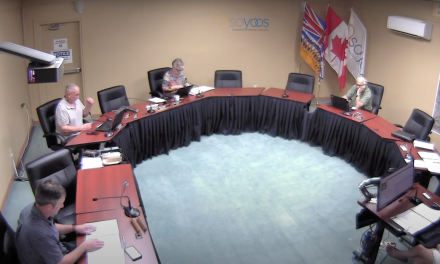
At their February 6 meeting, the committee moved for staff to bring a recommendation to the next meeting for consideration as some directors were already willing to move on the issue.
Despite some pushback and disagreement among directors, this opens up the road for these prohibitions to soon become a reality.
These new prohibitions will take shape by changing the wording of zoning bylaws and servicing bylaws.
Currently, the RDOS Regional Growth Strategy (RGS) encourages publicly operated utilities and services when creating new housing developments.
The Official Community Plan (OCP) Bylaws discourage the development of private systems for water and sewer systems as an objective, and the actual policy “strongly discourages” the creation of new private community sewer utilities.
Despite these policies and objectives, Chris Garrish, planning manager for the RDOS explained that there is a gap in the zoning bylaw.
“Despite having the policy documents that speak to not encouraging private systems, there is no corresponding regulation in the zoning bylaw at this point,” he explained.
On top of this, Garish explained further that the Subdivision Servicing Bylaw, “while it does speak to defining what a “community sewer system” is, it does consider those at the moment to include strata corporations.”
The last time this topic was before the committee for consideration was August 15, 2024, where discussion was deferred in order for staff to be available to answer directors’ questions.
Garish explained that there is still “strong rationale” for the board to regulate in favour of publicly operated systems versus those operated by business or strata corporations. And these potential changes to “prohibit private and strata systems” should be applied regionally.
One of the main consequences of this could be more pressure on the Regional District to assume ownership of new systems in order to facilitate development which some directors may not support.
It was noted in the discussion that this should not be confused with the acquisition policy. The difference is that the Regional District would own these new systems from the beginning so that they can plan rates accordingly to put away reserves and be able to maintain them properly.
RDOS staff explained that they want to make sure “property owners don’t face the situation we are facing today where we have to spend tens of millions of dollars now because they haven’t been putting away money for the past number of years”.
This means that the potential prohibition will be on all new private systems and won’t impact already existing systems.
Garish was also sure to explain that “nothing is ever really truly prohibited because under the act property owners always have the right to come to you as a board and submit an application and ask you to set aside that regulation in the context of their particular property”.
In that situation, a Development Variance Permit (DVP) would be presented by the board and staff would then ask questions of the nature of the system and its operation going forward.
The continued operation of water and sewer systems and their potential for deterioration would be addressed at the beginning, instead of the RDOS being approached later to take on failing systems.
“If you did have concerns about that system, you would either be looking at preventing it from ever being created in the first place or request or require that it be turned over to the Regional District.”
It was also brought up that these new prohibitions could be used to get the developer to pay for the installation of systems, which would then be handed over to the RDOS.
Garish explained that this is definitely a possibility and has already happened, for example with the development at Twin Lakes.
“The developer in order to undertake phase one of development, would construct the water and sewer systems, and as soon as it was constructed turn it over to the Regional District as their asset and would operate and maintain it going forward,” Garish explained.
Some directors explained that they still take issue with the planned prohibition for various reasons.
Tim Roberts, director FOR Electoral Area “G” rural Keremeos expressed his worries around Regional District overreach and the RDOS becoming a utility regulator instead of something like provincial oversight.
RDOS staff will bring a recommendation to the next meeting of the Planning and Development Committee.