By Lyonel Doherty
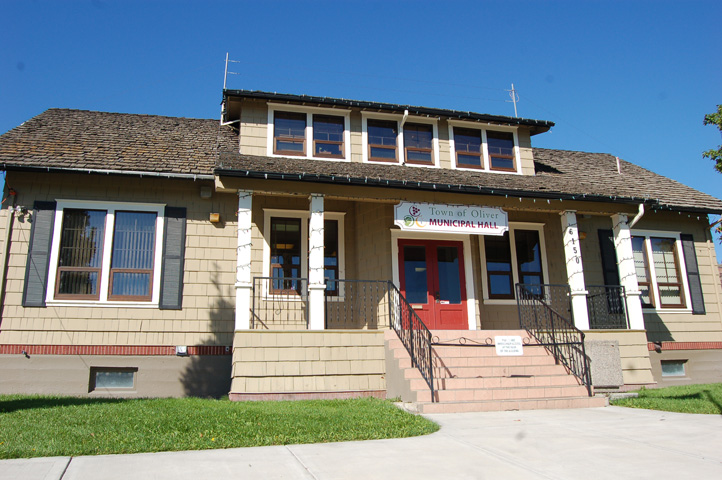
Unlike Osoyoos, the Town of Oliver won’t have to pay 70 per cent of policing costs, according to latest census data.
Statistic Canada shows that Oliver reached a population of 4,928 in 2016, up 2.2 per cent from 2011 when the population was 4,824.
The census took place in May 2016 before the Okanagan Correctional Centre was completed.
Municipalities that surpass 5,000 population must pay 70 per cent of their policing costs.
The Town of Osoyoos surpassed this threshold by 85 people in 2016, meaning its residents are on the hook for higher policing costs. Osoyoos’ population in 2011 was 4,845.
Oliver Mayor Ron Hovanes said the province previously indicated that the town would not be going over the 5,000 threshold.
“We can breathe a little bit now,” he said.
But the mayor said Oliver council will need to have a “tough discussion” going forward.
“There is a strong case for raising taxes every year in preparation for going over (the 5,000 mark)”
Hovanes said this would create a reserve that could be spread out over a few years.
“It would put in place part of a needed overall tax increase when we do go over 5,000 rather than having a huge increase in one spike.”
Hovanes said he feels bad for Osoyoos, but noted that surpassing 5,000 people was inevitable in that town.
Although Oliver dodged the bullet this time, the mayor is wondering how much the Gallagher Lake siphon project will end up costing the municipality.
Councillor Larry Schwartzenberger said he’s glad to see that Oliver stayed under the 5,000 population mark for now.
“I think we were lucky that the census was taken on May 10, 2016, which was before most of the new hires working at the Okanagan Correctional Centre would have arrived.”
While Schwartzenberger agrees that the next census in 2021 will probably put the town over 5,000, he has lived in Oliver for 25 years and people were talking about going over 5,000 when he arrived in 1992.
He said a town that is growing offers more opportunities for businesses to grow, more housing developments and an expanded tax base to help pay for extra policing costs.
The councillor said he is hopeful that the Town of Oliver’s resolution for a more gradual policing cost formula for municipalities exceeding 5,000 in population will get some traction with the provincial government.
“I had a meeting with MLA Linda Larson prior to Christmas about this issue and she indicated that it would be brought forward to the appropriate ministry.”
Schwartzenberger said that when Larson was the mayor of Oliver she forwarded a similar proposal on graduated policing costs to the province.
“I am confident that she will do her best to push this issue forward.”