By Sebastian Kanally, Times Chronicle
The Regional District of the Okanagan-Similkameen (RDOS) will begin the process of implementing universal water metering in all water systems they own and manage.
The RDOS board decided to go ahead with preparing a detailed universal installation plan on Feb. 22 which will focus on residential users and not agricultural water users.
Shelley Fiorito, project coordinator of the RDOS utilities department and lead on the universal metering plan explained to the board that the systems across the RDOS need to be assessed for efficiency improvements.
Fiorito explained that “one of the easiest ways to address the overconsumption and pressures on our systems is to implement metering.” She further claimed that metering is proven to reduce residential use by 30-45 per cent and this reduction can extend the lifespan of infrastructure and improve resilience to climate-related fluctuations.
Another prompt for the RDOS to implement metering, Fiorito said, is they are not seeing a reduction in use when implementing water restrictions in the summertime, and without water meters, it is impossible to assess.
The RDOS has 10 water systems across the region and only one is fully metered. Within these systems, there are around 3,200 connections to residential users which will be the focus of the first phase of the project.
Marty Van Alphen, director of the District of Summerland, asked why, if agriculture is the largest consumer of water, is the plan to begin with residential consumers.
Fiorito responded that when it comes to agricultural users the RDOS does not own or control a lot of the connections. She also pointed out “We don’t want to inhibit food security in the region.”
“Residential outdoor use is the second highest category of water use within the region, so we can definitely influence outdoor water use as far as landscaping is concerned and that’s what we are targeting more than addressing agricultural use,” Fiorito continued.
When asked how much the installation of these meters will cost, Fiorito responded that while it will vary depending on the property, “today our estimate is probably $3,500 per connection.”
Rick Knodel, director of area “C”, explained to the board that because of this cost, he will be asking for a postponement for Willowbrook due to it being a predominantly low income area.
Fiorito explained that in the proposed budget attached to the report, the cost of the meters would be put into the Gas Tax for the area and paid for over numerous years. Further explaining in a place like Willowbrook it may take 10 years to fully install all the meters.
This would result in $17,000 in cost for 2024, $20,000 for 2025, and $30,000 for 2026 through to 2028 and possibly longer.
The report notes that there are several possibilities for funding the project, such as capital reserves, gas tax, or grants. But Fiorito explained there are no such grants open right now.
Gallagher Lake water system is being categorized as “to be determined” since the water system is not entirely owned by the RDOS. The RDOS owns and operates only a domestic distribution system along Gallagher Lake Frontage Road and is in agreement with the Osoyoos Indian Band (OIB) and Senkulmen Utilities Ltd.
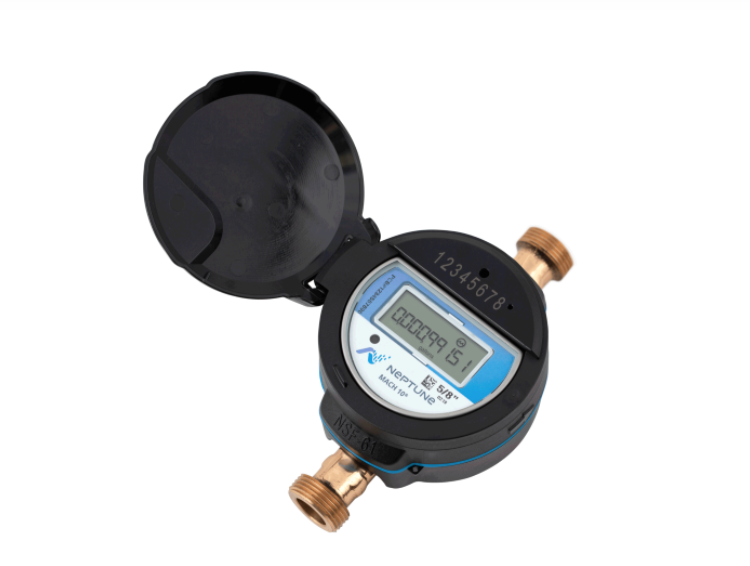
Meters will be installed in the ground at the frontage of the property for easy access by RDOS staff and operators. The RDOS currently uses Neptune Technologies for their meters and would like to continue using them because they are “reliable and familiar”.
Fiorito explained that there are two different processes by which meter readings are taken which will have to be decided on when the plan comes back to the board.
The first option is automated meter reading (AMR) which requires an operator to drive past each meter monthly using a portable unit to wirelessly attain the data. This means that leak detection alerts would be received at the monthly readings. This is the method the RDOS currently uses.
The second option is advanced metering infrastructure (AMI). This is a more advanced system which is fully automated. Receivers are installed throughout the community and readings are received in regular intervals every 15 minutes as opposed to monthly.
Installation of the meters would be in phases over the next several years and would prioritize some systems first based on their size, overall consumption, age of infrastructure and capacity of the system.
After the installation of the meters, the RDOS plans to introduce a tiered billing structure. This billing structure is intended to encourage residents to manage their consumption independently.
Fiorito explained that during the first 12 months, the RDOS would use a mock billing period to allow residents to adjust their use to reduce consumption and become familiar with the structure.
The discussion on the cost of implementing these meters also led to some councillors expressing support for a policy change in the future that whenever the RDOS acquires a water system, universal metering be built into the cost of acquisition.