By Don Urquhart, Times Chronicle
The confusing issue of e-bikes and e-scooters on local roads was tackled in an information session organized by the Town of Osoyoos and the RCMP last week, with the significant turnout getting the ins and outs of what’s allowed, what isn’t and the big grey area in between.
Sgt. Jason Bayda, Osoyoos RCMP Commander noted that a large part of the problem is the fact that over the last few years e-bike and e-scooter products have expanded rapidly and legislation has not kept pace, leaving police to navigate the murky waters of enforcement.While the turnout was significant, far better than most public forums in Oosoyos, Bayda did express disappointment that out of the assembled audience there was only one parent of a school-aged child in attendance.
“I was really hoping this presentation . . . would garner a lot of attention from parents,” he said.“I kind of wish there were a lot of parents here too to learn more about safety for their children, or what’s allowed for their children,” he said. This is particularly the case given the rising number of e-dirt bikes that are not street legal and can be quite dangerous given the powerful batteries they often come with.
Presenting on the subject, the Osoyoos detachment’s newest member, Constable Sukhpreet Singh who was tasked by Bayda with becoming the subject expert on the matter began by highlighting the different categories of e-bikes.
According to Singh there are two main categories of e-bikes:
Light e-bikes:
- Use pedal-assist only (no throttle);
- Have a maximum motor output of 250 watts;
- Be limited to 25 km/h assisted speed;
- Be able to stop from 25 km/h in about 7.5 metres on level ground.
Standard e-bikes:
- Can use throttle and/or pedal assist;
- Have up to 500 watts of power;
- Are limited to 32 km/h;
- Should stop from 32 km/h in about 9 metres.
There are further requirements, for instance a child under 16 riding with an adult on an e-bike must also wear a helmet.
Children aged 14 and under are not allowed to ride e–bikes (both light and standard) and those aged 16 and under can only operate a light e-bike and not a standard e-bike.
The riding requirements are pretty much like any other bike he noted, “basically ride them safely, wear a bike helmet and make sure you know where you cycle. That means some sidewalks you can, but some can’t,” he said in reference to shared pathways for bikes, running and walking.
“Cycling on highways, this is a little bit trickier,” he noted added that different highways have different speeds at different points. In Osoyoos Main St. is 50 km/h but becomes 60 km/h and higher at various points. As e-bikes are not allowed on roads over 50 km/h this technically means you cannot ride an e-bike on a highway.
But stepping in to clarify, Bayda said: “We’re telling you what the legislation, what the law is, how it’s written today. Obviously we as police recognize that a regular bicycle, people ride them on the highways all the time, and they’ll ride them across Canada.”
The same goes for e-bikes he says citing the example of riding from Osoyoos to Oliver on an e-bike. “The law is set so you’re not riding in the lane. A lot of people take these e-bikes and they think, well, I can do, you know, 32 km/h on them now, so they’ll start riding right down the middle of the lane. That’s not what they’re meant for.”
He says riding on the shoulder, and not interfering with vehicle traffic, as standard bicycles do then there is no problem. “So again, talking about what legislation says doesn’t mean that that’s what we’re going to enforce,” Bayda added.

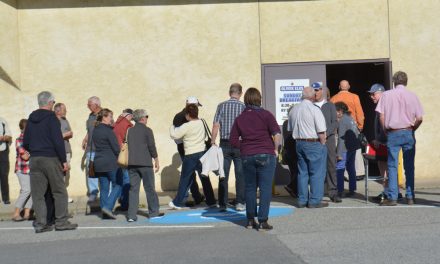
The e-bike information session organized by the Town of Osoyoos and RCMP.
Don Urquhart photo
Among the questions raised by those in attendance was why some retailers sell bikes over 500 watts. “They’re not supposed to,” answered Bayda. “A lot of bikes over 500 watts are sold for off-roading only.
“If you talk to a good, reputable bicycle shop that knows the laws for the streets, they should be telling you they will not sell you anything that’s over 500 watts for the roadway. And that’s the law.”
The other issue are e-dirt bikes which typically have batteries exceeding the 500 watt e-bike limit, sometimes reaching as high as 22,000 watts. These are not street legal and they are something Bayda says they will strictly enforce. These bikes are increasingly being bought for children and used on town streets, prompting what Bayda says is a “zero-tolerance stance”.
“If we can catch them… we’re going to impound that bike, because they are a severe danger to those kids, and they’re a danger to everyone else that’s on the road,” he said. The session also covered electric kick scooters, which are part of a four-year provincial pilot project currently active in Osoyoos and Oliver for another two years.
The legal requirements for e-scooters include:
- Maximum 500-watt motor;
- Maximum 25 km/h speed;
- Riders must be 16 or older and wear a helmet;
- Use of bells or horns to warn pedestrians when passing;
- Front and rear lights required at night;
- Use only on roads where the posted speed is 50 km/h or less.
Again complications arise where Main Street doubles as Highway 3. Portions of that corridor are technically highway but posted at 50 km/h, and certain segments, including the bridge, remain off-limits for scooters even within the pilot project. A map presented at the meeting highlighted these no-ride zones in blue.
Bayda said he has spoken with the mayor and CAO about reconsidering rules that restrict hotel-row rental scooters from safely connecting tourists to downtown shops via Hwy. 3/Main St. and the bridge.
“We’re a tourist town. People want to get from hotel row to the shops… Maybe we should allow them to ride those scooters, as long as we’re doing them safely,” he said, suggesting bylaw changes may be needed.
“Maybe we should allow them to ride those scooters, as long as they’re doing it safely. When it comes to policing we have a lot of discretion when it comes to the Motor Vehicle Act.
“I’m not a big ticket guy, never have been,” Bayda said. “I believe that education is number one, it is going to keep people safe. As long as people are being safe, riding safe, my officers aren’t going to be out ticketing people. We’re going to target the people that are being unsafe and putting other people their safety at risk,” he said.
Among the practical implications of enforcement Bayda said while helmet laws exist, his officers are not systematically ticketing everyone without a helmet as he would rather they prioritize property crime, violent incidents, and clearly dangerous riding instead.
Enforcement is tougher where risk is highest, he said reiterating the zero tolerance on e-dirt bikes and extreme scooter use in traffic. For borderline or technical violations, it’s up to officer’s discretion, he said.
Bayda also urged the public to note down the details of anyone they see riding dangerously and contact the detachment. “We can only deal with it if we know about it,” he said, acknowledging that sometimes the e-scooter riders will not stop for police because they can easily evade and out-maneuver a police car.
He did sound a positive note however, saying that often a simple conversation with the parents and kids involved resolves the situation. It was also noted that it’s not just kids who can be the problem, it’s also adults who are now buying e-bikes, in particular, in greater numbers.
Going forward the RCMP is planning on holding presentations at local schools and working through the Parent Advisory Committees. Bayda also noted they are happy to work with local bike shops and are interested in putting together a modern version of the old “bicycle rodeo” that for decades taught kids road safety.