By Don Urquhart
Sweeping changes to municipal zoning proposed by the provincial government to increase housing density across BC will likely spell big changes – and challenges – for Osoyoos and Oliver.
New legislation (Bill 44) was introduced in the BC Legislature last week in a bid by the government to address the worsening housing crisis.
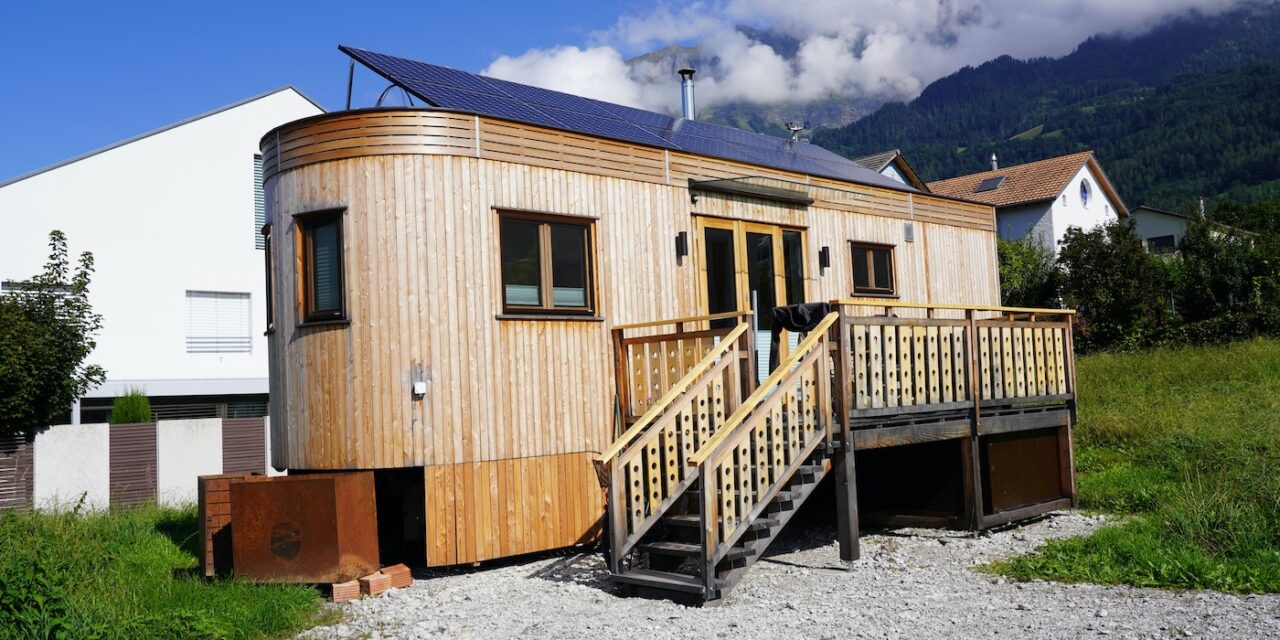
The aim is to deliver more small-scale, multi-unit housing for people, including townhomes, triplexes and laneway homes, and fix outdated zoning rules to help build more homes faster.
The province says its preliminary analysis shows more than 130,000 new small-scale multi-unit homes could be added over the next 10 years.
As a result, should the legislation be enacted, all local governments will be required to update zoning bylaws to permit one secondary suite or laneway home (accessory dwelling unit) in all single-family residential zones.
The Province will also require zoning bylaws to be updated by June 30, 2024 to permit small-scale, multi-unit housing such as triplexes and townhomes in municipalities of over 5,000 people.
Three to four units will be permitted on lots currently zoned for single-family or duplex use. The Province has indicated that lots smaller than 280 sqm (3,000 sq ft) will be allowed three units, and larger lots will be allowed four.
But in speaking to local officials the changes required to planning frameworks is likely going to be significant.
“It didn’t come as a total shock,” says Rod Risling, Chief Administrative Officer for the Town of Osoyoos. “The indicators were that they were going to be making changes to facilitate additional density on lots.”
The government hopes to pass the legislation before the end of the fall legislative session and this will be followed by regulations which contain the details with which municipalities will have to grapple with.
“The province is moving fairly quickly and they are informing us we’re going to have to be making changes to some of our bylaws by mid-next year but we don’t know all the details yet,” Risling says.
The proposed legislation will in most cases dramatically reformulate existing municipal zoning across the province. As Risling notes it will effectively double R1 single family dwelling lots into R2 zoned lots for two or more dwellings.
With Osoyoos in the middle of reformulating its zoning bylaws there is some relief that it hasn’t finalized the bylaws that have been worked on for nearly nine months.
“This will have an impact on some of that but the good news is it’s not finalized.” It is an opportunity to “clean up some of these things together” he adds.
For Randy Houle Director Of Development Services at Town of Oliver the changes will impact most lots in town as they typically are bigger than 280 sqm.
“We’re currently just reviewing the information from the province and seeing what the next steps are,” he said noting the province is coming out in December with what they call the Small Scale Multi-unit Housing Policy Manual and Site Standards.
This will provide key information on setbacks, parking, heights of buildings, etc. “I imagine they’re doing that so that municipalities don’t put their own wording around parking and what not in a way to circumvent what the province is trying to do.”
As to whether this is provincial over-reach into municipal affairs as some have suggested, Houle says he can only speak from a planning perspective.
“I can’t speak for council and what their views are, but from a planners point of view densifying in a municipality where there’s existing services is the best way to achieve housing.
“There’s definitely a missing middle and Oliver. We have apartments in Oliver, we have condos and we have single family homes.” What’s missing he says are the townhomes.
“There’s not a ton of rental townhomes and that’s really what this is trying to achieve, ground orientated three and four unit buildings.”
Oliver Mayor Martin Johansen on the other hand does see it as somewhat of an overstep into municipal affairs largely because there hasn’t been any conversations or process to determine what impact the different rules are going to have on different municipalities.
Similar to Rising’s comment, Johansen says they knew something was coming because of messaging out of Victoria which was reinforced at the recent Union of BC Municipalities (UBCM).
“A lot of communities have stopped their [Official Community Plan] OCP process because they knew it was coming.” And while it wasn’t exactly clear what would be coming down the pipe there was a general sentiment that it was better to put things on hold until it was clear.
“All of our little communities are different, we all know that,” he says. “When you have a blanket sort of zoning, with the province using their powers to impose zoning on our communities over 5,000 it’s going to have challenges for sure.”
Once the regulations are issued there will be no ability to intervene on specific issues he says. “If you have a lot of 3,000 sq. ft. and you put four units on it, there’s going to be no room for parking on that lot,” noting that many of the streets in Oliver aren’t wide enough to have parking on both sides.
He also highlights the issue of services. “If you densify a subdivision and the pipes in the ground aren’t big enough to handle additional housing units – the water requirements, sewer requirements, roads, sidewalks and all these things have to be to be thought of.”
The province has previously announced $51 million to support local government implementation of the proposed changes, with details to be announced in January/February 2024. Also available in the new year will be grants to assist in the necessary work to adapt OCP and bylaws to the new legislation and associated regulations.
From a real estate perspective Ken Davreux Managing Broker at Century 21 Premier Properties in Osoyoos feels it’s “a little too heavy handed but I think its going in the right direction.”
But he does point out it that the densification may not be well suited for all areas. “I think municipalities have to have the right to maintain the neighbourhood aesthetic or character.”
He cites the example of the Dividend Ridge subdivision near the Osoyoos Golf Course where it wouldn’t make sense to densify as compared to more central Osoyoos, in his view.
Putting a three- or four-plex in the subdivision wouldn’t fit the character whereas a carriage house probably would, he adds.
Overall he says the provincial government is rightfully pointing at municipalities and saying, “get your act together”.
“I think it behooves municipalities to look at themselves and for them to figure out what’s best. Local solutions are always better than ones brought down on high.”
His preference would be to improve densification by a prescribed percentage. “I think that would be a much better solution,” he says suggesting allowing laneway or carriage homes on certain properties and allowing six or seven micro-apartments on others. “There’s a lot of other solutions that aren’t being explored.”
As to what this might do to the real estate market Davreux says, “it’s certainly not going to hurt land prices quite honestly.”
Johansen agrees saying “you’re going to see certain pieces of property become more valuable.” And this he notes might well defeat the purpose of making a greater number of smaller units available to those trying to enter the housing market.
“Cost per door is a term you hear a lot and it takes into account all the servicing costs to service the lot, all the development costs and the cost of the land itself.
“So we’re getting smaller units, which today is a smaller price, but now all of a sudden, everything starts going up and those small units are more expensive, then we haven’t accomplished anything.” Much will depend on the uptake by developers he adds.