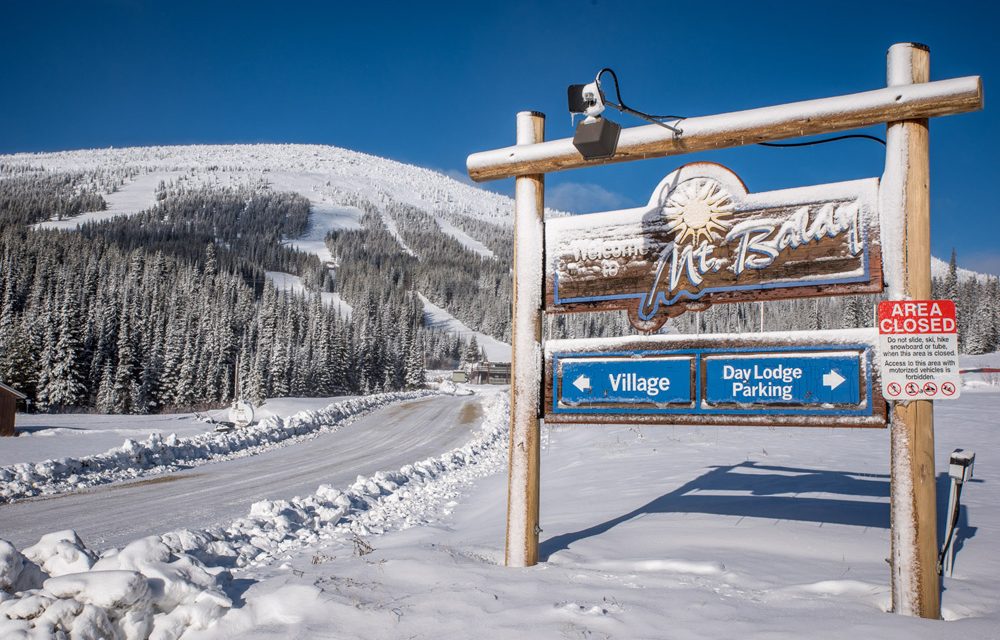

Saturday’s earthquake hit just north of Mount Baldy and rattled a lot of people in the South Okanagan. Richard McGuire file photo
The 4.0 magnitude earthquake that rattled many people from their Saturday morning sleep isn’t an unusual phenomenon in the South Okanagan, says an earthquake seismologist with Natural Resources Canada (NRCAN).
Alison Bird, a veteran earthquake seismologist with NRCAN, says the earthquake was centred east of Oliver and was felt from Lake Country south and east as far as Bridesville.
A 4.0 magnitude earthquake “would not be expected” to cause any significant damage or personal injury and there have been no reports of damage, said Bird.
The depth of the earthquake was reported to be about one kilometre, “which is a very shallow seismic event for this region,” said Bird.
NRCAN has revised its location to 49.21 N, 119.24 W, which is just north of Mount Baldy.
An earthquake ranging from 4.0 to 4.9 is classed as “light” and would be felt by most people and the phone in her office was ringing regularly for about two hours after the earthquake was felt Saturday morning, she said.
A 4.0 magnitude earthquake would cause noticeable shaking of indoor objects and a rattling noise, but generally causes no damage or only minimal damage, she said.
It is not unusual for earthquakes of this magnitude to be felt in the South Okanagan, she said.
“We’ve seen earthquakes in this region at around this level once every few years,” she said. “It’s quite common to have an earthquake in this region once every few years.”
From her many years of experience, there would seldom be any personal injuries or property damage caused by an earthquake under 5.0 magnitude, she said.
“Once you hit 5.0 magnitude, you would probably start to see some property damage and possible human injury,” she said.
After earthquakes of this nature, NRCAN likes to remind members of the public to do their homework and prepare an earthquake preparedness kit and for neighbours to consider working together to formulate a “neighbourhood preparedness plan,” said Bird.
“It’s most often those who live closest to you who you would have to rely on if a more serious earthquake were to take place,” she said. “It’s never a bad idea for neighbours to work together to put together a plan should a more catastrophic episode take place.”
Emergency Management B.C. has a link on their website which informs members of the public what they should do to put together an emergency preparedness kit, she said.
Historical paleontological data indicates the largest earthquake in British Columbia’s history took place in the 1700s and the largest earthquake recorded in modern times using sophisticated data was an 8.1 magnitude earthquake that hit the Queen Charlotte fault near Haida Gwaii in 1949, she said.
“There were some serious injuries in that earthquake … and 8.1 earthquake is very significant,” she said.
Bird said she would expect some “very minor” aftershocks throughout the course of the next 24 to 48 hours.
“If there were to be some aftershocks, we would expect them to be very minor … probably in the neighbourhood of 3.0 magnitude,” she said. “They likely would not be felt by those who were affected by the earthquake on Saturday morning.”
By Keith Lacey