By Roy Wood, Special to the Times Chronicle
As roadside fruit stands stir back to life up and down the valley, growers are distinctly happier as crops are looking bountiful again and memories of last year’s weather disaster are fading into mist.
Soft fruits and grapes were essentially wiped out following an extreme cold snap in January 2024 and even the hardier apples and pears suffered substantial crop reductions. But this winter was more typical and the orchards and vineyards that are the Okanagan Valley’s lifeblood are laden with fruit and growers are anticipating a profitable harvest.
Kuljeet Kaler, proprietor of the Peach Hill Farm Market just north of Osoyoos, told the Times Chronicle: “This year, everything looks perfect.”
She estimated that the 2024 cherry crop was about 50 per cent of normal and stone fruit like apricots, peaches, nectarines and plums were essentially zero. Apples and pear crops were about half normal.
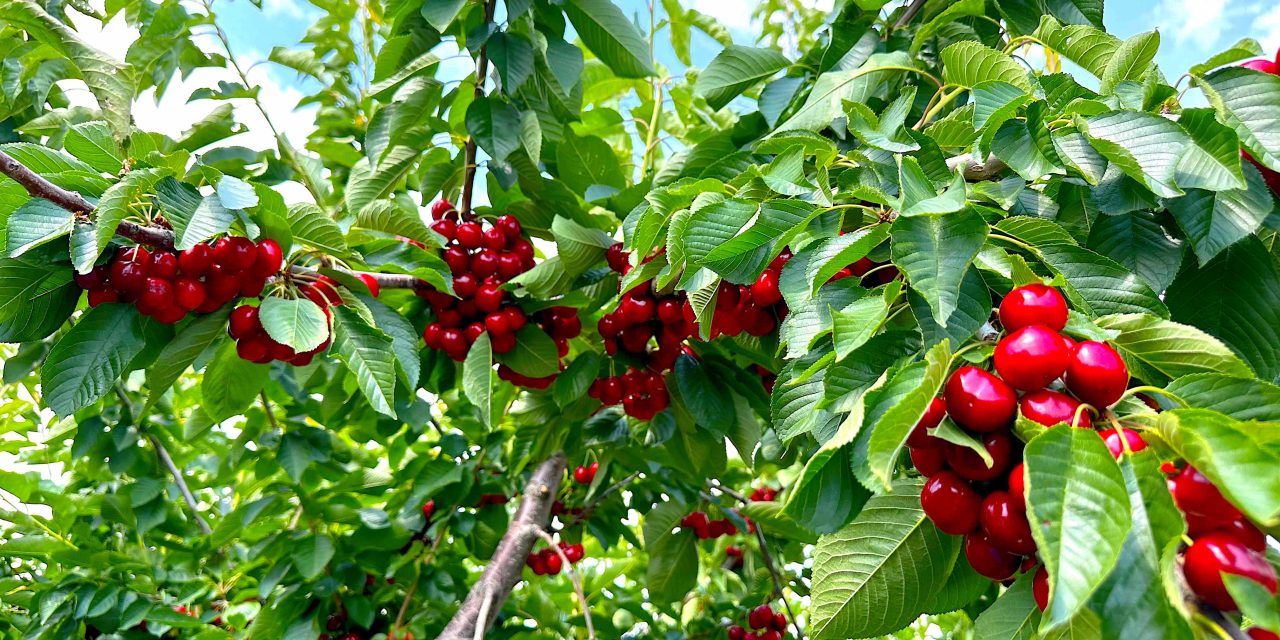
Sukh Kailay from the Kailay Fruit Market on Highway 97 echoed Kaler’s comments, adding that cherries are so bountiful this year they need to be thinned to ensure the quality and size of the fruit.
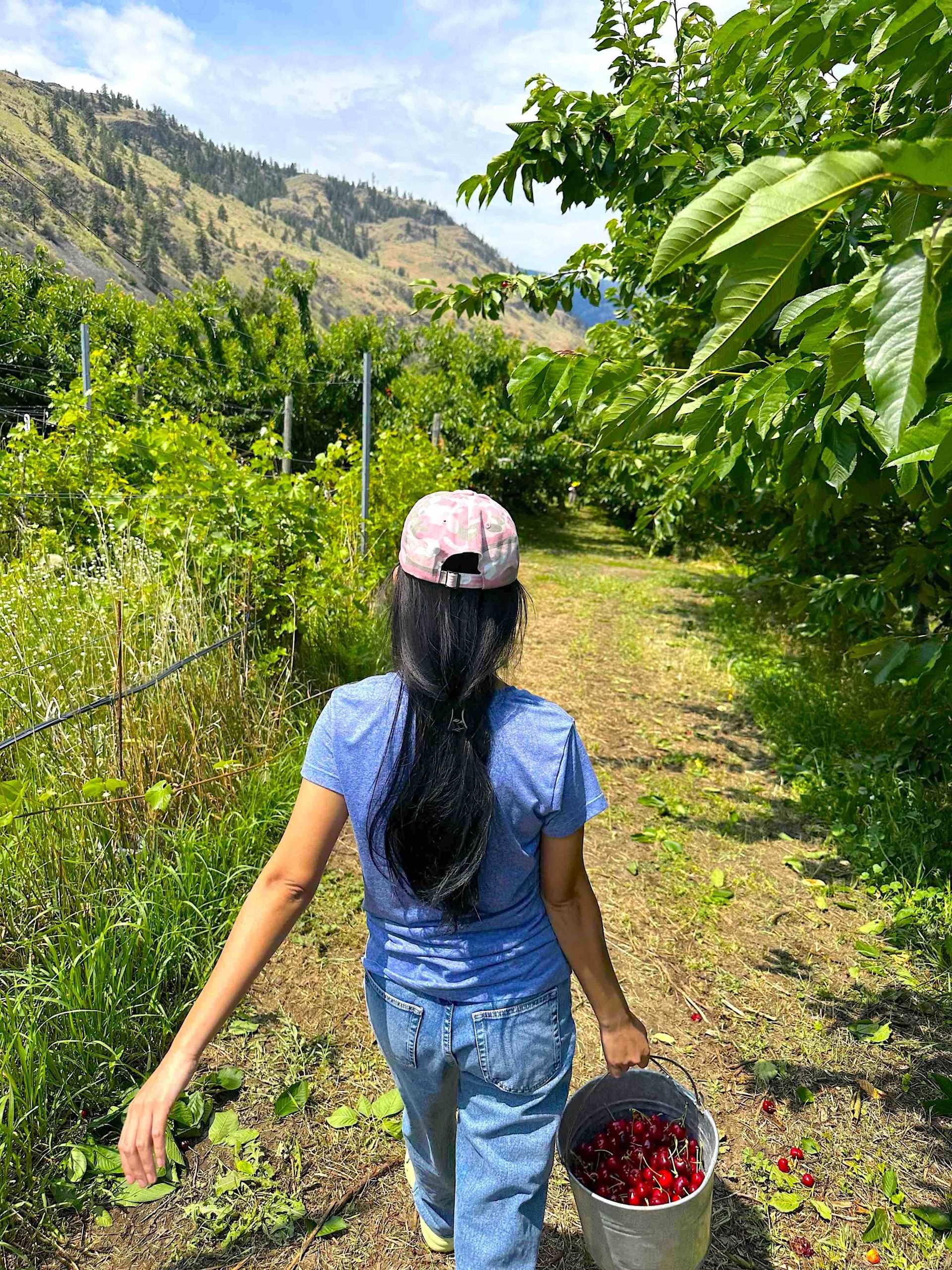
Pickers – both seasonal workers and u-pickers – have been busy for nearly two weeks now.
Don Urquhart photo
Grapes are looking good, too. Osoyoos Larose estate winery general manager Michael Kullman said in an interview, the crop “looks great, actually. (This is) the first time since 2022 we’ve had a respectable crop, and I think that’s true up and down the valley.”
Kullman said cold winter weather resulted in his vineyard losing about 90 per cent of its crop in 2023 and all of it last year.
Temperatures dipped to minus 22 or 23 in Osoyoos in January 2023. And then even colder in 2024 when, on January 12, a polar vortex swept through the Okanagan Valley. Within hours, the valley was plunged into a flash freeze lasting 56 hours, with temperatures dropping to minus 25 and even lower.
One positive result of the extreme cold, according to Oliver-area orchardist Rick Machial, is that it gave cherry and other trees a chance to rest, resulting in a huge crop this season.
“When trees are kind of weak, they crop extra heavy. That’s just mother nature,” he said. “The crop looks great. … Some trees, boy, they’re loaded.”
At Peach Hill, Kaler said all the crops must be thinned. “(Otherwise) the fruit is not good quality. We thin everything including cherries. … If we don’t thin, they are small and not good quality, and no one wants to buy them.”
As for permanent damage to orchards, there are reports of a few lost trees around the valley. Kaler said Peach Hill lost “a few” cherry, peach and apricot trees because of the cold snap.
But, she said, the weather was the death knell for their aging nectarine trees, all which were pulled out. She estimated three to four years will be needed for replacements to start bearing fruit.
Early cherries are being picked now and are already finding their way into stores and fruit stands.
Next up will be apricots in a couple weeks, then peaches in mid-July and nectarines a week or 10 days later. Apples and pears will start arriving in late August or early September.
Grapes are the last crop to be harvested, typically through September and into October. Kullman said Osoyoos Larose usually starts picking in mid-September. This year’s mild winter and relatively hot May and June will likely lead to an early harvest.
Kullman explained that this year’s “bud burst” occurred around April 20, about 10 days ahead of schedule. Then came the emergence of “pea sized” grapes.
The next key moment will be veraison in mid-July. This is when the grapes begin to change colour: “Reds start turning red and the white varieties will turn a golden yellow colour. … For us that’s a key period when we can start to relax.”
Kullman said there is still a lot that could go wrong between now and veraison, like hail or mildew outbreaks. “(But) all signs point to a good vintage.”
Long-term damage to Okanagan Valley vineyards was substantial, Kullman said. “I don’t think a single winery in the valley didn’t lose any vines.” He estimated that 25 per cent of the vines in the valley were ripped up.
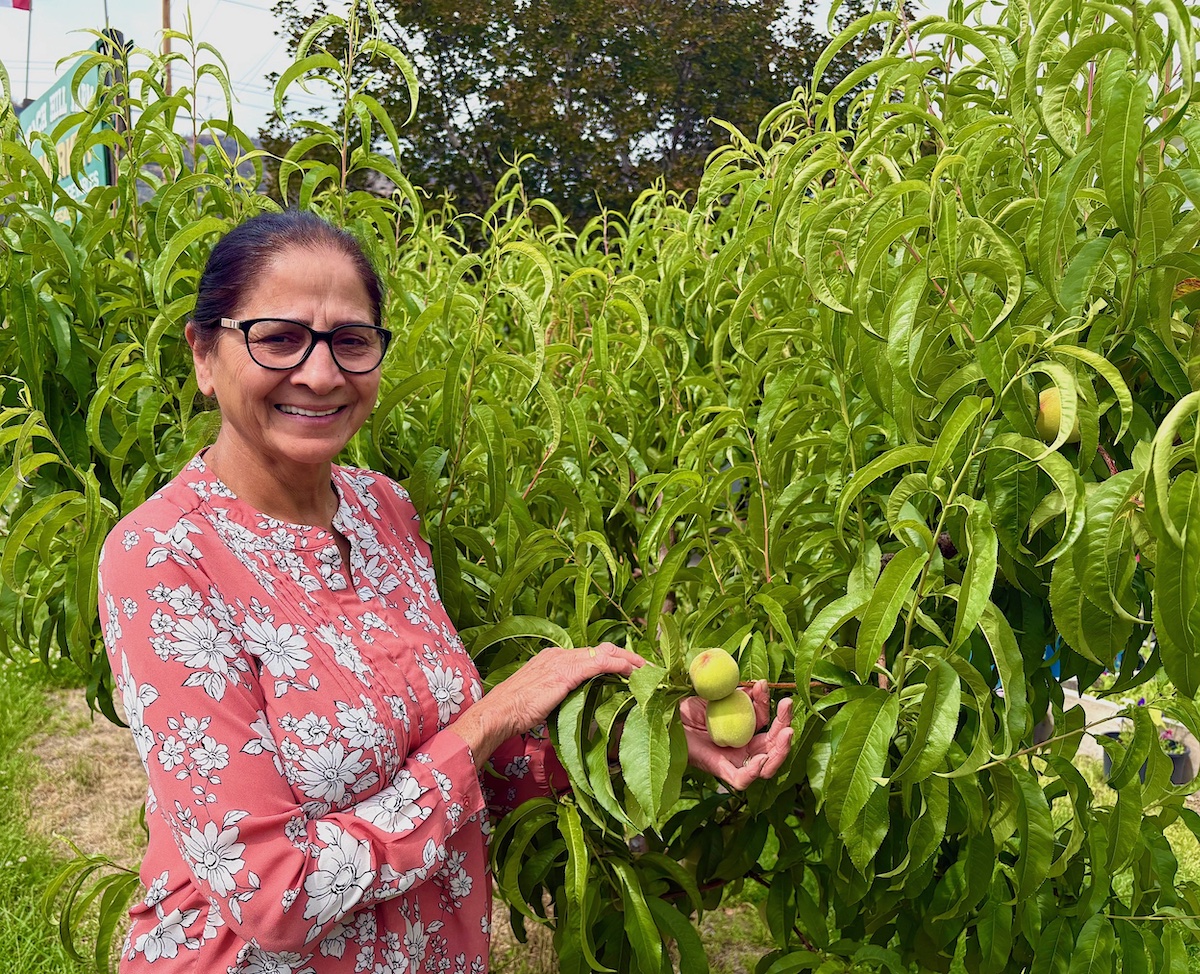
Kuljeet Kaler of Peach Hill Farm Market shows off the orchard’s fledgling peaches.
Demand for Okanagan fruit is unlikely to suffer from the interruption of supply caused by last year’s cold snap.
Virtually all the grapes grown here end up being turned into wine in the more than 200 licensed wineries in the valley. Poor crops from the previous two years have merely increased demand.
As for other soft fruits, BC Fruit Growers Association executive director Adrian Arts told the Times Chronicle his organization is already seeing strong interest in BC fruit, both domestically and abroad. “BC cherries are world renowned … and last year’s absence I think, has built pent up demand,” he said.
“We have a harvest window that starts in mid-June and extends right through to September, (supporting) retailers with a long season of fruit.”
Kaler said Peach Hill will continue to supply retailers like IGA and other fruit markets from Vancouver to Williams Lake and Kimberley.
The supply of labour to pick the fruit will also apparently not be affected by last year’s problems.
Kaley said her farm will use the federal temporary foreign workers’ (TFW) program again, bringing in the same workers from Mexico they have in the past. Last year, the farm needed one fewer picker.
Arts said the temporary foreign workers, primarily from Mexico and Jamaica, are the backbone of the picking corps that come to the valley each summer. “Without these workers right now we wouldn’t be able to pick the crops. I can say it that bluntly,” he said.
The TFWs have largely supplanted the cavalcade of youthful backpackers, mainly from Quebec, who used to arrive annually to work the orchards of the valley.
“Those domestic workers really aren’t coming back in the numbers we have seen. (There has been) a full-on decline in the local labour returning season after season,” said Arts.
In the face of more unpredictable weather in a changing climate, the federal Summerland Research and Development Centre has launched a research project to explore or develop “mitigation techniques” to help reduce the damage from future events.
Arts said the aim of the research is to look at techniques or technologies that can be applied at the beginning or end or during the season to build resilience in the plants and protect the fruit. “If we can increase the cold tolerance of a peach bud or a cherry bud by five degrees that (could mean) it won’t die,” he said.