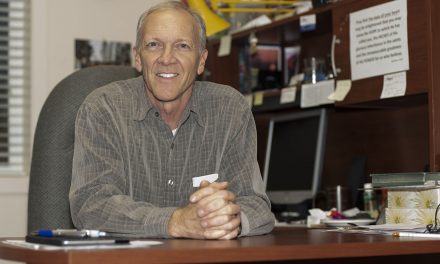
MLA Linda Larson found the tone of meetings constructive and there were no derogatory comments from park supporters, who have been critical of her in the past, she said. (Richard McGuire photo)
A solution to the national park debate may be a long way off, but groups on all sides said they were happy with recent meetings on the issue with B.C. Environment Minister Mary Polak.
Boundary-Similkameen MLA Linda Larson, who was present at three separate meetings with stakeholders on November 21, said the minister’s staff would put together a report of important points made by the different groups.
There will be no concrete proposal from the ministry before further consultations, she added.
Discussions have been underway for more than a decade about the creation of a national park reserve to protect an area of grasslands habitat in the South Okanagan-Similkameen. The provincial government abruptly cut off talks early in 2012. Without provincial support, the federal government has also withdrawn.
In recent months, various business, municipal, environmental and tourism organizations have passed resolutions and applied pressure on the province to re-open discussions with the federal government – something the province is not yet ready to do.
Nonetheless, the recent meetings reflect a new initiative by the province to engage stakeholders on all sides.
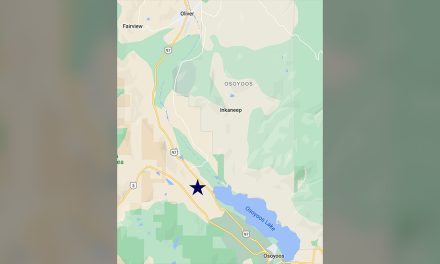
The meetings were held at Silver Sage Winery near Oliver and the minister, her staff and Larson met with both supporters and opponents of a national park reserve as well as with representatives of local First Nations.
“It was good,” said Greg Norton, a spokesperson for the Grassland Park Review Coalition, an informal group of about 20 people opposing the national park. “I found her to be very attentive and she certainly did her homework. I think she is listening to every side. She’s got to look at her options and at some point make a statement, I suppose.”
Norton was present at the meeting for opponents of the park, which also included representatives from the B.C. Wildlife Federation, fly fishermen, ranchers, users of all-terrain vehicles and a representative from Penticton-based HNZ Helicopters.
Chief Jonathan Kruger of the Penticton Indian Band said the meeting for First Nations representatives went well and was respectful.
“We had a good conversation, but there were no action items coming out of the meeting,” he said.
The only other chief present was Harvey McLeod of the Upper Nicola Band, but representatives of councils of the Osoyoos Indian Band and Lower Similkameen Indian Band also attended for the Okanagan Nation Alliance (ONA).
Kruger said the First Nations representatives pointed to a feasibility study released in early 2013 by the ONA, which supported the idea of a national park reserve.
The ONA wants to see a tribal park in the entire area which First Nations would manage in collaboration with Parks Canada, said Kruger.
The model, he suggests, is Gwaii Haanas National Park Reserve, which is operated jointly by the Government of Canada and the Haida Nation in Haida Gwaii. Discussions are underway for a similar park in Chilcotin, he said.
The idea of a park under B.C. jurisdiction, however, is not something the ONA would support, Kruger said.
“I think the Okanagan Nation is open to the federal government with the province,” said Kruger. “I would prefer both the federal government and the provincial government be involved.”
The idea of federal involvement, however, doesn’t appeal to Norton and others in his coalition.
Norton said he objects to “the restrictive nature of a national park and to be honest, I guess the attitude of Parks Canada. It doesn’t include us, and we want to be part of it. They’re not an open-door outfit in our view. We’ve tried and it has been a struggle.”
Norton said his group has always supported environmental protection, but since the start they have favoured the Land and Resource Management Plan (LRMP) process.
“It was inclusive and the whole community was represented,” he said. “We all signed off and we just could never understand why that was abandoned.”
Norton said the coalition raised points it has made during the past 12 years. These include the fear that lack of cattle grazing would contribute to catastrophic wildfires and negative effects of a national park on people’s lifestyles, homes and businesses.
“We had a good group there,” said Norton. “A group that’s been together for 12 years. We were all there and we made our points. The minister asked a few questions and we answered them and that was that.”
Norton said he doesn’t want to comment on the type of solution that might be found, saying it is now up to the minister.
Parks Canada, he said, hasn’t spoken on the issue at all in the past three years.
“So I don’t think I consider the federal government or Parks Canada to be a player at this point,” said Norton. “They haven’t said a damn thing. So we are real happy and we will work with the minister. It’s all about working together.”
Chief Kruger said ONA underlined the importance of protecting the area’s environment.
“The South Okanagan is the rarest ecosystem in all of Canada,” he said. “It’s a huge responsibility for us, for the Okanagan people and those of Canada, obviously British Columbia and especially the residents of the South Okanagan. It’s a big responsibility to take care of the land. We want some kind of balance where we’re protecting one of the grasslands. That would be something we can totally work together on.”
Kruger also said one of the ONA’s major concerns in the park discussion is protection of Spotted Lake to the west of Osoyoos.
“We stressed that so much because Spotted Lake is not only sacred to the Okanagan people, but it’s one of those special places that all British Columbia should appreciate and protect,” he said. “We should be limiting the development around that area and showcasing the beauty and educating the world on how precious that lake is.”
Larson said she had not previously had a chance to discuss the issue with the ONA as a group and so she did learn some new points about how First Nations would like to be involved with the land in a traditional way.
Her meetings with the other groups didn’t provide much new information, but she was pleased that the tone was respectful.
“The first group we met with was the Grassland Coalition and there was no table pounding or demands being made,” Larson said. “It was very calm and no change from their previous position in that they wanted to have more uses on the land.”
The pro-park group spoke a bit about improving tourism as well as preservation and protection of sensitive areas of the land, she said.
“I felt much better after those meetings in that they were very calm and reasoned,” she said. “There was not the usual derogatory remarks being made about me or any of that nasty stuff … so it was a much more comfortable environment for me. I was just listening and from that perspective I was comfortable with the talks and I hope that we will find common ground.”
RICHARD McGUIRE
Osoyoos Times