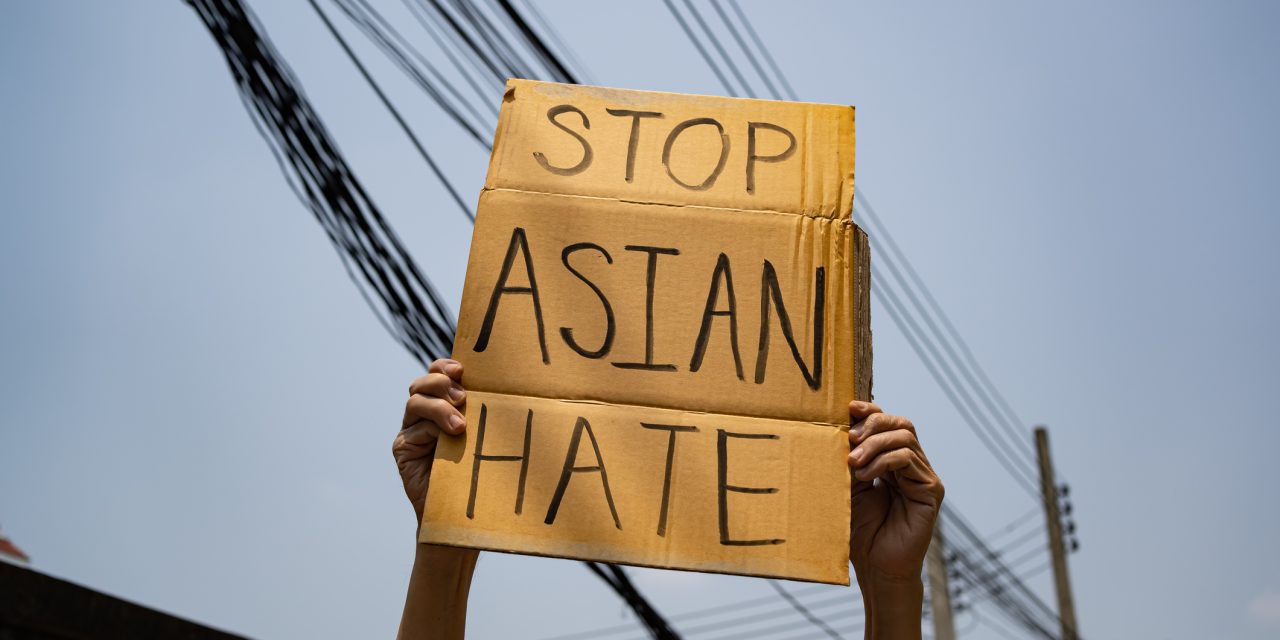
I notice that every time there is a national tragedy in America, Canadians often take that as an opportunity to pat themselves on the back. It’s an attitude that’s not only misinformed but silences the experiences of countless Canadians.
On March 16, 2021, a 21-year-old man went on a rampage around Atlanta, Georgia to three different spas and killed eight people, seven of whom were women, and six of whom were Asian-American women.
The heartbreaking incident has highlighted a conversation around how anti-Asian racism has been on the rise for the past year since the start of the pandemic. And these attacks are just as prominent in Canada.
Cities across the country have reported a spike in hateful, violent attacks against Asian-Canadians over the last year.
Anti-Asian hate crimes in Vancouver saw a shocking 717 per cent increase in 2020, according to Vancouver police board statistics. The board reported that there were 98 incidences in 2020 compared to 12 in 2019.
A Canada-wide report by Chinese Canadian National Council shows there were 1,150 racist incidents targeting the Chinese-Canadian community across the country over the past year. Forty-four per cent of the attacks happened in B.C., while 40 per cent occurred in Ontario. Asian-Canadian women were the target of 60 per cent of incidents.
It’s gutting to read these numbers.
These hate crimes include attacks against children, people being spat on, and elderly folks being shoved. The incidents often happen in public places like parks, grocery stores and restaurants. The most common attack (one in 10 of those reported) was being coughed or spat on — a vicious act considering the public health crisis at hand.
“Asian-Canadian communities not only face the challenges of COVID-19 (the social, economic and health implications of which has disproportionately impacted racialized communities) but also the added racism that sees our communities as somehow responsible for COVID-19 and its horrific damages,” the report writes.
Despite this, Canadians, I find, are obsessed with comparing themselves to America, trying to prove that we are somehow—even by a smallest fraction—morally superior to our southern neighbours.
Yet being the lesser of two evils isn’t a victory worth celebrating. It’s important, no matter how uncomfortable it may be, to accept the problematic facets of our country if we ever want to move past them. Without doing so, it’s nearly impossible to fix the issues that are so obviously present here just as much as they are south of the border.