By Don Urquhart, Times Chronicle
The Town of Oliver is intensifying its push for long-term provincial support to help secure the future of its 105-year-old irrigation canal, warning that the critical piece of agricultural infrastructure and keen economic driver is now beyond what local taxpayers and water users can reasonably support.
In Victoria earlier this year, Oliver Mayor, Martin Johansen walked both Lana Popham, Minister of Agriculture and Christine Boyle, Minister for Housing and Municipal Affairs through the length, complexity and fragility of the system that still delivers most of the irrigation water to the farms, orchards and vineyards around Oliver.
Key to his argument for Provincial support is the importance of the canal as a vital economic driver, estimated to help generate around $190 million in crop value annually, although the very tenuous nature of this estimate speaks to the Town’s desire for a thorough economic impact study.
In order to provide a clear picture of the significance and sheer magnitude of the 22 km long, gravity-fed canal, the Town of Oliver hosted Minister Popham for an aerial helicopter tour of the canal, aka the “Ditch”.
“You talk about a piece of infrastructure that’s about 105 years old already, and the amount of work that’s going on to keep it in its current shape and keep functioning,” Johansen said, in an interview with the Times Chronicle. “It’s pretty easy to understand the financial need associated with it.”
The canal, created after the First World War to turn near-desert lands into farmland for returning soldiers, and inaugurated in 1920 by BC Premier “Honest John” Oliver, now dominates his namesake Town’s balance sheet.
Johansen notes that about 89 per cent of the town’s total debt — approximately $7 million — is tied to the canal, leaving only about $470,000 linked to all other town infrastructure, including water, sewer and roads.
“That’s really the challenge,” he said. “You’ve got a small municipality of 5,000 people trying to maintain all our infrastructure… and look after this irrigation canal.”
The system serves roughly 600 rural users – including farms, vineyards, orchards and a major silviculture facility (soon to be two) – providing irrigation for over 2,000 hectares, but their fees don’t fully cover the cost.
Operating the canal runs to about $1.4 million per year, while revenue is closer to $1.3 million, leaving a shortfall that must be absorbed through borrowing or municipal reserves.
Johansen reckons both irrigators and local taxpayers have hit their limits. Water users face rising rates tied to capital and operating costs, while the town’s tax base is too small to keep taking on new debt. While Oliver continues to meet its obligations, the current model is clearly no longer sustainable.
“The only people that contribute to it are the ones that use water out of it. There’s no other money,” he said. “At the end of the day, the [farmers] can’t afford to pay it… We can’t continue to do this. The water rates can’t continue to go up.”
And so while the system is technically “user pay,” the wider public ultimately bears a burden. “As it stands now, all of our taxpayers are kind of shouldering it,” he said. “It’s an asset that’s deteriorating, aging past its service life in various areas.”
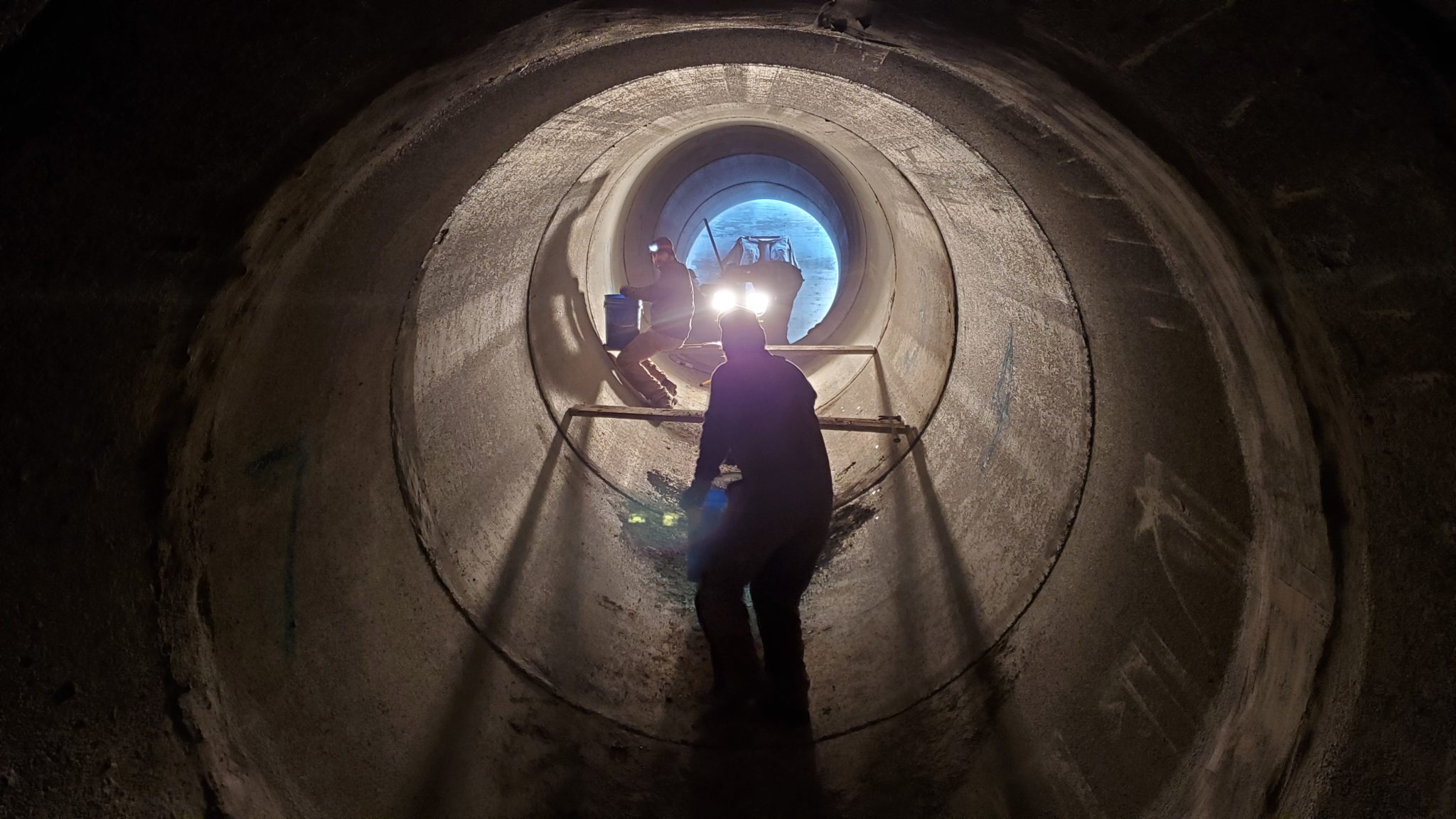
Part of the siphon diversion away from McIntyre Bluff and the rockfalls that continually damaged the original canal. Photo courtesy of TRUE Engineering.
A key reason for the debt burden was the necessary intervention to reroute the canal around Gallagher Lake after rockfalls from McIntyre Bluff repeatedly damaged the canal with a significant rockslide in 2016 that restricted water flow to about 70 per cent of design capacity.
“It used to go right below the bluff,” Johansen noted. “If you’re ever there looking up at it, it’s like ‘holy smoke.’ It crushed some of the area. They managed to put a pipe in there to get about 70 per cent of the flow.”
The town ultimately built a new piped section and pump station, taking the canal under the river, across Highway 97 and back to the original line. That work required Oliver to borrow over $6 million, to top up the $5 million in provincial funding. It appears to have been money well spent, Johansen suggests.
“When we went on our fly over, there have been multiple rockfalls since then that would have maybe decommissioned the canal entirely if we hadn’t rerouted it,” he said. “It kind of confirms we did the right thing — but we need some help with this,” he adds.
Canal ailments
Compounding the issue is the fact that the 22 km long canal – approximately 17 km of it in rural areas, with a mix of open ditches, covered sections and buried pipe – is now running at close to full capacity.
“We’re close to being maxed on that canal. There’s not a lot more usage that we can get out of there,” Johansen said, noting that ideas like irrigating a golf course had to be turned down. “The canal doesn’t have an infinite [capacity].”
And as one could expect, the grand old canal is showing its age. A largely visual assessment carried out in 2016–17 identified kilometres of pipe at the end of their service life and raised questions about century‑old concrete.
“Concrete that was poured 100 years ago, they didn’t have the ability to make large amounts of it and control the chemical components,” he said. “You’ve got areas that are kind of soft, kind of hard — it’s a hodgepodge… The concrete doesn’t have a lot of structural integrity in places.”
The town now resurfaces about 300 metres of open canal each year with sprayed concrete to smooth rough surfaces, reduce algae and improve flow. Operations and maintenance are complicated by the fact much of the canal remains open.
“The operations and maintenance associated with that canal are huge, because it’s open all the time,” he said. “The debris, the algae that gets grown in there, the exposure to sunlight.”
Johansen said some of the most worrying sections are old trestles carrying the canal over steep gullies — original structures that still perform but no longer meet modern expectations for robustness.
“You look at that trestle and you think, ‘oh my God,’” he said. “It’s in good shape, but those are things that are risk associated… It honestly doesn’t look very sturdy, not compared to today’s build.”
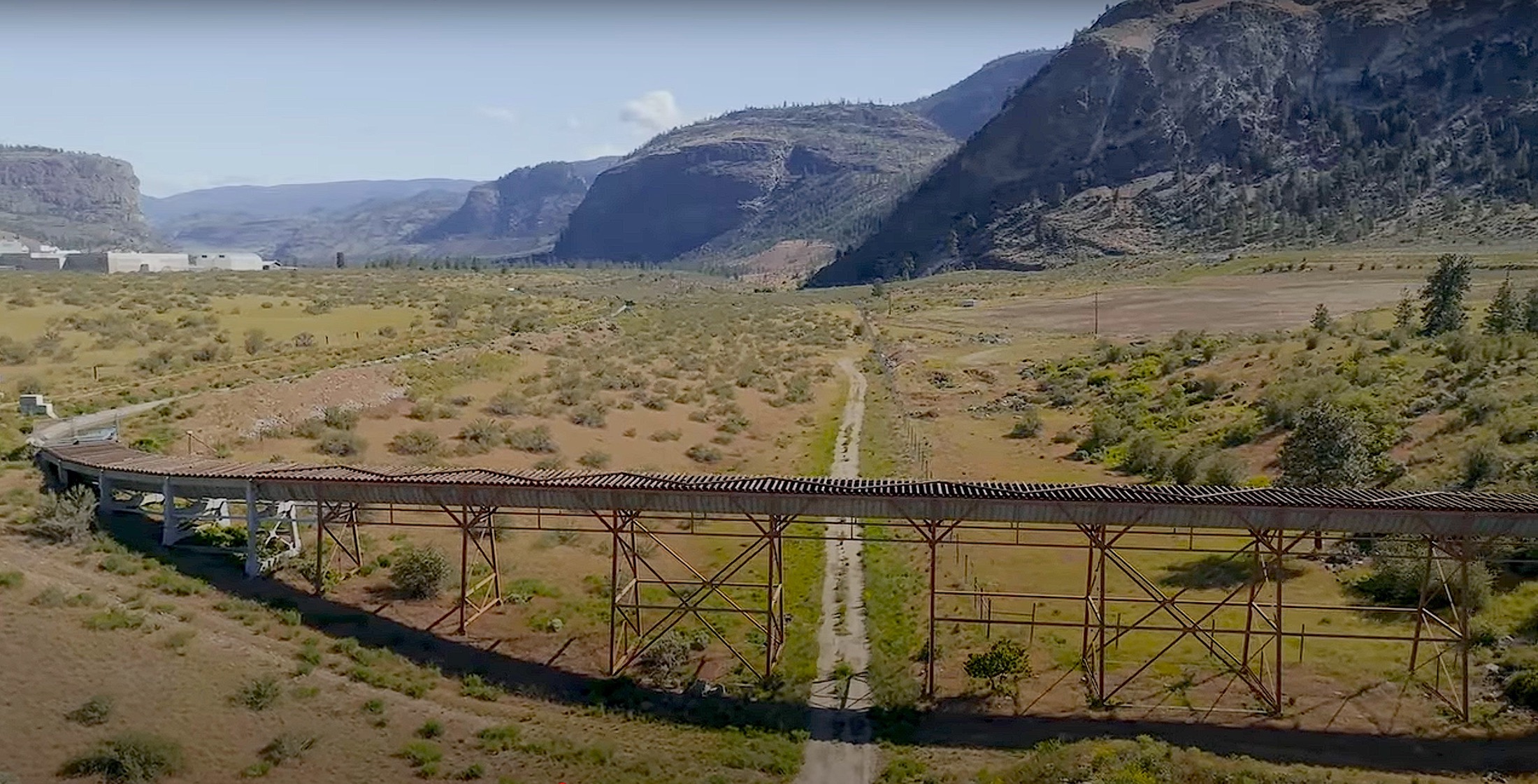
Pictured above: Some of the original elevated steel sections of the irrigation cannel. Screen grab from the “Oliver’s Irrigation Ditch: Lifeline of a Community” video released in 2025.
He also noted a previous estimate that warned of potential losses in the $200 million range if the canal went dry for just two to three weeks during the growing season, comparing to extreme cold snap that damaged and killed off fruit trees and grape vines in 2024.
“The amount of money that’s being spent to replace plants that have frozen through the freeze‑thaw… is a drop in the bucket compared to what would happen if the canal lost its flow,” he said. “The South Okanagan is here because [of] irrigation. There’s so much economy — we can’t just stop. We have to find a way to make it go.”
Push for study funding
Johansen said Oliver’s immediate goal is to secure about $200,000 for a detailed structural assessment and economic impact study, work that could take up to a year and would form the basis for long‑term funding talks with both Victoria and Ottawa.
“We really need to do a structural‑integrity, much more in‑depth assessment of the canal and the needs going forward, and the big one would be an economic impact study,” he said. “I think that document will lay the groundwork for those discussions going forward.”
“We need some kind of sustainable funding source. It’s not the odd grant here and there,” he said. “I’m not here saying the sky is falling… What do we need to do to be able to prove that we can’t afford this anymore?”
The town has applied for a grant and is in active discussions with the Ministry of Agriculture, aiming to have funding in place by September and the Mayor is optimistic.
“She was very appreciative of the tour. And yeah, I think it’s going to help us with conversations moving forward.” He added: “We were in total agreement that an assessment and economic impact study was really the first piece of the puzzle we need to put together.”
At the same time, Oliver is seeking help for a $1.1‑million upgrade at the Rock Cliff Pump Station, another irrigation capital project it would otherwise have to borrow for. The ministry has indicated there is around $40 million available for agricultural infrastructure across BC.
“It’s not a ton of money, but it’s money that we don’t have to borrow, or spend out of our depleting reserves,” he said.
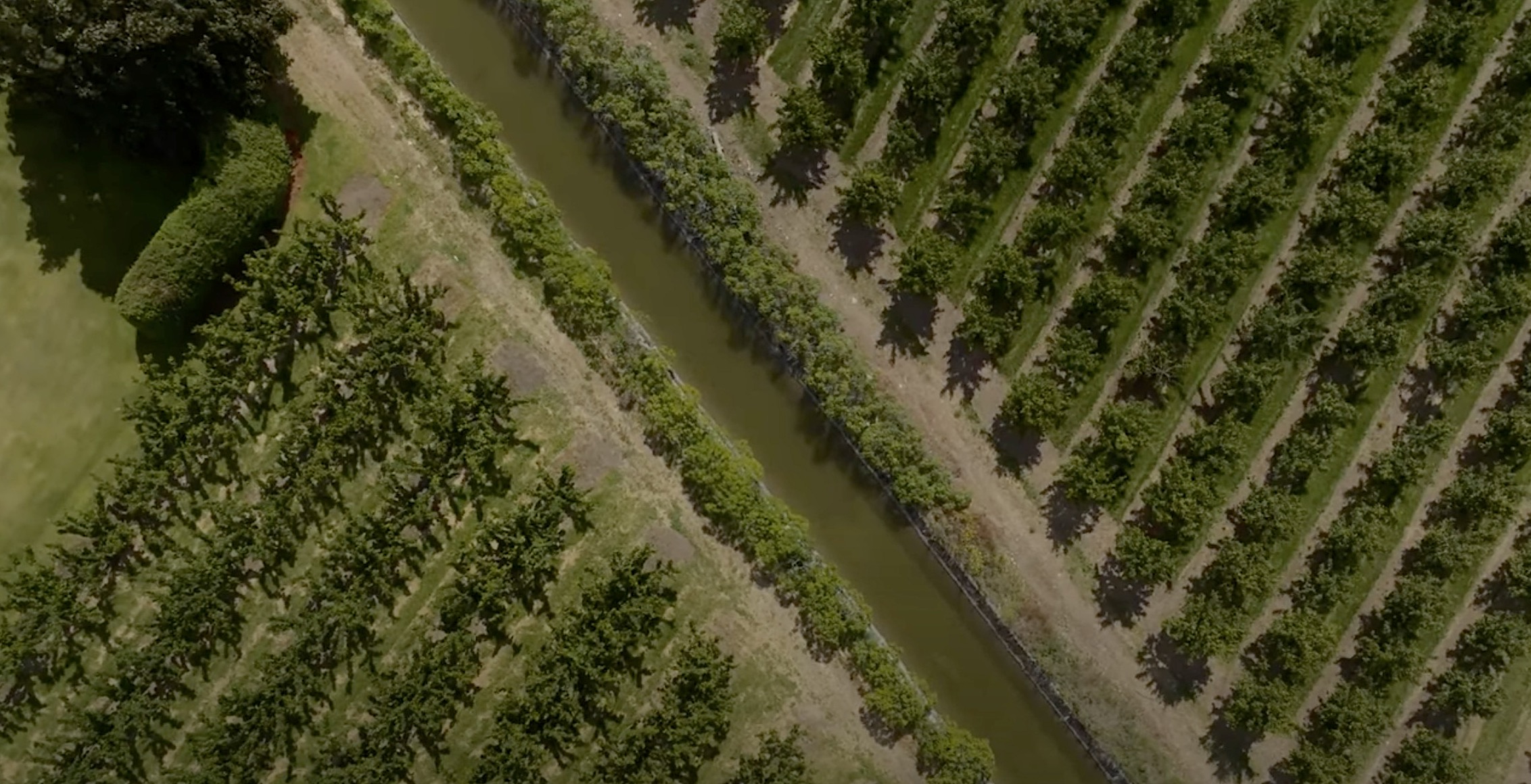
Oliver’s agricultural base is dependent on irrigation water drawn from Vaseux Lake and the Okanagan River. A screen capture of the “Ditch” Irrigation Canal from the video produced last year titled: “Oliver’s Irrigation Ditch: Lifeline of a Community”.
On her part, Popham expressed gratitude to Johansen and the Town of Oliver saying: “I really appreciate the efforts made to allow me to understand the situation. Looking forward to working together to find solutions.”
For now, the Town is banking on the impact of getting the Agriculture Minister in the air, above the ditch that made the Oliver area famous and profitable.
“That visual was worth millions,” he said. “It’s a piece of infrastructure that they know about, but now they really know what we’re talking about… I believe at the end of the day that will be the thing that gets us to where we need to get.”