By Sebastian Kanally, Times Chronicle
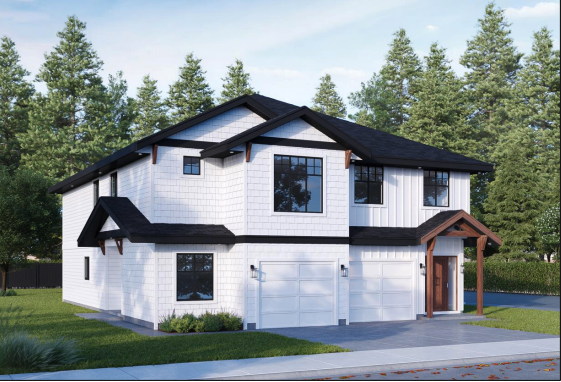
The Oliver Town Council meeting on February 13, 2023 was a contentious one, council passed the third reading of an Official Community Plan (OCP) amendment and a zoning amendment in a proposal to build six duplexes on Chardonnay Avenue only hours after a public hearing on the matter took place.
The public hearing that took place earlier that same day had a nearly unprecedented turnout. Randy Houle, Director of Development Services with the town, spoke with the Times Chronicle saying, “we had to accommodate people in another building because there was more than we thought.”
He further assured that “everyone was given a chance to be heard.” In addition to the public hearing that took place, there were over 90 written submissions received in relation to the application with 80 per cent being unsupportive, and a petition signed by 119 Oliver residents who were also against the proposal.
The latter two were publicly available in a binder at the front of the room during the hearing and council meeting. Council saw those materials as well, said Houle, who also mentioned that he had not seen that many feedback forms received before.
Duplex plan adopted
Duplexes can move forward
When asked about the process by which councilor’s receive and consider the information, Councilor Aimee Grice explained that “basically what happens is it gets emailed to us as it comes so we get to read all of the forms prior to the meeting, so that is something we would have seen prior to going into the public hearing.”
Councilor Terry Schafer told the Times Chronicle, he did not want to talk about the specifics of the proposal although he did mention that, “I received it after we had the public hearing, and as you know we had a full house. I certainly understand the concern. We haven’t made a final decision yet, so please forgive me, we have to discuss this with the council,” he concluded.
The amount of feedback may have been deceiving too, as Grice noted there were “90 different feedback forms filled out, but there were not 90 different reasons given and a lot of feedback forms didn’t give a reason. So I would say overall there were four or five different arguments given in opposition, so those were able to be weighed and you think of how many people made that argument.”
Grice said there were some saying that, “we don’t want rentals in our neighbourhood because those types of people don’t take care of their properties and they will bring property values down, ‘and I don’t agree with that’.”
“I am just one opinion and that is why there are five of us and it wasn’t unanimous . . . We definitely had time to digest it,” she added.
The Times Chronicle received an email from a concerned citizen about the process behind how councilors receive the feedback forms and petition and how that worked into their split decision to pass the motion three to two.
They had felt unheard because in the council meeting afterwards, there was no summary or mention of the written feedback forms or the petition, although there was good discussion over the arguments at the hearing.
Grice noted that “it was quite a large amount of feedback” and “it’s hard right, sitting there looking at all those people who were opposed to this development, and still trying to do what’s in my mind best for the community.”
So it raises the question of how much weight do written feedback forms and petitions weigh in the councilor’s decisions?
“I guess the public hearing was sort of top of mind. But that is a fair point that maybe it wasn’t brought up in the discussion and I can see that if you are someone who signs the petition that may feel like it wasnt heard, but it was certainly heard by me personally, I can’t speak for everyone else. I definitely considered it and weighed it when I was making that decision.”
When asked if it may have been better to delay the process because of the amount of feedback, Grice replied: “no, because essentially what could have happened is that the developer alluded to the fact that they would have had to develop million dollar houses. They already own this land so they have the right to build on it, so if they are not going to be able to build this, they are going to look at what their alternative is and the alternative is not better.”
Schafer added: “be aware that Oliver is constrained in its perimeter, we cannot grow out anymore we can only grow up, so we have to densify, so that’s generally where we are at. This is a similar situation to what Osoyoos has been grappling with for over a year now.