The chief of the Osoyoos Indian Band (OIB) has a clear message for Canadians – ‘truth and reconciliation’ must uphold unblemished truth as its cornerstone and it must be focused on First Nations economic development and independence.
Chief Clarence Louie (yilmixwm ki law na), known for not pulling his punches, provides some clear perspectives on how he sees the way forward as he writes about his experiences growing up on the ‘Rez’ to this day with his book due out in November.
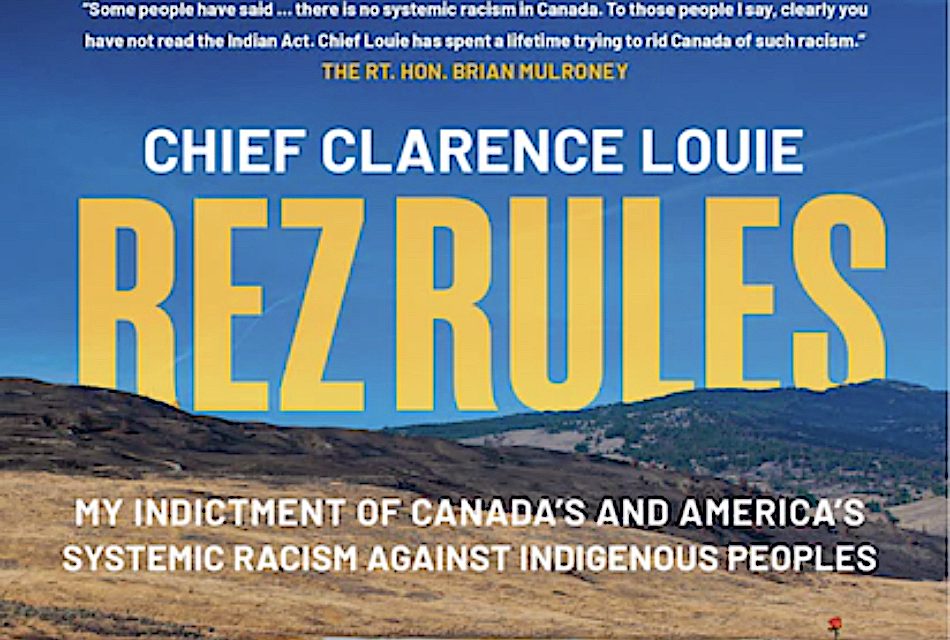
The book’s title is itself a spoiler alert for the journey Louie will take readers on. ‘Rez Rules – My Indictment of Canada’s and America’s Systemic Racism Against Indigenous Peoples’, is among other things a sort of reconciliation road map as the passionate, plain-spoken chief of one of the most economically successful Indian bands in this country sees it.
Asked in an interview with the Times-Chronicle whether readers might be ‘shocked’ at what he has to say, Louie replies simply: “Well, if the truth shocks you that’s the by-product of it, if the truth hurts, so be it.”
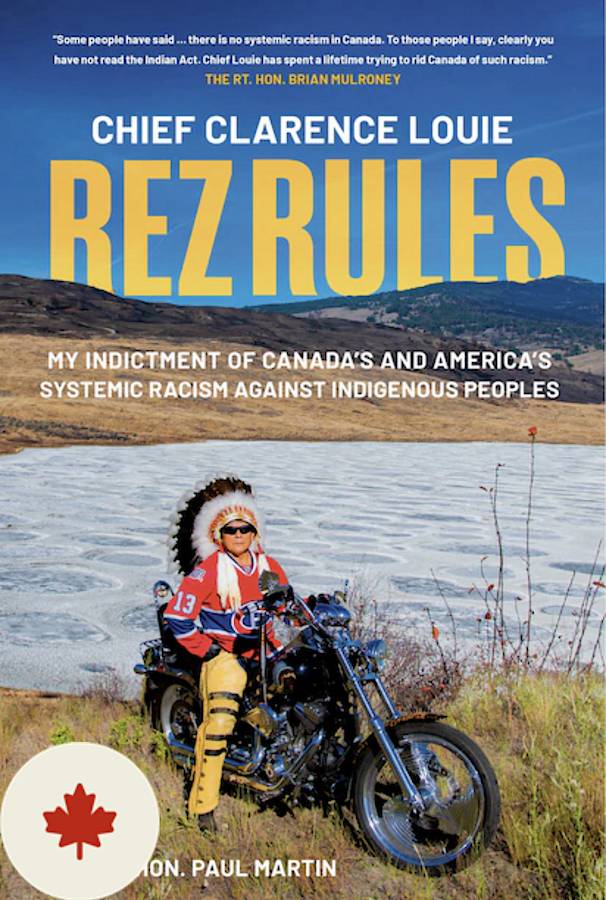
Osoyoos Indian Band chief Clarence Louie says if the truth hurts, so be it. He notes that not everyone will agree with what he has written in his new book, Rez Rules, his indictment of Canada’s and America’s systemic racism against Indigenous peoples.
For Louie the truth is paramount after “the ongoing lying to native people, lying to Indian people, lying to First Nations which has been going on for 500 years.
“What I want to see is the truth to be told in every way, shape and form because that’s what every relationship has to start with. If you don’t have the truth then you have no relationship.
“My book is what the real truth and reconciliation should be about, not phoney apologies because phoney apologies don’t build houses on Indian reserves,” he says.
“I’m calling out the Canadian and American governments on the bleak history of those governments in their dealings with the Aboriginal people. The whole country was built on a lie, the Canadian and American states were built on racism towards First Nations people and land rip-offs,” he says.
He doesn’t expect everyone to agree with what he has to say, including some within the OIB community. “I expect that a bunch of my people are not going to agree with what I say in that book and that’s fine because in a democracy there’s never 100 per cent agreement on most any issue.”
Louie highlights that only through economic development can First Nations be self-sufficient and free themselves from the welfare dependence created by successive Canadian governments that began with British rule, and bring prosperity to their communities.
A crucial enabler of this economic development requires rectifying the “land rip-offs” through realistic land claim settlements based on current valuations – something that has often not been the case in the past.
Louie’s business-oriented approach is perhaps not surprising given the OIB’s economic success he has helped guide with a deft hand since first being elected chief in 1984. The band now runs a string of highly successful businesses.
The target audience, Louie says, is focused on three groups. “The first are the reserve people on both sides of the border,” he says, noting that the Okanagan people were split by the arbitrary creation of a border by the British and Americans.
Second is corporate Canada and America, “because that’s who obviously we have to develop a relationship with. To get back to that relationship we first had when white people came in our territory which was founded on the fur trade.
“Back then that was the economy and that was what the original treaty relationship was based on. It was about business and commerce, not welfare dependency which is what the government turned it into,” he says. And the third, of course, is the governments of Canada and the U.S.
Land settlement is vitally important to all of this, with Louie citing broken treaty promises and stolen reserve land.
The “historical land rip-offs” happened almost everywhere on every Indian reserve on both sides of the border, he says, citing the Colville Indian Reservation in Washington State which had almost 1,000,000 acres of its land taken away, he says.
“Reconciliation for me, I would start with the land. We got 4,000 acres taken away which is the best land, it’s agricultural and it turned into the best economic land, of course.” This includes everything east of the old Okanogan River from the top end of Osoyoos Lake to the present OIB reserve land.
“But now the hospital is on it, the hockey rink is on it, hundreds of private homes are on it, private orchards and vineyards are on it, a lot of expensive houses. That’s all old Osoyoos Indian reserve land that was stolen from us.”
But this is where the pragmatic businessman side of the OIB chief steps up. “We’re not going to get it, we’re going to have to buy it back,” he says of land in general. He cites the example of a OIB land claims settlement that enabled the band to regain the land where the current OIB-operated Petro Canada gas station is. This also required removing it from the Agricultural Land Reserve (ALR).
The OIB again put this into practice just this past summer when it purchased 9.5 acres of land along the Lower Arrow Lakes near Castlegar. The area is part of the traditional territory of the Okanagan Nation and the OIB will use it for access to traditional use including hunting, fishing and berry picking, etc.
“Governments have to realize that they ripped us off bad and that when the band settles a land claim they should be able to buy back land anywhere – of course willing seller, willing buyer – and that land should automatically be transferred to Indian Reserve status. Take it out of the ALR or whatever zoning it is on,” he says.
He cites the example of Manitoba where First Nations bands have bought land in Regina to create ‘urban Indian Reserves’. “Now bands maybe have a chance to start creating their own jobs to making their own money and get off the welfare roll,” he says.
Louie also adds that having a special day for truth and reconciliation, while a “nice gesture,” doesn’t “increase our land base.” He’s not a big fan of the land acknowledgements either. “It’s weird how they use that word ‘unceded’ land. To me, that’s just a nice way of saying stolen.”
“You have to tell the truth and that’s what this book is about – telling Canadian and American people to tell the truth from now on. Quit lying about how Canada and America were founded – they were founded on stolen Indian land and stolen Indian reserves.”
When asked what non-Indigenous Canadians can do to play their part in reconciliation, Louie says, “Start electing leaders at the mayor and council level, at the provincial level and at the federal level, start electing honest people that tell the truth.”
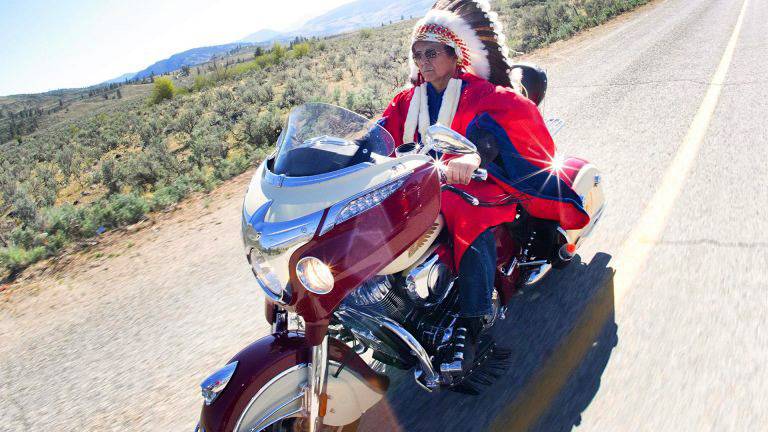
Aside from his thoughts on truth and reconciliation, Louie also discusses wide-ranging subjects including life on the Rez, including Rez language and humour; per capita payments; the role of elected chiefs; the devastating impact of residential schools; the need to look to culture and ceremony for governance and guidance; the use of Indigenous names and logos by professional sports teams; his love for motorcycle honour rides; and what makes a good leader. He also sounds a call to action for First Nations to “Indian Up!” and “never forget our past.”