By Madeline Baker, Times Chronicle
The Okanagan Basin Water Board (OBWB) held their last meeting of the year on Oct. 6 when much talk focused on invasive mussels, drought, and water protection projects.
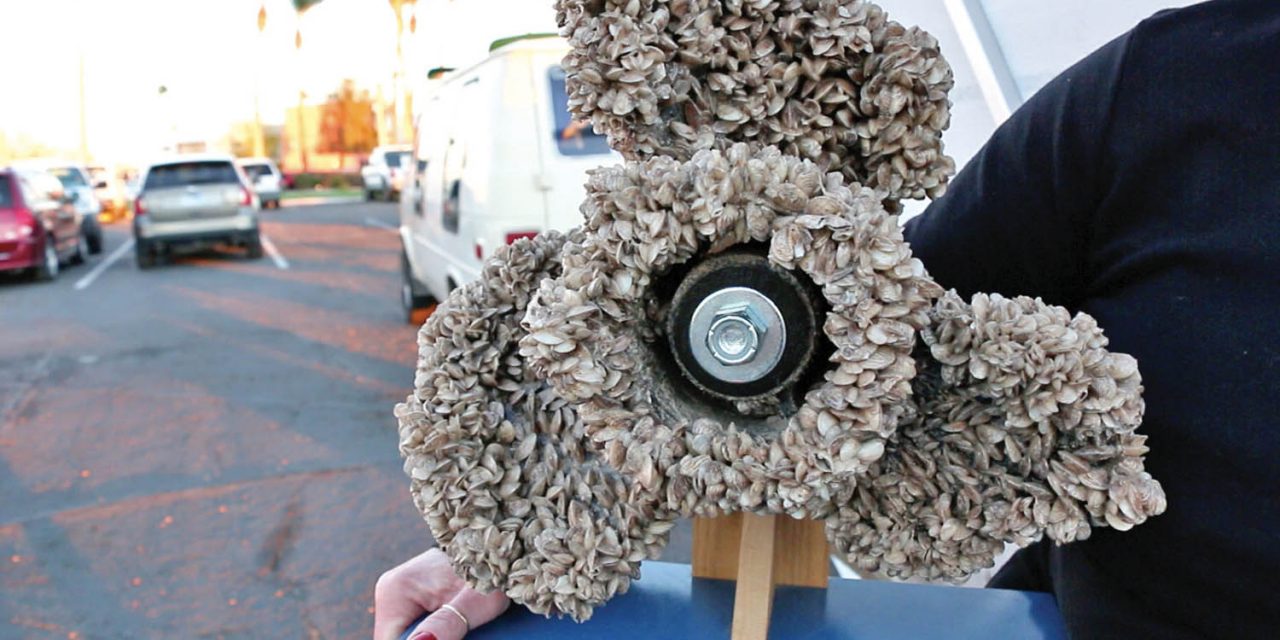
One of the biggest and longest-standing issues faced by the water board in 2022 was the encroachment of invasive mussel species into BC lakes and rivers. In a report looking back on the year’s progress, the OBWB learned that over 19,000 watercraft had been inspected at stations set up by BC’s Invasive Mussel Defence Program.
Big push to stop invasive mussels at the border
Federal muscle needed to fight invasive mussels
While most of these watercraft were allowed to continue on their trip after a brief questioning about where they had begun their trip and their intended destination, any that showed “red flags” were asked to pull over for a thorough decontamination. Of the watercraft that went through this process, 12 were found to be transporting live invasive mussels.
The vast majority of contaminated vessels came from Ontario, with one each from Quebec and Manitoba, and were destined for the Lower Mainland. Unfortunately, four of them were destined for the Okanagan, and that number was enough to prompt the OBWB to ask for more decontamination stations throughout the region.
Currently, the results of water tests performed by the IMDP suggest that no mussels were introduced to Okanagan Lake or its tributaries this summer. This can also be credited in large part to the OBWB’s own “Don’t Move a Mussel” campaign, the results of which will be presented in early 2023.
The board also received an update on the province’s current drought level, an issue that has only grown in severity throughout a very dry and warm October, from staff members who attended meetings with the Thompson Okanagan Drought Response team.
Provincial drought conditions are ranked on a scale of severity from 0 to 5. At the time of the OBWB meeting, the Okanagan sat at drought level 1, while the South Okanagan in particular sat at level 3 due to many fish-bearing streams in the region that are monitored closely for possible adverse effects. At time of publication, those numbers remain unchanged.
Given that many other parts of the province with traditionally humid climates are at level 5, including the Sunshine Coast, Lower Mainland, and both the east and west coasts of Vancouver Island, board members felt that the Okanagan is in a better position than the numbers might suggest.
Local governments, improvement districts, and non-profits in the Okanagan will be empowered to develop their own water protection projects in 2023 with the Water Conservation and Quality Improvement Grant Program, which was approved by the OBWB board. Applications for grants up to $30,000, with a total of $350,000 available, will open in November.
The OBWB board also heard one last update on the last major water conservation event of 2022, the Nk’Mip (Osoyoos Lake) water science forum, which will take place from October 27 to 29. While the conference itself is free, there will be a small fee to cover the coffee and lunches provided at the event.
Recently re-elected Osoyoos Mayor and OBWB member Sue McKortoff described the event as “Indigenous and western approaches to knowledge, science, and the management of water,” and said that it’s full of “great information” for the general public and students alike. Anyone interested in attending the forum can sign up at obwb.ca/olwsf.
Once regional directors have had a chance to appoint new members to the OBWB, the new board will meet on January 10, 2023.