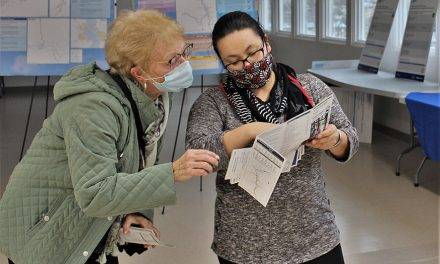
A public information meeting last Thursday at the Sonora Community Centre only drew about 30 people to hear about the potential for our lakes to be infested by invasive zebra and quagga mussels.
We hope this low turnout simply reflects that most local residents are already well informed on the issue. We would hate to think it is a sign of complacency.
The threat is very real, and the potential for devastation is huge – especially given the importance of our lakes to tourism, recreation and agriculture.
Zebra and quagga mussels have been spreading rapidly across North America, with boaters being the main carriers. Several lakes in the southwest United States are now infested.
The situation is hopeless in eastern Canada and United States, and the cost of mussel mitigation in the Great Lakes alone was about $5 billion over 10 years.
Biologist Heather Larratt estimates the cost of an infestation in the Okanagan lakes would be about $43 million a year – and that’s just to control it. Once this scourge spreads in a lake, it is impossible to get rid of it. Nor can we put a price on things like sandy beaches and clean water that these mussels would destroy.
Organizations fighting the spread of aquatic invasive species urge boaters to stop them by practicing “clean, drain, dry” when they remove a boat from water to transport it.
But public education in itself is not enough. Senior levels of government must become more engaged, bringing B.C.’s prevention programs up to the levels of some of our neighbours in states of the U.S. northwest.
The only time provincial and federal governments really pay attention is when a strong message is sent by citizens.
It takes many citizens to raise their voices, but only one careless or irresponsible person to infect our lakes.
Last summer, a boater brought a boat encrusted with quagga mussels from Arizona and launched it in Shuswap Lake. Although the mussels are believed to have been dead, the province is still monitoring the location in case infested water containing larvae was also released by the boat.
The worst part is that the boater was, apparently, confronted by authorities in Idaho, but refused to decontaminate the boat. The boat was then taken across the border, but Canada Border Services Agency (CBSA) inspectors failed to notice the encrusted quagga mussels.
Since this incident, B.C. has toughened its regulations so it can now fine people with zebra or quagga mussels on their boats or equipment up to $100,000.
At the federal level, the response of the CBSA has been more complacent. Incredibly, the CBSA declined to send an official to the March meeting of the Okanagan Basic Water Board (OBWB) on the grounds that it doesn’t have funds for outreach. The official is based in Penticton where the OBWB’s meeting was!
Instead, the official sent the OBWB a PowerPoint on the issue that was not reassuring. Travelers are required to declare plants and animals at the border, and if they don’t declare them, they can be prosecuted. But there was nothing to indicate that CBSA makes a point of inspecting boats or that its officials know what to look for.
An effective prevention program will have costs, but nothing near the magnitude of the costs we face if these creatures make it into our lakes. The time for effective action is now – not when it’s too late. The price of complacency is huge.