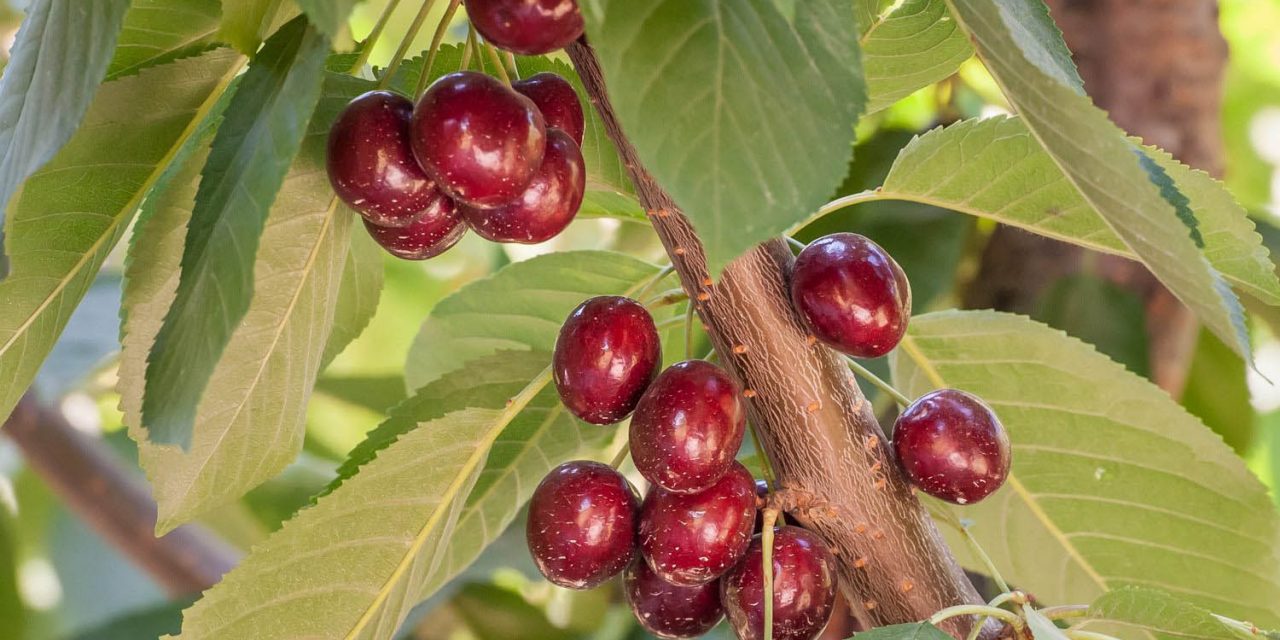

Cherries ripen on a tree near Osoyoos in this file photo. (File photo by Richard McGuire)
By Dale Boyd
Osoyoos Times
European Union changes to pest requirements on imports of fresh fruit, including Okanagan cherries, are not going to come at great a cost to growers in the region according to the general manager of the province’s fruit growing association.
Since the announcement by the CFIA last week, Glen Lucas, general manager with the BC Fruit Growers’ Association (BCFGA), clarified that “essentially what is required is reporting on what systems you have in place. Which doesn’t mean you have to implement any new system of pest control or monitoring. Just that the exporter would have to record what they have done.”
In 2018, around $3 million worth of cherries were exported to the European Union from Canada, with those numbers expected to trend upward in the future according to Lucas.
“It appears at this stage that there will be no additional cost or time, other than reporting to the CFIA (Canadian Food Inspection Agency) what you do,” Lucas said. “That’s the level of effort, as we understand it today.”
He admits the situation has been ongoing, and the association’s understanding of the situation has changed day-by-day.
There was at most one shipment, and not a large one Lucas noted, caught up in the EU import ban. Blueberries are at the end of their season, with some small amounts exported from B.C. to the U.K., “which we didn’t know,” Lucas said.
Blueberries, cherries and apples are among the products the EU would block imports of after Sept. 1 if they do not meet the new reporting requirements.
The CFIA is going to speak with the apple industry to help gain an understanding for shipping and packing requirements moving forward, Lucas said, as Canadian apple exporters may be the first to deal with the new requirements head-on.
“We will probably have a common approach that all packers need to meet the requirements,” Lucas said.
Okanagan cherries were already subject to strict pest control requirements which came about when fruit growers in the Okanagan had their market open up to Japan in recent years.
“The only requirement is that you report. It’s not that you have anything specific in place. Now, in time there may be specific treatments. Another thing that is often required is cold treatment, after the crop is harvested, it has to be held at a certain temperature for a period of time. That type of requirement is not in place, but people would report what they do.”
Using the example of cold treatment, Lucas said the growers or packers will report to the CFIA what their systems are and indirectly report that information to the EU through the CFIA and the shipping process.