Lyonel Doherty
Times-Chronicle
This is Part 4 in the Fairview After Dark series hosted by Rebecca Rizzo from the Oliver Museum.
Walk 10 paces, turn around, and draw!
You’ve been watching too many “spaghetti” westerns, gringo.
While Rizzo did walk 10 paces, she didn’t carry a six gun in a holster, just a flashlight.
“The 19th century was not the safest or most law-abiding period in history, and no exception could be made for Fairview,” she told her intrigued audience.
People with infamous reputations could be found occasionally skulking around, such as train robber Bill Miner or in this case, a hold-up man named Matthew Roderick.
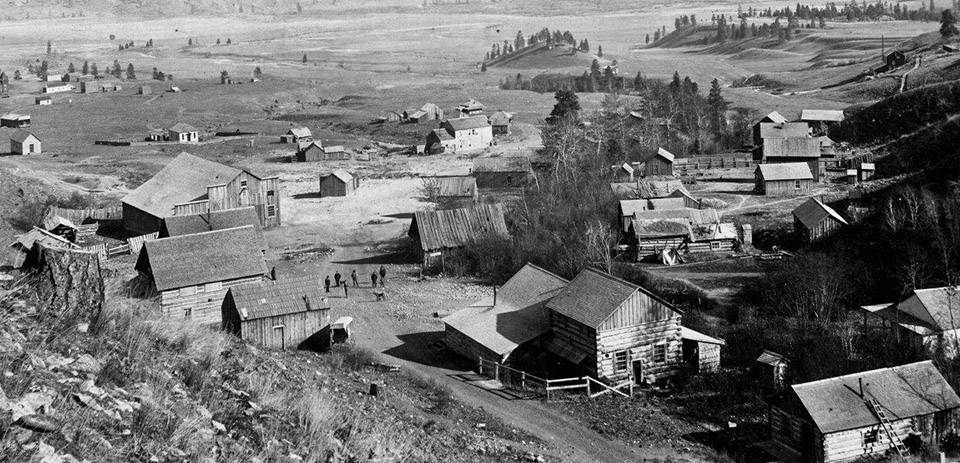
In 1896, on the neighbouring mountain at Camp McKinney’s Caribou-Amelia Gold Mine, three 60-pound gold bars were produced, valued at approximately $10,000 in total.
George McCauley, who held a stake in the mine, left Camp McKinney with the gold bars in an uncovered wagon. “Travelling alone and unarmed, McCauley thought that the mountains offered no fast escape routes to any thieves who might want to rob him, and he felt that a pistol would only draw attention,” Rizzo said.
But less than half an hour from the camp, a masked bandit holding a Winchester rifle forced McCauley to a stop. Staring down the barrel of the rifle, McCauley was made to deliver the goods, and the thief made off with the gold.
A warrant was issued for the arrest of a “masked bandit.” And Roderick, who had not shown up for work at the mine on the day of the robbery, was suspected of being the culprit.
Suspicions continued to rise when Roderick made a quick escape to his family in the United States shortly after the incident. He was also seen to be spending money.
“Many believed he was there avoiding arrest,” Rizzo said.
He was being monitored while he was living in Tacoma, Washington with his wife and children, but when he was searched, the gold bars were not found on his person.
A few months later, Roderick made a return to the valley near Camp McKinney, leading fellow miners to draw the conclusion that he may have hidden the gold bars in the mountains after the hold-up.
Rizzo said the detective agency employed by the mining company reported to the mine superintendent, Joseph P. Kean, that Roderick was heading north on horseback.
At this point, Osoyoos Indian Band member “Alexine” (probably Long Alec Baptiste, a special constable of the area), was stationed where two roads leading to Camp McKinney converged, about two miles from the camp. He had been instructed to notify Kean if anyone unknown to him was attempting to enter the camp after dark.
Sure enough, on the evening of October 26, 1896, at approximately 10 p.m., Alexine reported that someone was coming, and two provincial police constables and Kean prepared to act, arming themselves.
“A man of quick action, Kean hurried out onto the dark trail before the constables could follow,” Rizzo explained. “Less than a mile from the camp, Kean overtook the dark figure, yelling out, ‘Is that you, Matt?’ The figure whirled around and Kean, who caught a glimpse of a rifle, wasted no time in firing his weapon, shooting the man through the heart.”
Upon examination, the dead man was confirmed to be Roderick. But his rifle was found to have a piece of rag stuffed in the muzzle, and the handgun that was found in his pocket was quite rusty, leading to the conclusion that even if Roderick wanted to fire on Kean, his weapons were in no condition to do so.
They found about $100 in cash on his person, and under his coat he wore a canvass harness with two pockets, just the right size to carry two gold bricks (that weren’t there).
A coroner’s jury eventually determined the cause of death to be justifiable homicide.
The following year, in the spring, J.P. Kean was tried for manslaughter. The result of the trial saw Kean sentenced to one-day imprisonment which had already been served.
Unfortunately, Kean’s action on that dark trail in October prevented the capture of Roderick alive and ultimately prevented anyone from finding the whereabouts of the hidden gold bars.
“The secret died with Matthew Roderick,” Rizzo said. “As it is, the gold bricks, which would carry a market value of over $300,000 today, have since been lost to history, and it is suspected that they are still lying in the hills of the old mining camp, waiting to be found.