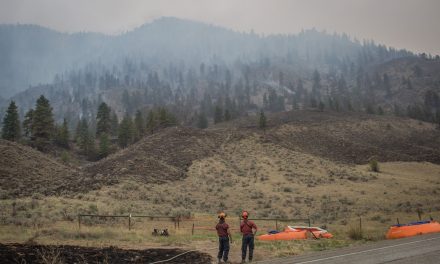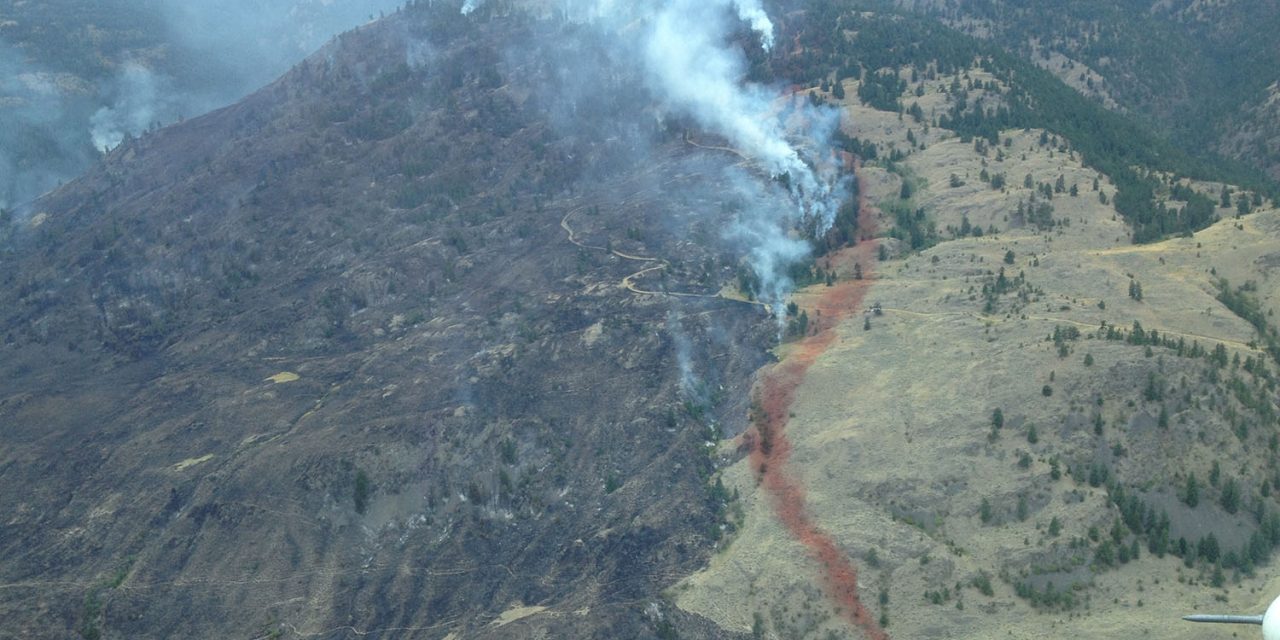
Work continues at the Testalinden Creek wildfire north of Osoyoos, though the fire is now 95 per cent contained.
On Monday, the fire camp in Oliver was demobilized, B.C. Wildfire Service said in a news release.
However, 32 firefighters and one helicopter remain at the location, attempting to increase containment to 100 per cent and extinguish remaining hot spots.
Smoke from the fire perimeter will continue to be visible over the next few days.
All remaining evacuation alerts and area restrictions were rescinded as of last Friday, but the public, including hunters, are asked to be aware that fire crews are continuing mop-up operations.
Angling re-opened in Okanagan region
Angling on streams and rivers in the Okanagan region was reopened last Wednesday due to lower water temperatures and increased flows.
The change was announced in a news release last week from the Ministry of Forests, Lands and Natural Resource Operations (FLNRO).
The decision reverses previous closures on the Similkameen, Kettle and West Kettle rivers and tributaries, which were imposed on July 15. A closure of the Okanagan River main stem that was imposed on Aug. 6 has also been lifted.
The closures were put in place to protect fish stocks due to low flows and high river temperatures.
B.C. extends deadline to comment on South Okanagan protected areas
The deadline has been extended to the end of October for those wishing to comment on the provincial government’s proposal for protecting land in the South Okanagan.
The extension allows more time to prepare more comprehensive submissions, the Ministry of Environment said in a recent news release.
The province issued an intentions paper with maps in August following discussions with First Nations and Stakeholders.
The proposal recommends that areas of the Okanagan grasslands south of Highway 3 and between White Lake and Vaseux Lake be designated as a national park reserve, while the area between Highway 3, Oliver and Cawston would remain under provincial control as a conservancy.
It also would recognize existing land users, respect private land, promote tourism and share management with First Nations.
A consultation report based on the public feedback, along with final recommendations, is expected in early 2016.
SPECIAL TO THE TIMES
Osoyoos Times