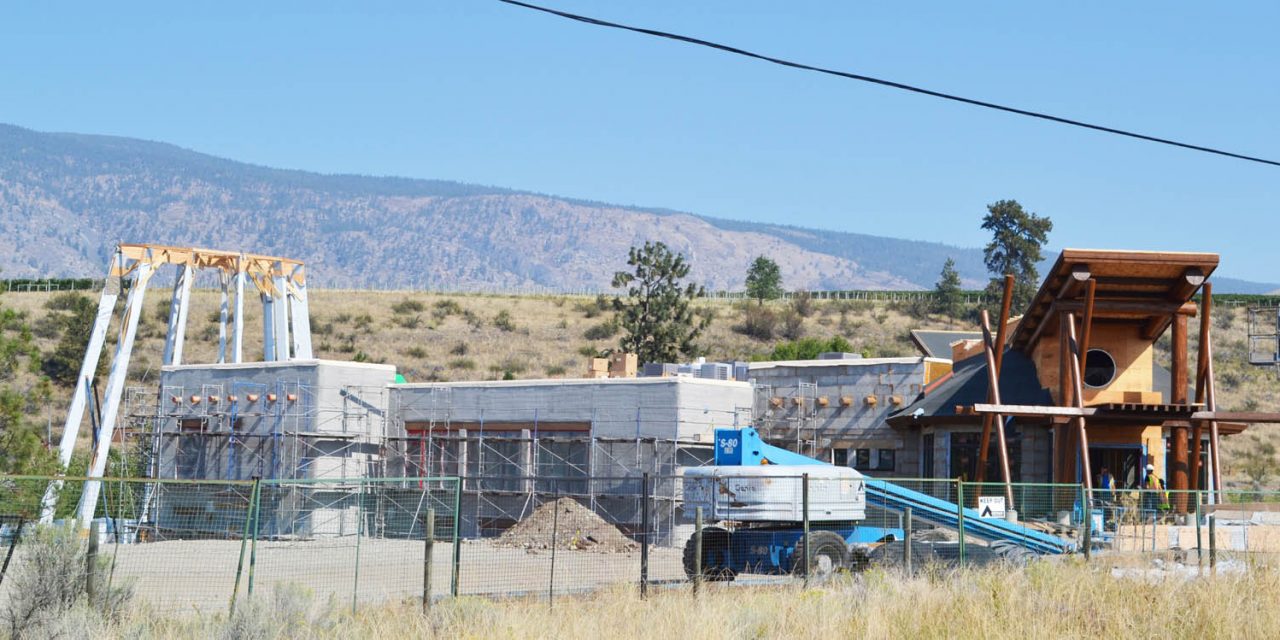
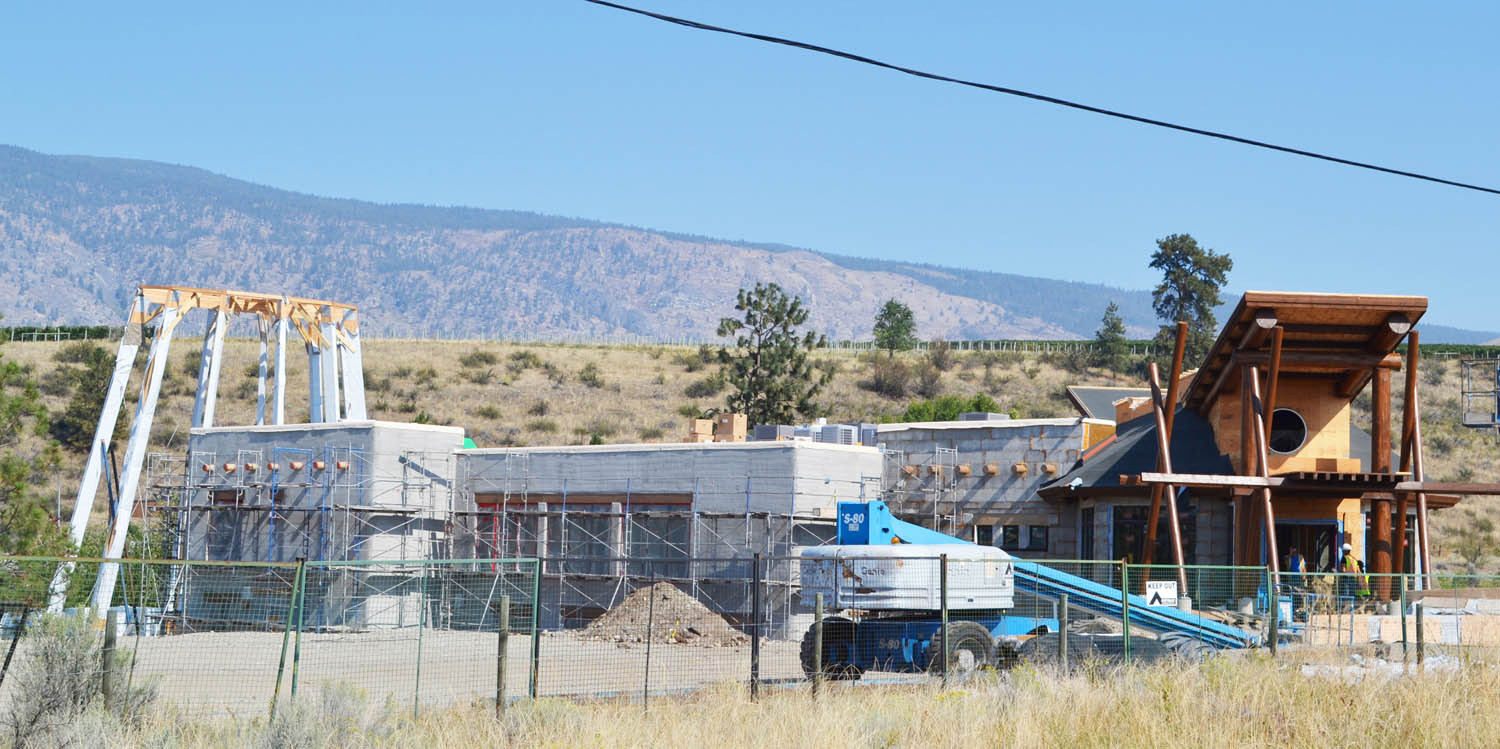
The Osoyoos Indian Band will be moving into its impressive new office space in the coming weeks. The “gathering space” is being built to resemble the traditional plateau-style hat of the interior tribes. Once it’s completed, the gathering space will be able to hold 200 people. (Trevor Nichols photo)
If you’ve driven down McKinney Road in Oliver lately, you’ve probably noticed the striking log structure taking form on the site of the soon-to-be-completed Osoyoos Indian Band (OIB) offices.
Snuggled just behind the main office building, the “gathering space,” as Chief Clarence Louie called it, resembles an overturned drinking cup sitting on a slant. Massive logs jut from the ground, connected in a cylinder shape approximately three storeys high.
Rather than have the usual cement pad with a roof over, Louie said the OIB choose to construct a gathering space to make more of a statement and have a stronger connection to the history of First Nations descendents from this region.
So the OIB gathering space is being built to resemble the traditional plateau-style hat of the interior tribes, which Louie saw in an old picture of a former chief’s wife.
Once it’s completed, the gathering space will be able to hold 200 people, said Louie.
The connection to his people’s past continues with the rest of the new building, which Louie explains draws inspiration from other structures traditional to the OIB.
“Most office buildings are rectangle, especially those only a few storeys high. We wanted some of the building to have logs incorporated, as our traditional pit houses used logs as well as rails,” he said, explaining the traditional “tule tepees” used rails as well.
The traditional pit houses were usually shelters built mostly below ground with an entrance ladder at the top.
The frame was built with logs and sealed with dirt and grasses, and the domed roof frame was made of wooden poles, and then covered with layers of timber, bark and earth.
“Tule tepees” were tepees covered with tule grass—a strong and durable reed that was abundant in the area.
The features harkening back to those structures can also be seen both on the outside of the building (the entrance, with its single large circular window, is quite striking in its own right) and will be a feature on of the interior once it is completed.
“We did not want the usual contemporary looking office building,” Louie says. “We have outgrown the original band office that was built in the early 70s. In fact, we outgrew the existing Band office three times. We need more business and operational space.”
The OIB began building the new office in October last year and Louie says he hopes it will be finished by November this year.
The building is a big and much needed upgrade, which Louie says will cost $6.4 million.
TREVOR NICHOLS
Regional Reporter