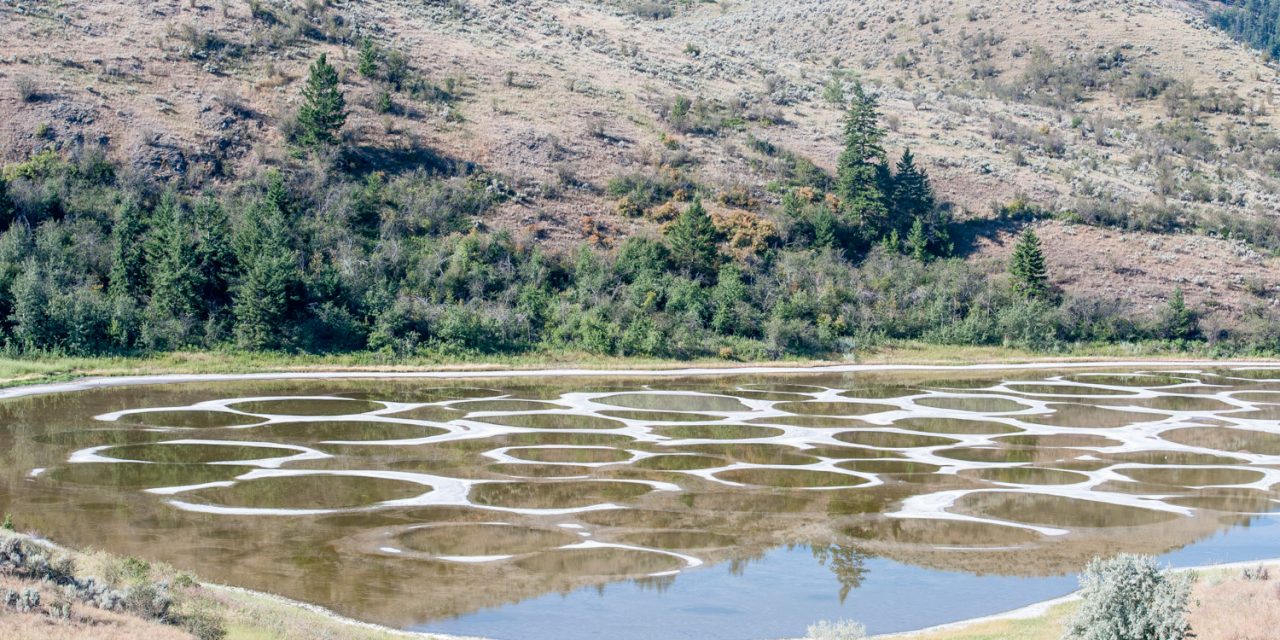

Spotted lake, just west of Osoyoos below Hwy. 3, is considered to be the most sacred of lakes by the Okanagan people. It is said to have 365 rings, one for each day of the year. It has high concentrations of magnesium, calcium and sodium sulphates that form the large circles that are especially visible when water evaporates in the summer. (Richard McGuire file photo)
Spotted Lake to the west of Osoyoos has caught the attention of the New York Times, one of the top newspapers in the United States.
The paper recently ran a story on its website by writer Joanna Klein titled, “The Otherworldly Polka Dots of Spotted Lake.”
The lake, which has been considered sacred to the Okanagan First Nations for thousands of years, has more recently fascinated travellers driving west of Osoyoos on Highway 3.
Its muddy rings rich in minerals form hundreds of pools as the water evaporates in the summer, creating the effect of spots. According to the Okanagan people, there are 365 of them – one for each day of the year.
Klein’s article compares Spotted Lake to “a terrestrial analogue for ancient Martian Lakes,” for its particular set of minerals.
She says Kevin Cannon, a PhD candidate studying planetary geology at Brown University has studied Spotted Lake’s mineral composition and found it similar to mineral deposits in what was believed once to have been a lake in Columbus crater on Mars.
“Mr. Cannon wasn’t able to make any strong conclusions about Martian climate, but he reminds us that if you can’t make it to another planet, you can feel like you’re on another planet on earth,” Klein wrote.
She also points out that like the Great Salt Lake in Utah and the Caspian Sea, Spotted Lake is endorheic, meaning that no water leaves it except by evaporation.
The briny pools of Spotted Lake are rich in sulfates, magnesium, titanium, sodium and other minerals.
These minerals have healing properties, especially when rubbed on knees and joints afflicted with arthritis, say members of the Osoyoos Indian Band (OIB).
The lake is on land owned by the Okanagan Nation Alliance (ONA) and it cannot be visited without ONA permission. There is, however, a small pullout beside the highway that affords one of the best views of the lake.
Three years ago, the Osoyoos Times accompanied Bob Etienne, an interpreter with the Nk’Mip Desert Cultural Centre, and Derek Bryson, marketing manager at Nk’Mip when they visited the lake to make offerings and give prayers for a good salmon run.
The saline mud has a strong sulphur odour. It sharply contrasted with the sweet smell of a smudge of sage that Etienne offered to the “grandfather” of lakes.
The New York Times web article also includes a video taken by a drone flying over the lake in 2014 that shows the lake from a unique perspective.
RICHARD McGUIRE
Osoyoos Times
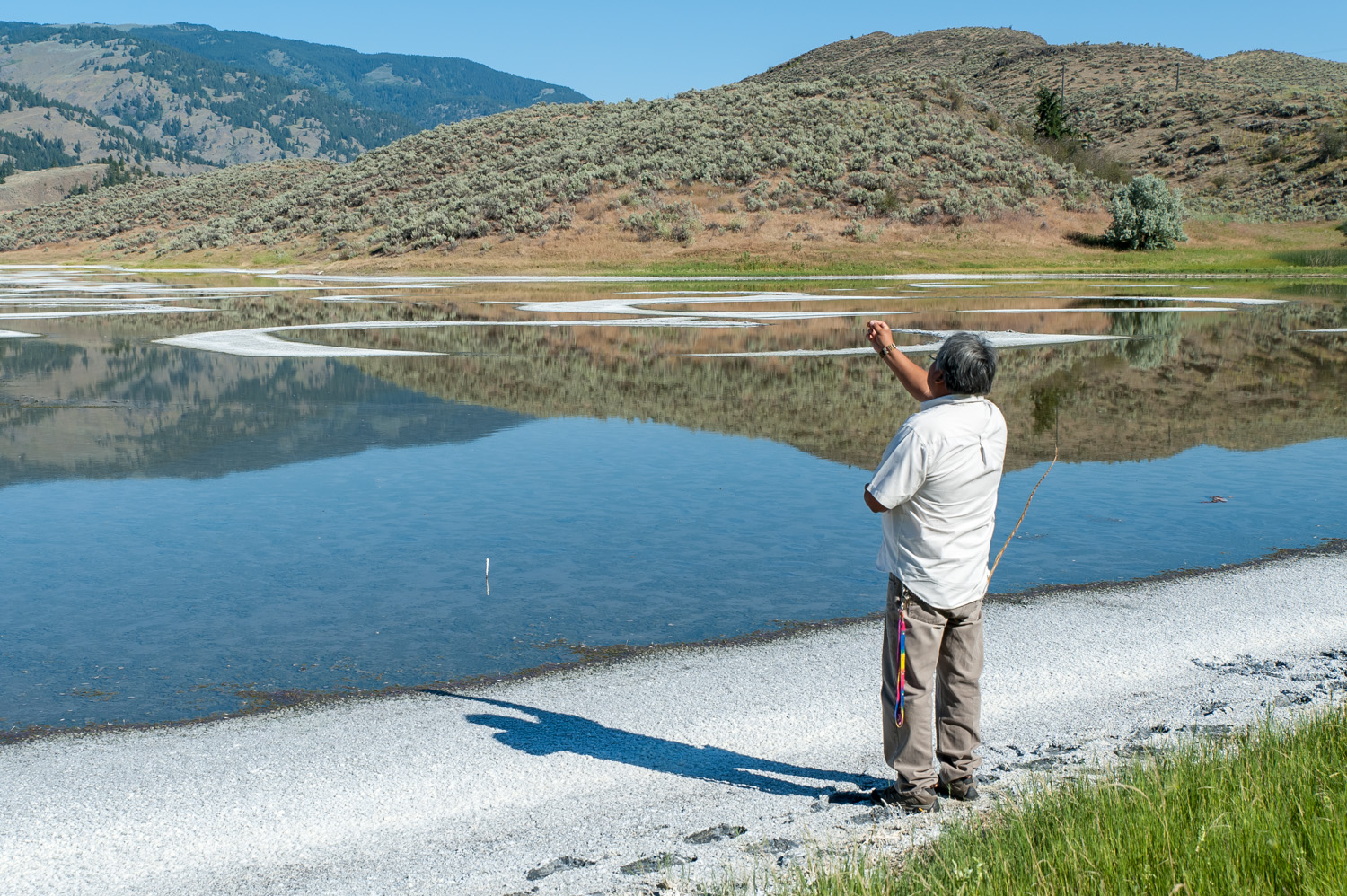
Bob Etienne, an interpreter at the Nk’Mip Desert Cultural Centre, makes an offering of sage and tobacco on the shores of Spotted Lake to ask for a successful salmon run this year. Although the salmon run occurs in Osoyoos Lake rather than Spotted Lake, the later is considered the most sacred of lakes by the Okanagan people. As Etienne puts it, Spotted Lake is the grandfather of the other lakes in the area. (Richard McGuire file photo)

Penticton photographer Mike Biden’s book Jewels of the Okanagan includes this aerial photo of Spotted Lake. The book published in 2014 features exceptional landscape photos of the Okanagan from Osoyoos to Vernon. (Mike Biden photo)
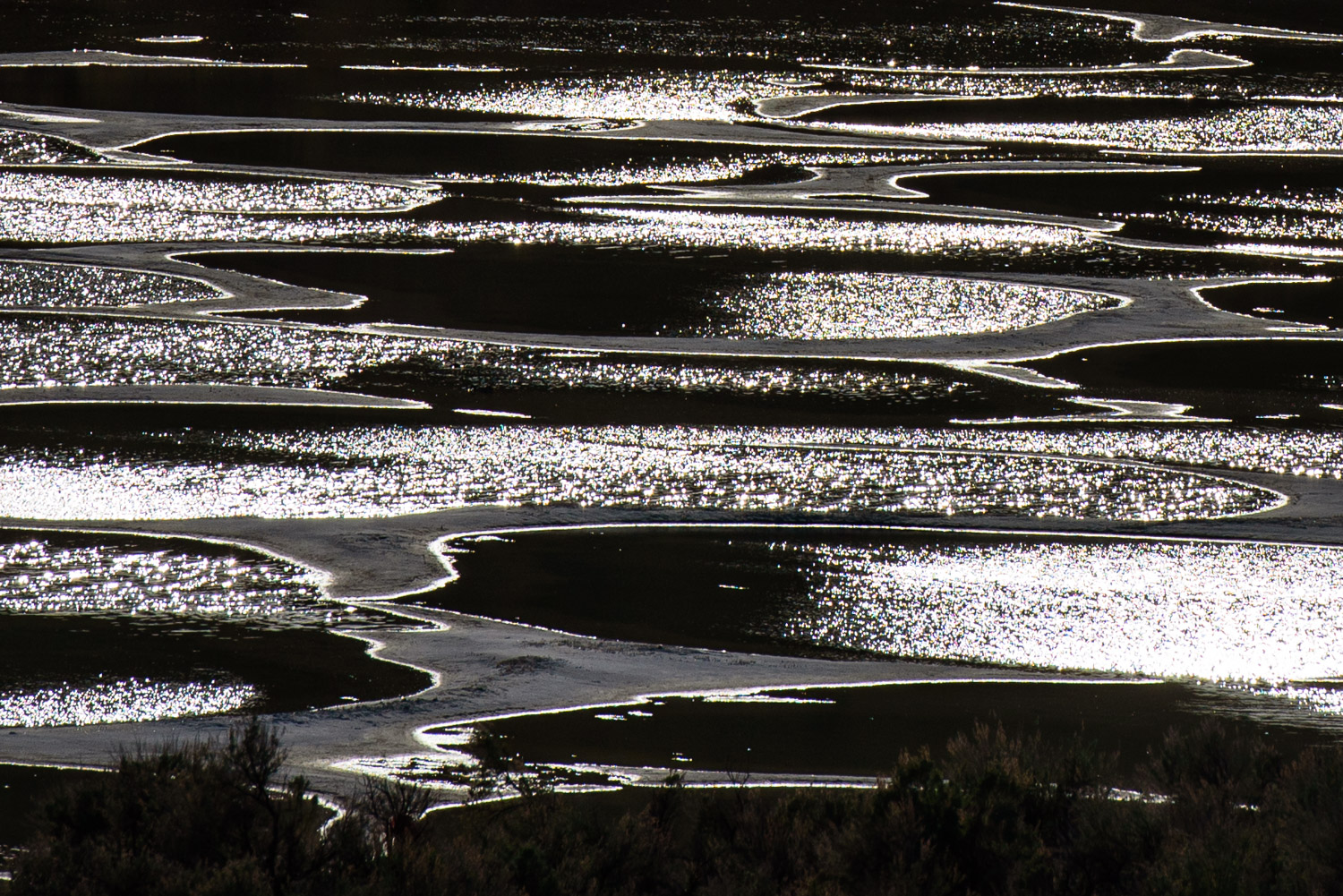
Late day sun rays glisten on the waters of Spotted Lake, framed by rings of mineral-rich mud. The lake is sacred to the Okanagan First Nations of the area. (© Richard McGuire)
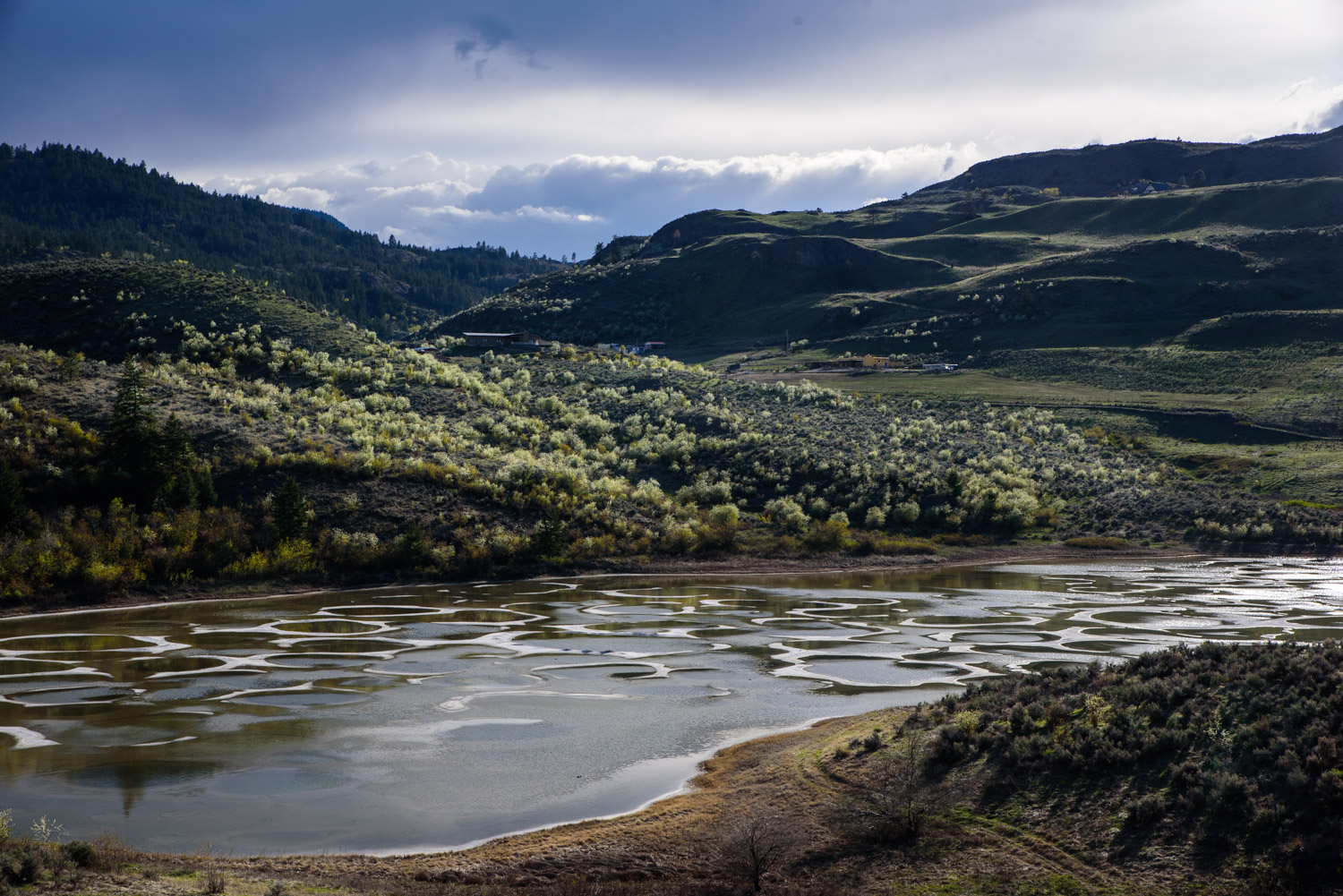
In early April, there’s still water covering the mud rings on Spotted Lake just west of Osoyoos, B.C. The mineral-rich mud rings make this lake distinctive. Okanagan First Nations people of the area say the mud has healing powers and the lake is sacred to them. (© Richard McGuire)