
Don Urquhart
Times-Chronicle
This is the conclusion to a three-part series on elder care. See here for part one and part two.
The COVID-19 pandemic has revealed a great many things the world over about who we are as human beings and how well, or poorly, our societies tick. In Canada, the tragic heart-rending loss of so many elderly in care homes will not soon be forgotten and will surely unleash a torrent of introspection, official reviews, task forces and reports.
There will likely be not only regulatory changes as to how care homes are operated and regulated but social changes as well.
The impact of Canada’s care home tragedy will go beyond the regulatory nuts and bolts to more personal issues.
This includes those planning their senior years and families who are either contemplating the best options for their ageing parents and relatives or who already have parents in homes.
Brittany von Burg, program coordinator with Better at Home in Osoyoos believes there is a mindset change happening in Canadian society.
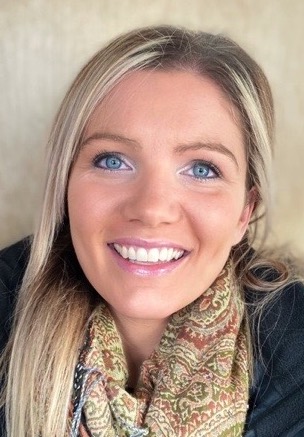
Brittany von Burg
“It’s opening the door to having those hard conversations before it’s a last-minute desperate thing. I think that people who 10 years ago decided to retire out here, and people who are contemplating that now, will re-evaluate because they are thinking about, ‘where is my family’? I think there will be a more thorough evaluation of choices,” she said.
Culture connection
Culture and social norms play a key role in this. In North America, it is more commonly accepted for the elderly to live in homes in their twilight years, as compared, for instance, to Asian cultures where the elderly are looked after by their children, usually in multi-generational homes.
As Tommy Takacs, whose father with dementia is living in Mariposa Gardens in Osoyoos observes, there are a number of staff who are of Indian heritage, yet there are virtually no Indo-Canadian residents in the home despite the significant population in the Okanagan.
He also points to other cultures such as Italy or the Philippines where “it’s just a given that your parents stay at home. Here it’s just easy to pawn them off into old age homes. But it’s just a culture thing.”
For Chrystal Chong, a Canadian-born daughter of Malaysian immigrants, the very idea of elderly parents being placed in care homes is simply inconceivable.
Her father passed away in 2019 after a bout of illness on top of struggles with dementia. Her father was in the hospital on and off, and she says it was a heartbreaking eye-opener to see the situation of the elderly in the hospital. Hospital wards are filled with elderly patients because of a lack of space in care homes and families unable or unwilling to look after them.
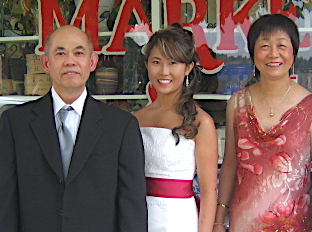
Crystal Chong with her parents.
Chong was shocked when nurses expressed appreciation that she and her family were by her father’s side 24 hours a day. But for her and her family, there was nothing extraordinary about it.
And when her father returned home, there was no question about where he would go, or who would take care of him. “In our Chinese cultural context, we don’t leave our elders. They are the highest part of the hierarchy and that’s how it will forever be, and we will also take care of our mother. It’s how we grew up, what we were taught, our morals,” she said.
“I don’t agree with putting a family member in a care home myself, but I understand that maybe there are certain circumstances that people go through that leave them no option. Not everyone is able to change the diapers, not everyone is able to administer medication which in my case it was insulin for my dad. Every situation, every family is different,” she said.
“But I think it is a sad situation overall that we have the lack of manpower in care homes, a lack of availability of elderly housing and housing in general with the housing crisis.”
It’s not that mainstream Canadian society has necessarily lost its love or respect for the elderly, but social norms constantly evolve, partly driven by geography and socio-economics.
Von Burg highlights part of the problem. “I’ve been with the program for six years and it’s actually quite sad because a lot of people move out here [to the Okanagan] and retire and then their kids are in Ontario or Vancouver and they can’t pop down to take them to the specialist appointment with the doctor, that sort of thing.”
It’s too big of a move, or even impossible because of employment, for many children of elderly parents to move to be with them. And then there are people who live here who have grown children who have created a basement suite ready for them, but they don’t want to do it because of their independence and what they’ve got already set up.”
Illuminating this very point is 82-year-old Oliver resident Margaret Helgeson, who lives independently at home. “I had my parents living with me for the last 25 years of their life. But I don’t know that my children would be willing to put up with me,” she said with a laugh. “I would certainly look at it, but I’m still very independent and I still want to be that way as much as possible.”
In reality, it’s not simply that children of elderly parents can’t or don’t want to look after their parents in a multi-generational setting, but changing expectations and lifestyles over a fairly short space of time of just one or two generations, as Helgeson’s situation demonstrates.
Highlighting that only 15 per cent of people over 85 in B.C. are in long-term care, Isobel Mackenzie, BC Seniors Advocate, notes that in the US and Canada a higher proportion does go into care homes than many other countries, for various reasons.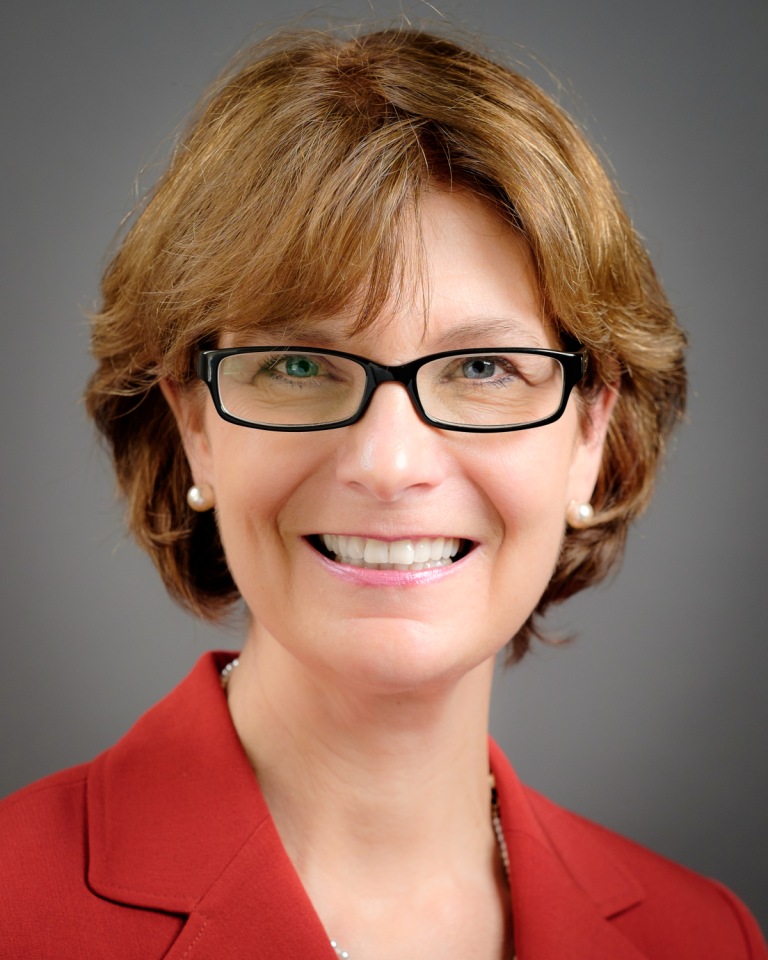
“We are countries of immigrants so we don’t have all the family connections and Canada particularly, we have big distances and all these factors go into why the inter-generational living didn’t form part of the psyche.”
While more recent generations of immigrants tended to bring their parents, this was typically not the case with Canada’s earlier immigrants who came at a young age. As a result, there wasn’t even the possibility to look after their parents, she noted.
“What we do see, particularly in the Lower Mainland, are lots of inter-generational caregiving in the houses, but is that going to be played out in successive generations who were born here and culturally assimilated here?” That remains to be seen.
For Chong, there is no question. “It’s about respect for our elderly who have given us everything and I think we have a big obligation to them.” And significantly, should she have children one day, this respect and duty – known as filial piety – will be thoroughly ingrained, she said.
Respect for one’s elders is also a core value amongst First Nations. Mackenzie points out there is much more inter-generational living amongst First Nations communities. “It is a culture that values elders and that is reflected throughout everything, including in how they care for them.
“First Nations in that arena is a very good model but what remains to be seen however is that as we evolve over time is it going to start to be a dissipation of that.”
This is already evident, she said, by looking at First Nations peoples living in urban settings as compared to those living on reserves.
Changing demographics is also an important factor, she added. In North America, younger generations coming up are less likely to have a spouse, less likely to have children and if they have children, they are likely to have less than previous generations.
“We’ve got to think about that as we look to the future,” she said, pointing to a more recent phenomenon of independent, congregate-type living situations.
This can be seen in what is known as ‘naturally occurring retirement communities’ or NORCs. Essentially condominium living that has naturally forming clusters of seniors living independently and supporting each other.
Care home outlook
And while the socio-cultural environment may be fuzzy in terms of if and how, and by how much societal norms are being influenced by the pandemic, the more formal institutions of care homes and the related regulatory framework might be easier to assess.
“When we look back over this pandemic and we look back at those horrific first two months in Ontario and Quebec in terms of what the pandemic looked like in long-term care and the consequences of that, I think really what this has focused is the need to improve quality of life in long-term care, which is arguably the most important thing,” said Mackenzie.
She highlights that care must be taken to avoid an approach that infection control is the number one priority because that will create an incredibly antiseptic environment. “Care homes are where people go to live and you need to balance the risks of communal living with the fact this is a person’s home.”
In B.C. most long-term care is publicly funded and privately delivered, and as a result, the government has the greatest responsibility to ensure a proper care environment, she said.
In general, this has seen a “very hands-off approach,” in terms of dictating what happens in the long-term care environment beyond the basic levels of health and safety that are ad- dressed through licensing and through inspections. “But it’s much more than that, and we have a duty and obligation I think to ensure that the total well-being of residents is being met as much as possible.”
The process of examining the sector has only barely begun, she said, noting that her office is currently doing a review of COVID outbreaks looking at how B.C. could have done better in terms of the outbreaks in care homes. “That’s a very small piece of it. The bigger question is, what is the future going to look like? This will gather pace in the fall as the situation in Canada settles, she estimated.
“The change overall is that people are thinking about it where they didn’t before. I think the public has been awakened and it’s their system and it’s their money. And I think the change will come because the public is going to demand more accountability and more information and they’re going to be more astute around things in the long-term care system.
“That is going to drive positive change which will seem frustratingly slow for some people because it’s going to be incremental, but I think that the change that’s driven by the public demanding it, is the change that will be sustained over time,” Mackenzie said.






Care for elderly people at home is existing here in Belgium since 1934. It’s done by registered nursus, belonging to an institution called “WIT-GELE KRUIS or “WHITE-YELLOW CROSS. The nurse comes to the house in the morning to take the person out of bed and to wash and dress him or her – the nurse puts breakfast on rhe tabble and hekps the patient eat if nec essary. The nurse returns in the evening to put the person in bed.
I am a 93 year old man with a handicap (wheelchair) and I live on my own very comfortably
I know, one cannot compare Canada with Belgium – everyone lives closer together here, but with a bit of good-will, there cqn be a similar situation set up in Canada
I give you the e-mail address of the Wit-Gele Kruis here where you can ask for information and help: [email protected]
Good luck
Thank you for your comment, it’s interesting to learn what other countries such as Belgium do in this area. Certainly, a lot could be learned from other cultures/countries as Canada goes forward in addressing the many issues relating to elder care. Cheers!