Don Urquhart
Times-Chronicle
Last week in part one of this three-part series on elder care we examined the impact on senior living and long-term care homes from the Covid-19 pandemic. This week we share some of the personal stories of how the pandemic impacted seniors and their families.
Tommy Takacs
For Tommy Takacs, the COVID-19 pandemic has involved both emotional and physical pain for him and his parents. Just over two years ago his parents – both suffering from dementia – went into long-term care at Mariposa Gardens in Osoyoos. Returning to Canada to be closer to his parents after 32 years in England, Takacs was here barely six months before the COVID-19 pandemic struck.
“I went from seeing them five days a week before COVID to just 15 minutes through a glass window. And of course, both my parents are in the same facility but on different levels and I was only allowed to see either my father or my mother. I wasn’t allowed to see both of them.”
“I didn’t see my mom since before COVID,” and sadly this meant that while they had been speaking on the phone, he didn’t see his mom in person before she passed away about five months ago, unrelated to COVID-19.
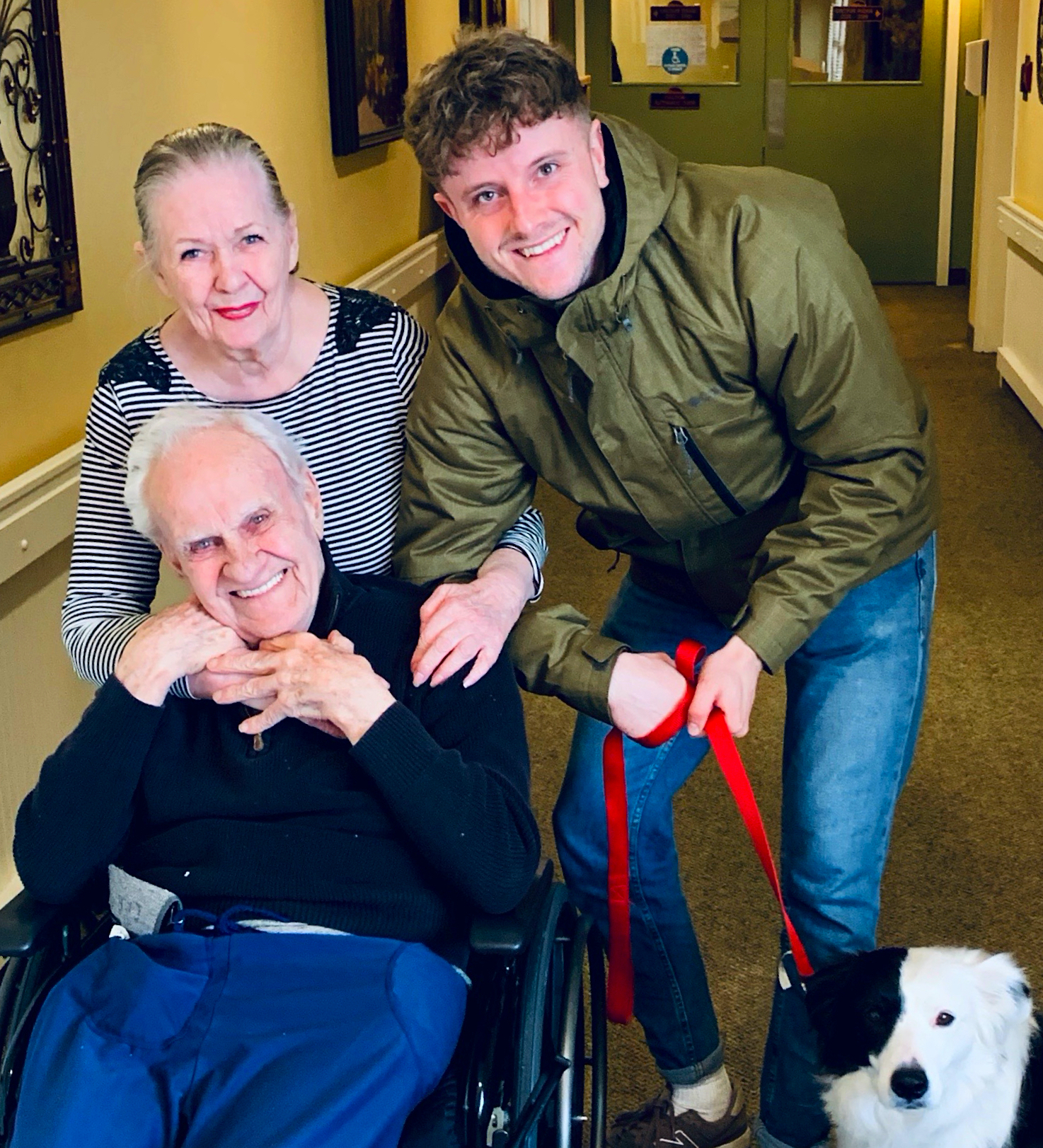
Tommy Takacs enjoying a visit pre-pandemic.
His father, on the other hand, started off the pandemic with a rough ride, when he started showing symptoms of COVID at the very start. “He’s in a wheelchair and because he’s got dementia and Alzheimer’s to a certain degree, they put him in his room and taped it off and wouldn’t allow him to leave.
“He was getting up, falling over because he wasn’t supervised, so he had bangs on his head, cuts and bruises because they basically just shoved him in a room and basically said ‘fend for yourself, mate’. And that’s not right. They just literally put tape across the door saying nobody’s allowed in, nobody’s allowed out.”
Eventually, his test came back negative and he was allowed to leave his room again. “Thank God, I mean how much damage can you do falling in the corners or banging your head on the toilet or whatever?” The rules are frustrating, he adds. “I think a lot of homes make up quite a bit of the rules, but of course they’re drawn towards whatever the government says.”
On a positive note, he and his father are now able to visit in person – two metres apart with Takacs wearing a mask, his father exempted. “So we’re now in the same room at least,” he adds. But, there is a harsh downside.
Around late February Takacs was told by the care home staff that he could only see his father once every two weeks.
“So not 25 minutes every Monday, it’s going to be 25 minutes every second Monday. That’s just wrong and unacceptable as well.” The explanation he received was “staffing budgets and labour costs.” What also riles him is the fact he wasn’t informed officially, he was simply told casually by one of the staff.
Margaret Helgeson
For 82-year-old Oliver resident Margaret Helgeson, living independently at home is important to her and she says she will continue to do so as long as she’s physically and mentally able. Having had knee surgery she has difficulty with some household tasks.
With no family in Oliver, Helgeson turned to Better at Home for help with housekeeping and yard work. “They’ve done really well for me; I am most pleased with the use of their service,” she said.
While independent living is important for her, Helgeson said she wouldn’t be opposed to living in an assisted living home. “But this is my home and it’s paid for, and I have the ability to look after it mostly by myself, but for a few drawbacks. I suppose as I get older I will require more services from Better at Home though.”
As for the pandemic, “I’ve cut back the amount of social things that I was doing and I’ve cut back my ‘pod’ of people to three, one of them being my homemaker and then I’ve got a really good neighbour who I do everything with – I walk with her, we do groceries together,” she said. Helgeson also helps her neighbour out in one other important aspect as she still drives and in fact, just had her licence renewed.
She still maintains her social network via telephone. “I think my mental attitude is still good. Having conversations and also being able to get out and walk every day is a good thing. We change the various routes we go on and it seems to be enough just to be able to get out of the house physically. It’s a good thing I think.”
“I am also a quilter who keeps quite busy most of the time with that, and I think being involved with something like that I’m not just sitting on my duff watching television for hours on end, that sort of thing. You have to have other interests like hobbies and what not to keep you going. I think it helps the mental stability as well.”
Nikki MacGregor
The last time Nikki MacGregor saw her 90-year-old mother was November 2019. Living with her husband in Florida, they had just returned from a trip to the UK when COVID-19 lock-downs were beginning, which ended any notions of visiting her mom. Sight impaired, MacGregor’s mother lives in Sunshine Ridge Seniors Community where she lives somewhat independently – meals and housekeeping services are provided along with social activities among others.
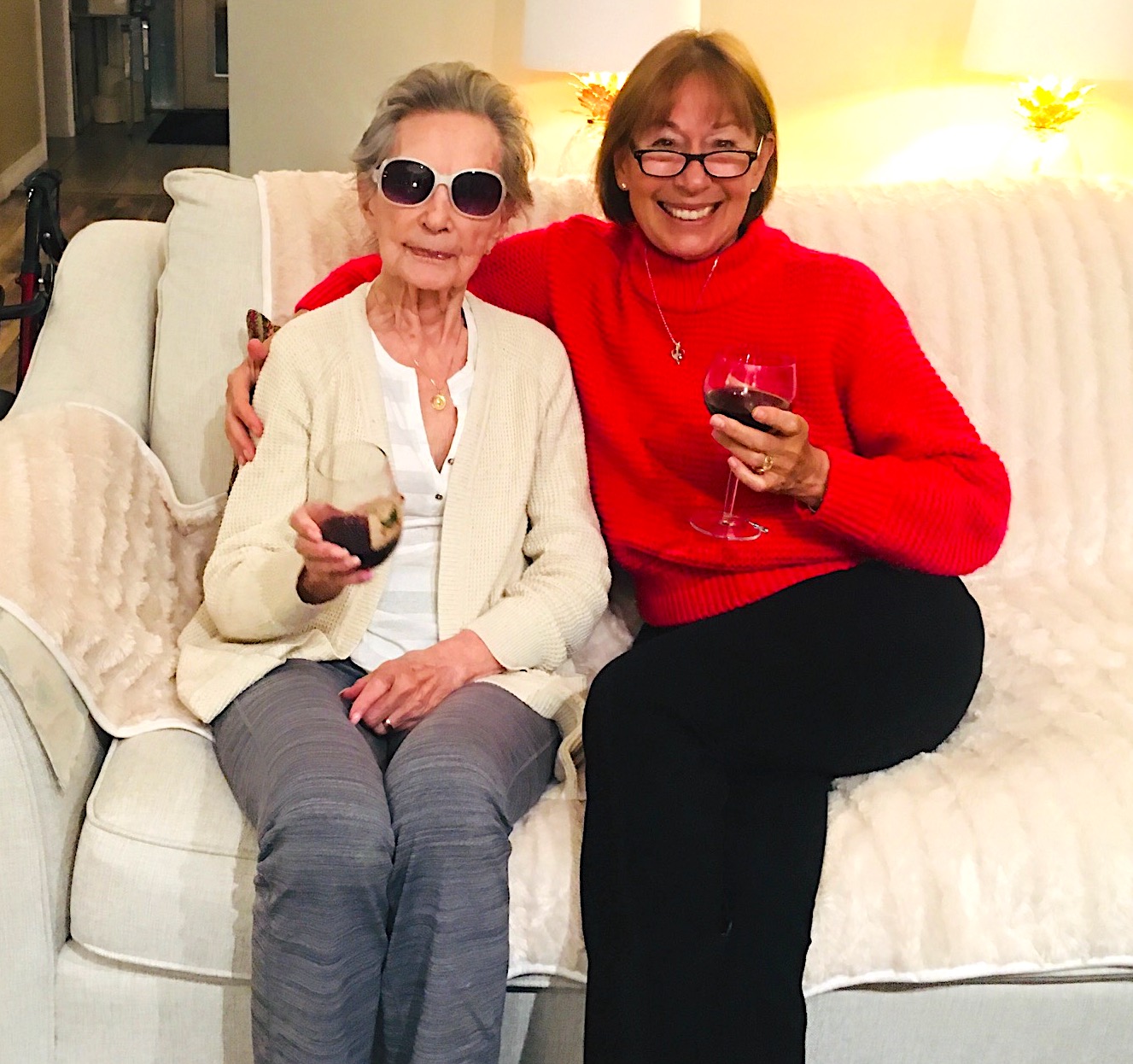
Nikki MacGregor relaxes with her mother.
To help overcome the sight hurdle, her mom has an Amazon Alexa which she can call people from as well as get information from the Internet, listen to music and audiobooks, make shopping lists and so on.
There’s been a couple of occasions where she’s had a fall and while she is supposed to wear an alert necklace around her neck, it’s often left hanging from her walker. MacGregor laughs that her mother is “a bit of a rebel, she’s like a bad teenager.” But in this, Alexa proved her worth more than once as MacGregor’s mother can use the device to call for help.
The otherwise relatively smooth living situation changed dramatically with the onset of the pandemic, however. “It was pretty difficult for all of them during the earlier days of COVID because they were confined to their rooms and if they were going out it had to be essential visits to doctor’s appointments and so on.” Visits to the hospital for any type of procedure also meant automatic quarantine once they returned.
“Everyone was meant to stay in the rooms and the meals were delivered to them and that was really, really isolating for a lot of the people,” she said. Telephone calls became pretty much the sole form of communication, MacGregor says.
Her mom did have a close friend she spent most of her time with, but as the pandemic crisis deepened last year she was pulled out of Sunshine Ridge by her family, increasing her mother’s sense of isolation.
Also crucial for her mother’s coping has been the involvement of Better at Home, says MacGregor. “I must say that Better at Home’s Brittany [program co-ordinator, Brittany von Burg] was an absolute star at the beginning of this because she basically ran things herself and she covered things as far as my mom went for the first three months of my mom’s struggles.”
Her mother can’t, for instance, manage the blister packs that her medication comes in so they need to go into little cups that she can take and little bits and pieces like putting outfits together for her because she has difficulty with colours and when she gets dressed she wants to make sure things match and that type of thing.
“Brittany would do that type of thing for her plus she had some doctor’s appointments and they provide the transportation and it’s just been superb,” she added.
In part three next week we will look at what the future holds in store for elder care in British Columbia and whether societal notions of how to care for elders are changing as a result of the impact that the COVID-19 pandemic has had on Canada’s elderly.