By Lyonel Doherty
Times-Chronicle
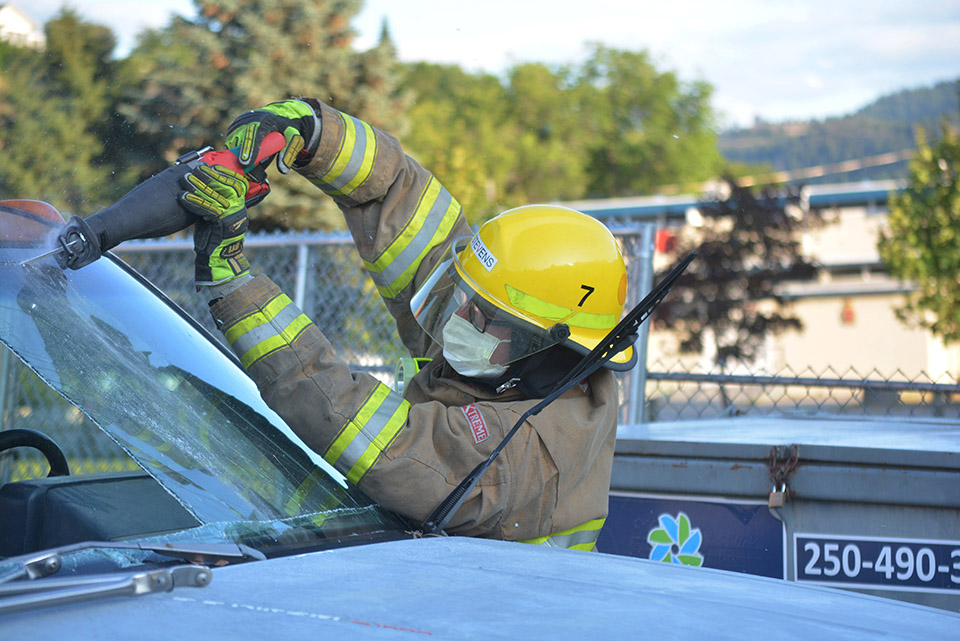
Chris Stevens cuts a windshield during auto extrication practice. (Photo by Lyonel Doherty)
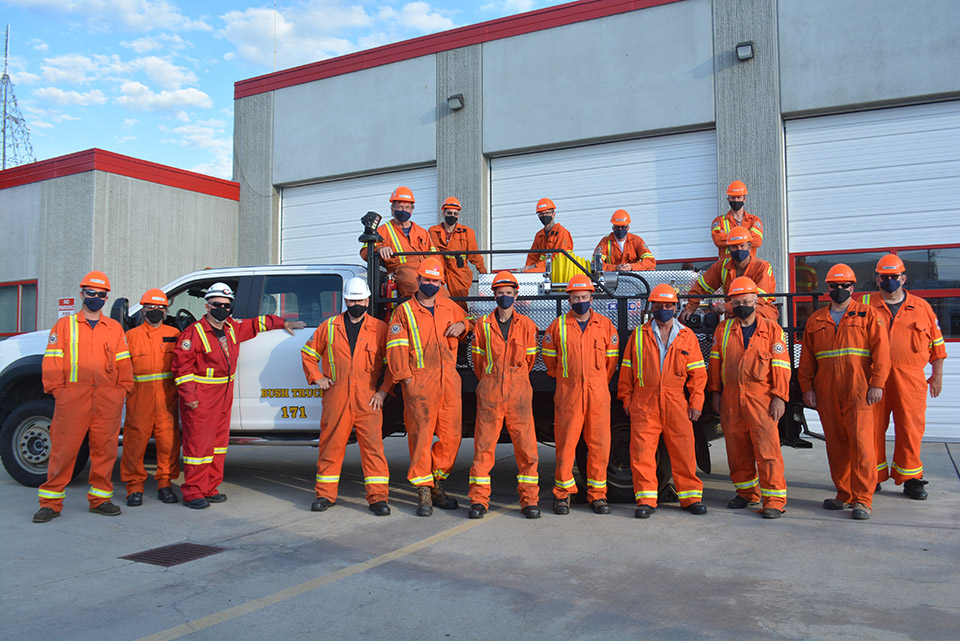
Firefighters in Okanagan Falls have added yet another crucial piece of equipment to their growing inventory.
After two years of searching for the ideal “bush truck,” Fire Chief Rob Oliver found it at a local dealership.
Like a lost love? Not quite, but close.
He described it like a kid describing his favourite toy. It’s outfitted with foam capability and a remote control 360-degree spotlight system.
The 2017 Ford F 550 XL diesel truck holds 200 gallons of water, 350 feet of inch-and-a-half line, 200 feet of inch-and-a-half line, and 100 feet of booster (three-quarter-inch) line.
“Because with the way the weather is getting now, we need a quicker response for grass fires,” Chief Oliver said.
He noted the pumping system is very simple to operate: you basically hop in the truck, flip a switch for the power, hop in the back and activate the line.
“We can take off within a moment’s notice . . knock down a potential wildland fire quicker than normal.”
Needless to say, the truck can go places that other vehicles can’t, which cuts down the response time.
In the wintertime, you can take the tank off the back deck and use the truck as a utility vehicle, hauling hose and other equipment, the chief said.
As far as cost goes, he noted there is $77,000 in the truck right now, including the pump and other equipment. This was paid for via a grant from the Union of BC Municipalities and the fire department’s reserve fund.
“It didn’t (directly) come out of the taxpayer’s pocket,” Chief Oliver said.
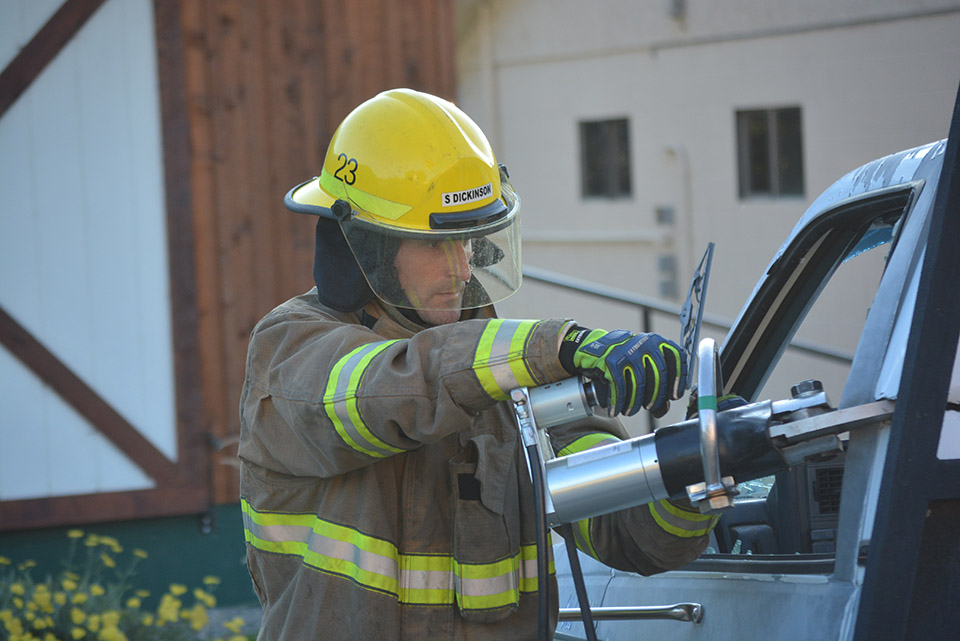
Stuart Dickinson uses a hydraulic tool to cut a vehicle post during auto extrication practice. (Photo by Lyonel Doherty)
The department currently has 22 members and is always recruiting. Anyone interested can drop by the fire hall on Wednesday nights between 7 and 9 p.m.
Needless to say, the pandemic has made it difficult to recruit new members, the chief pointed out.
But the fact is their first responder call volume is down 50 per cent, he added.
“The challenge we face now is that the powers to be have taken it upon themselves, in a good way, to lessen our volume in first responder calls because they don’t want the fire department getting sick.”
All of their non-essential first responder (medical calls) have been cut back for the safety of firefighters.
“We don’t get called for routine things (anymore); they just don’t want us taking the chance.”
Chief Oliver said many fire departments are experiencing similar decreases in call volumes.
While the reason is clear, he said it’s a bit worrisome because members tend to get a bit “rusty” if they’re not on calls. As a result, the department is conducting additional first responder training to keep members sharp.
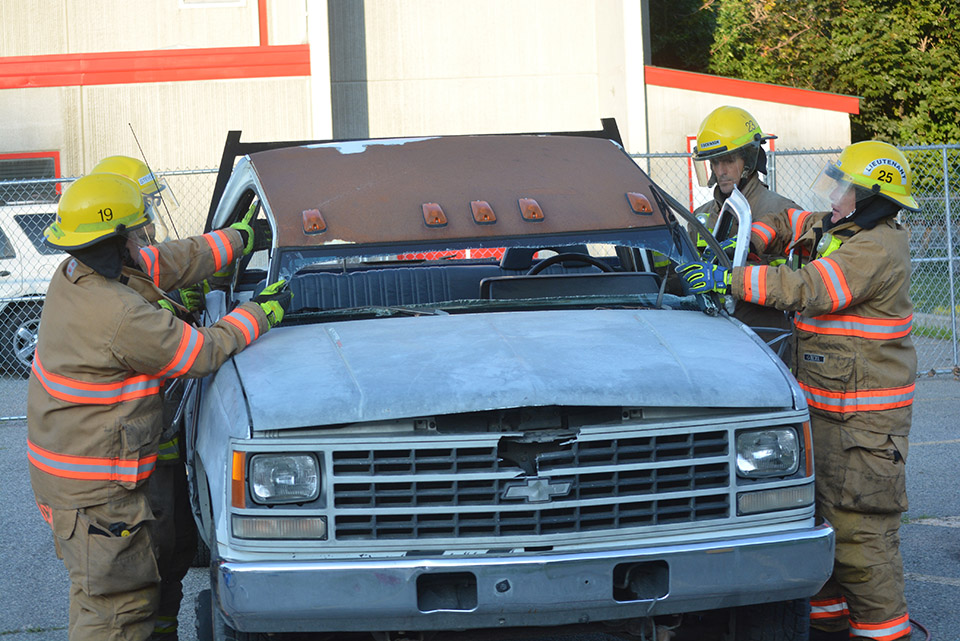
Firefighters lift off the hood of a truck during practice to hone their auto extrication skills. (Photo by Lyonel Doherty)
When firefighters do attend medical calls, they wear gowns, masks and gloves. They determine what the emergency is at the door and will provide first aid if necessary, calling in a second member to help. The third member stays outside with the truck.
Another vehicle follows up and is utilized as a changeroom for members to shed their clothing and put new clothes on before returning to the hall.
“It’s hard right now with COVID and we are doing our best here,” the chief said.
Each member who shows up for practice must wear a mask, wash their hands and sign a form indicating they are not ill.
It’s a protocol that members never had to follow before, but these are new times dictating a new normal.
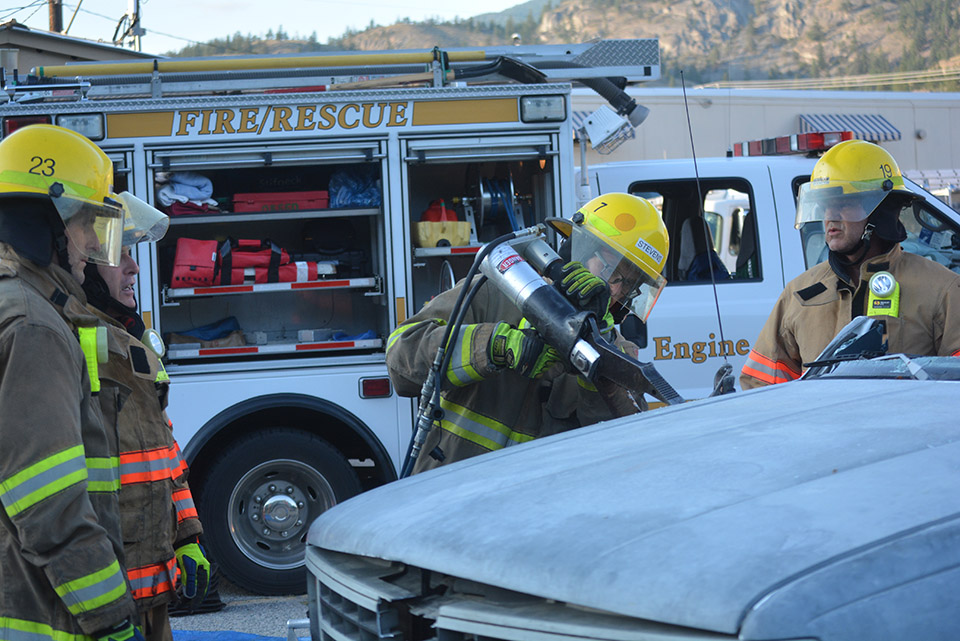
Photo by Lyonel Doherty)