By Don Urquhart, Times Chronicle
The Lower Similkameen Indian Band’s Natural Resources (NR) team, Parks Working Group (PWG), and Skul’qalt Forestry Ltd, continue work to rehabilitate the sməlqmíx Protected Area after the devastation from 2023’s Crater Creek Complex Fire.
The wildfire burned over 44,000 hectares of trees, vegetation, and tmixw (all living things) habitat which supported many endangered species, their food sources, and their sanctuaries.
Rehabilitation work – which began before the fire was declared “out” – was given a boost recently from volunteers and partner agencies.
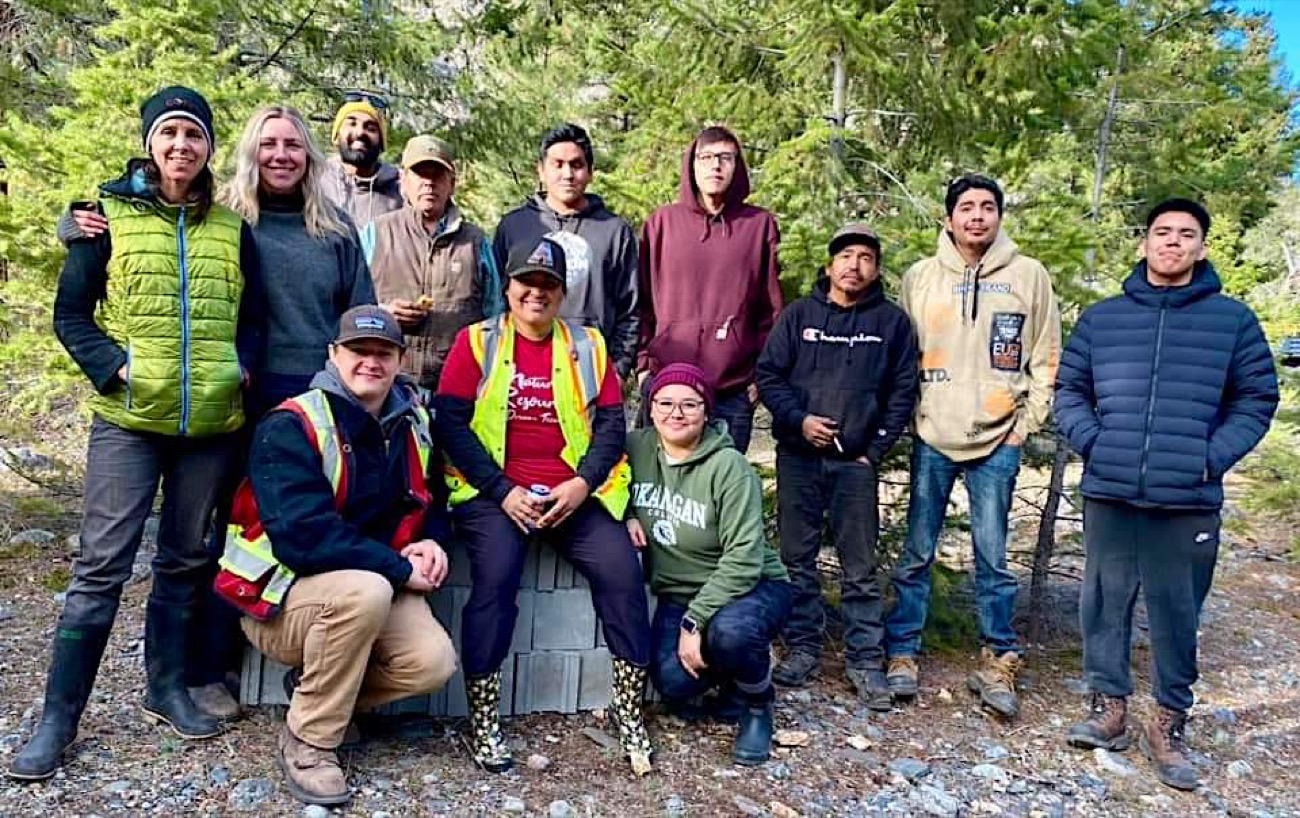
A group of volunteers from partner organizations.
Tiinesha Begaye and Janessa Lambert photos
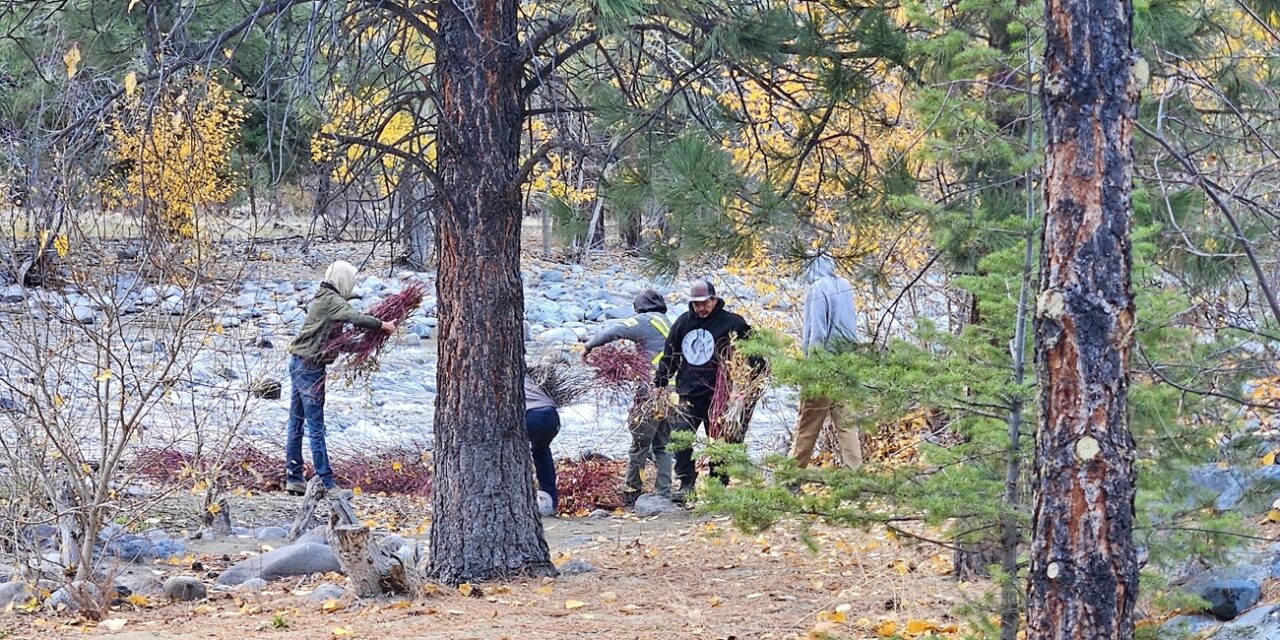
In the first week of November teams led by the band’s Natural Resources team and Parks Working Group, including partners from EcoJustice Canada, Corvidae Environmental, Skul’qalt Logging, Rob Heinrich Excavating Ltd, Cariboo Carbon, and local volunteers worked on rehabilitation.
This included harvesting and transplanting local plants & vegetation into soils, riparian areas, and streambanks affected by wildfire. The restoration work provides bank stabilization, water cooling, and endangered species habitat rehabilitation, according to the Lower Similkameen Indian Band (LSIB).
“By creating conditions for native vegetation to grow back, especially in high intensity burn areas, this work helps bring back local food sources for tmixw native to the affected area,” it said.
“Willow staking and log pinning is a bio-engineering method that helps with stream bank stabilization and steep slope erosion control,” stated Tiinesha Begaye, Project Lead.
“Willow planting also encourages other species of vegetation and berry-producing shrubbery to grow near water sources, helping restore balance to the tmxwulaxw (the lands), providing food sources to animals and birds, and giving strength and shade to riverbanks for cooler waters for fish habitat,” Begaye said.
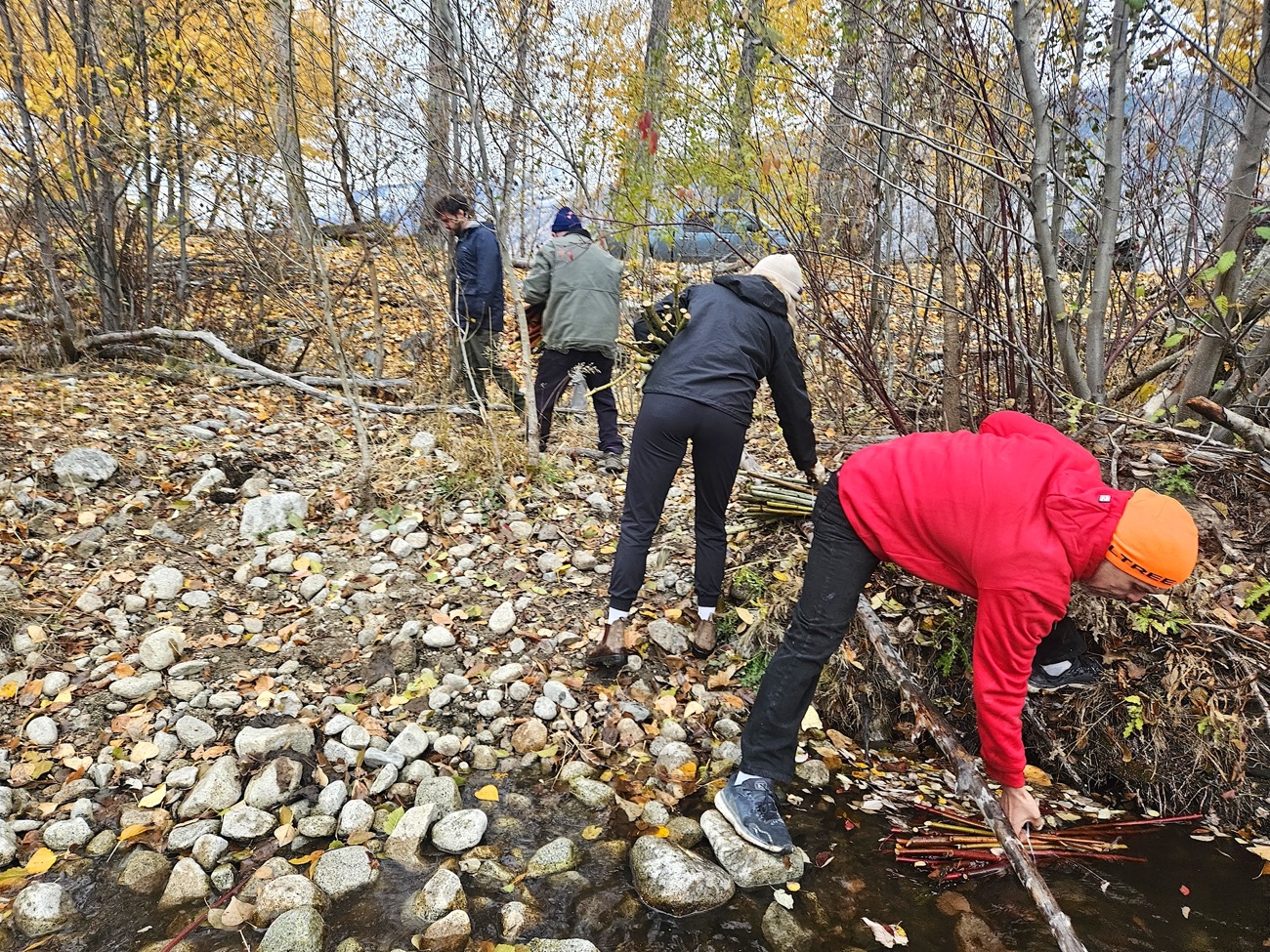
Wetting of bundles of willow shoots.
Tiinesha Begaye and Janessa Lambert photos
An excavator, run by owner/operator Rob Heinrich, constructed snake den habitat where former dens and tree root systems had been razed by fire. The burnt roots, vegetation, and cooked soil were collapsing the old dens. This work provides safe havens for the endangered reptiles in the area and will also encourage their food sources to return, the band’s Natural Resources team explained.
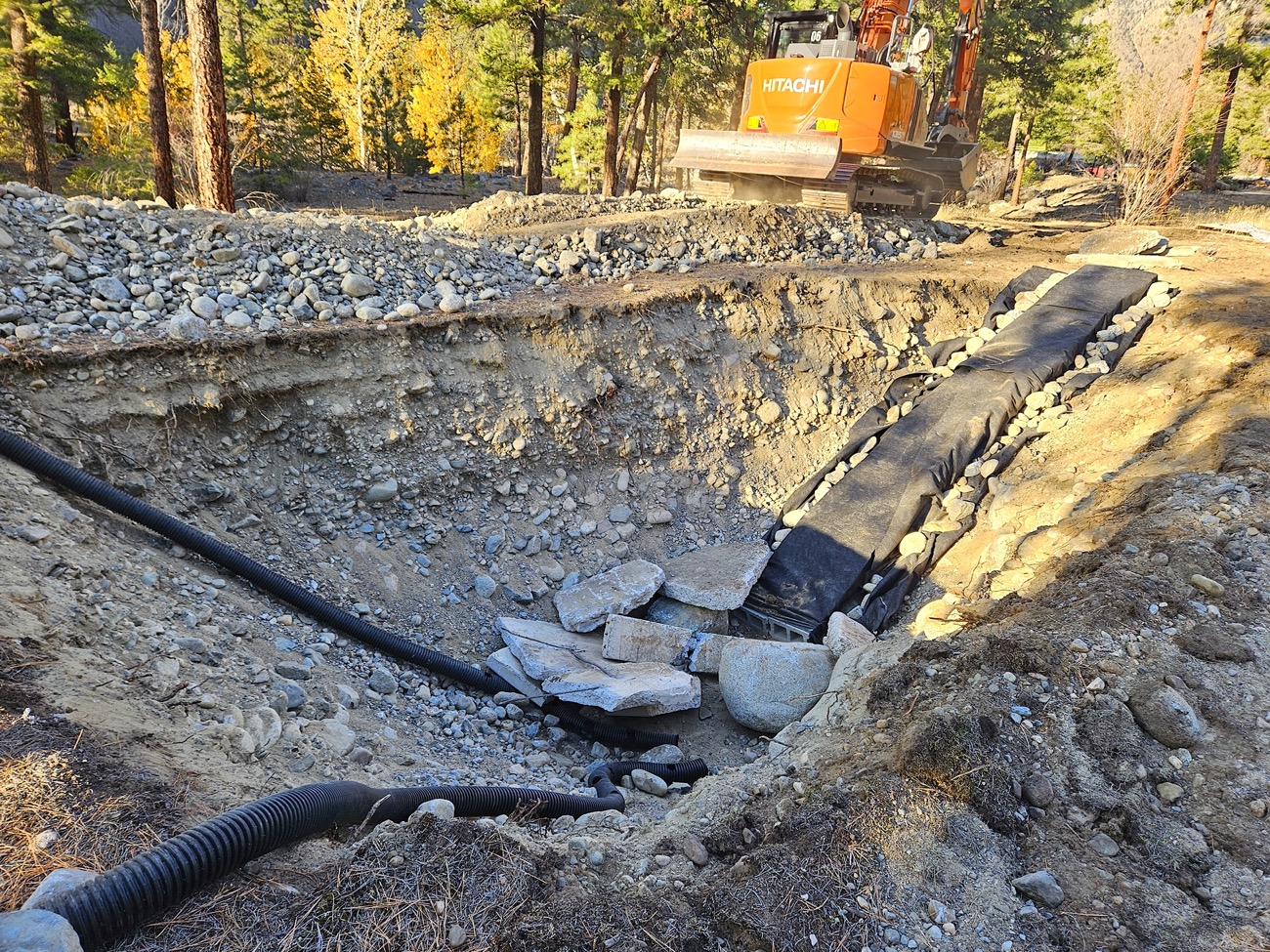
Construction of a snake den.
Tiinesha Begaye and Janessa Lambert photos
The LSIB said it also worked with local ranchers to fast-track grass reseeding to restore livestock range tenures within affected areas.
LSIB Councilor Janet Terbasket said, “We are unique and distinct from the broader Okanagan Valley. We have hundreds of endangered species that make our lands and waterways so invaluable. We all must work in partnership with local businesses and communities to restore these beautiful smǝlqmíx homelands that we share with our neighbours in the Similkameen.”
“This project is just one of the many projects in the scope of LSIB’s NR department and the PWG team, and we look forward to showing neighbours and allies how we’re helping our lands and beings heal. limləmt (thank you) to all who continue to heal and care for tmxwulaxw (the lands) and tmixw (all living things),” the LSIB said.
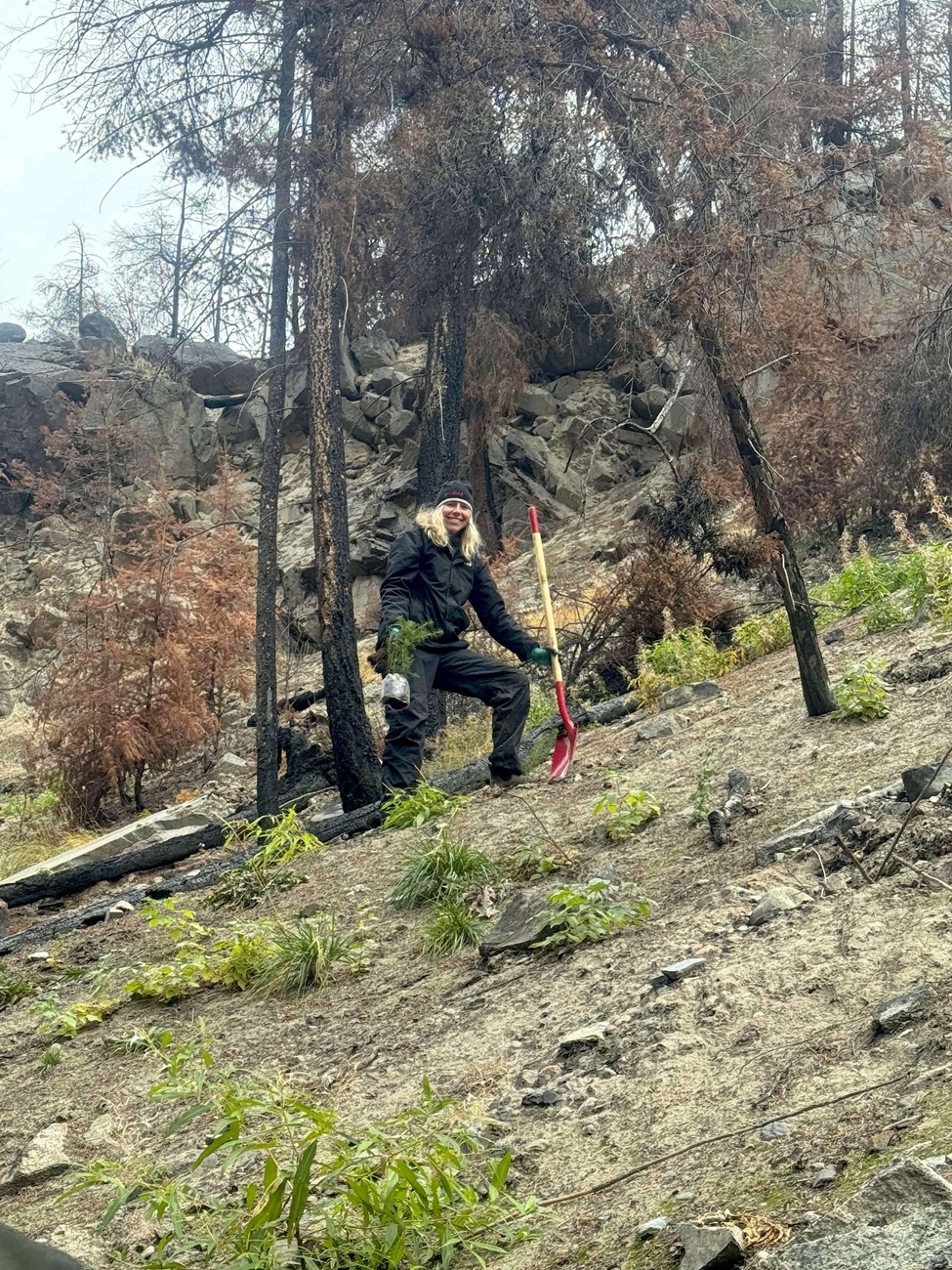
Volunteer tree-planter on the slope.
Tiinesha Begaye and Janessa Lambert photos
The historical and traditional territories of the LSIB stretch from Ross Lake/Manning Park in the west, to the Kootenays in the east, the Nicola in the north, and to the Methow Valley (US) in the south. LSIB’s NR, PWG, its workers, volunteers, and partner agencies, through support from Tree Canada and others, have planted well over 60,000 plants since 2023 in the affected areas.
Current plans are to replant up to eight million trees and shrubs over the next 5-7 years within the nʔaysnúlaʔxw (Ashnola) corridor to continue to help restore balance to the tmxwulaxw and tmixw.
The PWG and its partners welcome contributions to the environmental trust that has been set up to support the continuation of this important work. Those wanting to contribute can do so here: smǝlqmíx Protected Area Trust Fund.
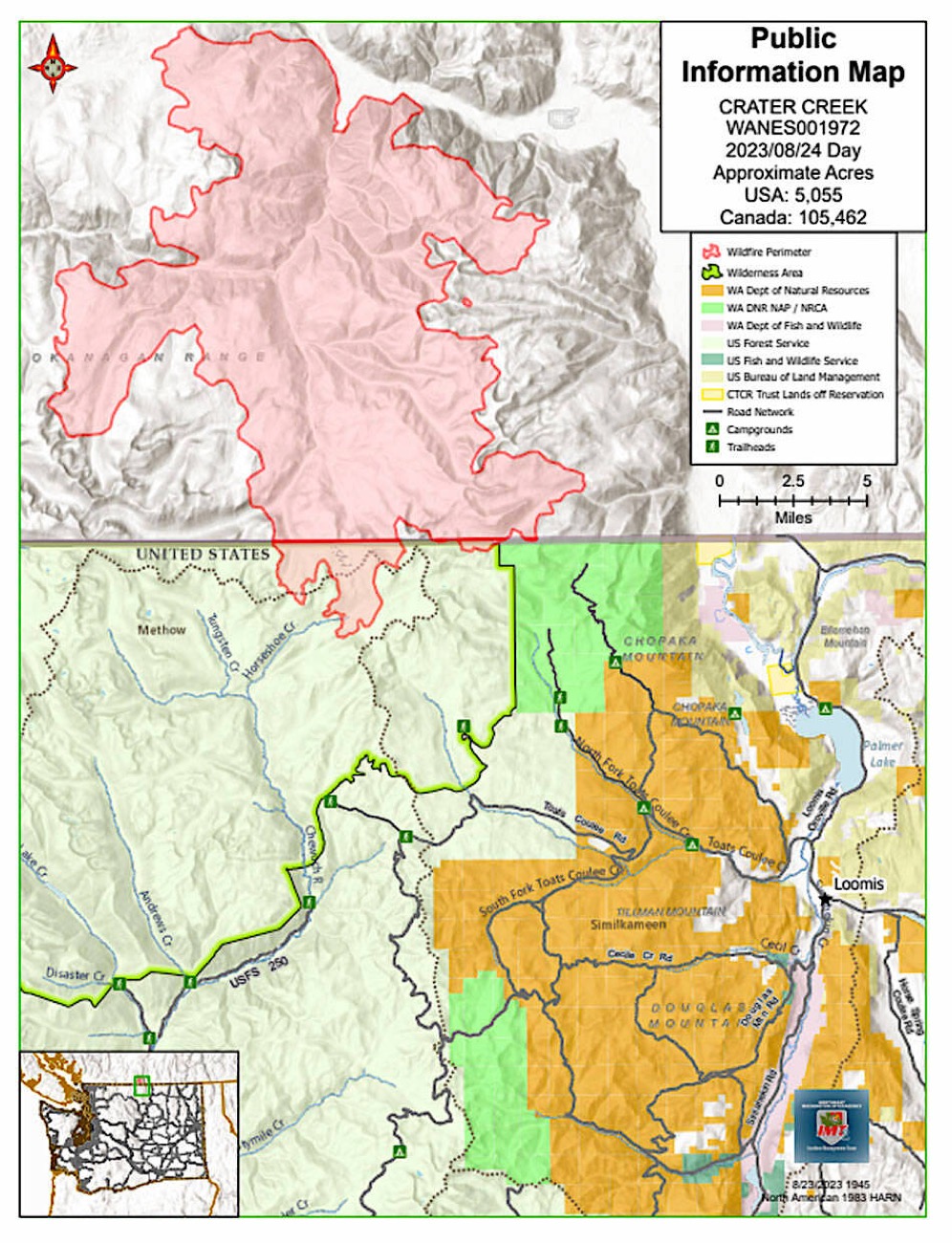
Map showing the extent of the Crater Creek Complex wildfire.
Okanogan Gazette-Tribune map image