By Lyonel Doherty, Times Chronicle
First responders are fast, but they were super “hero” fast at Area 27 last week thanks to Chevrolet Canada.
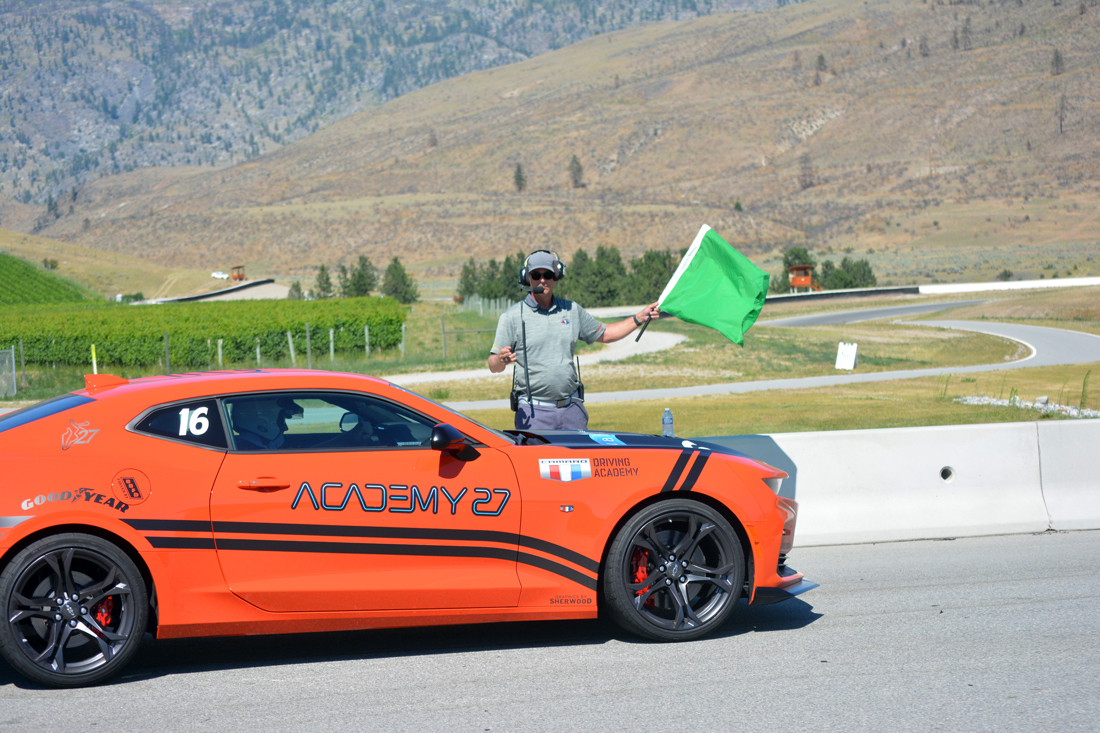
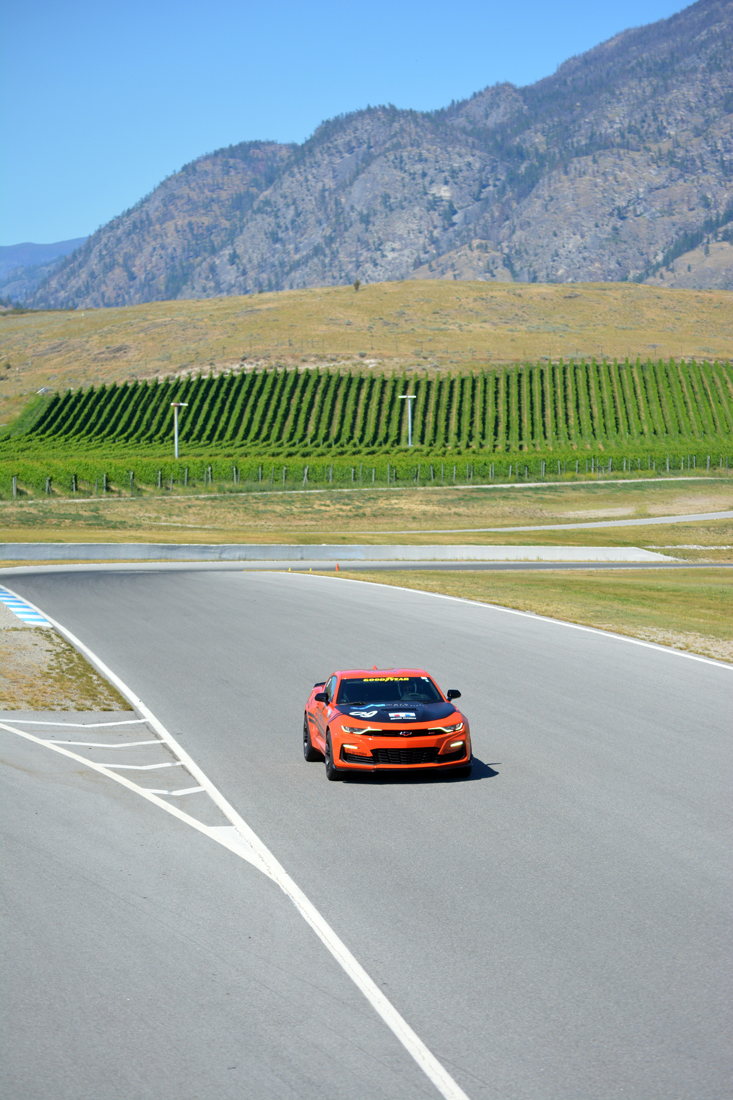
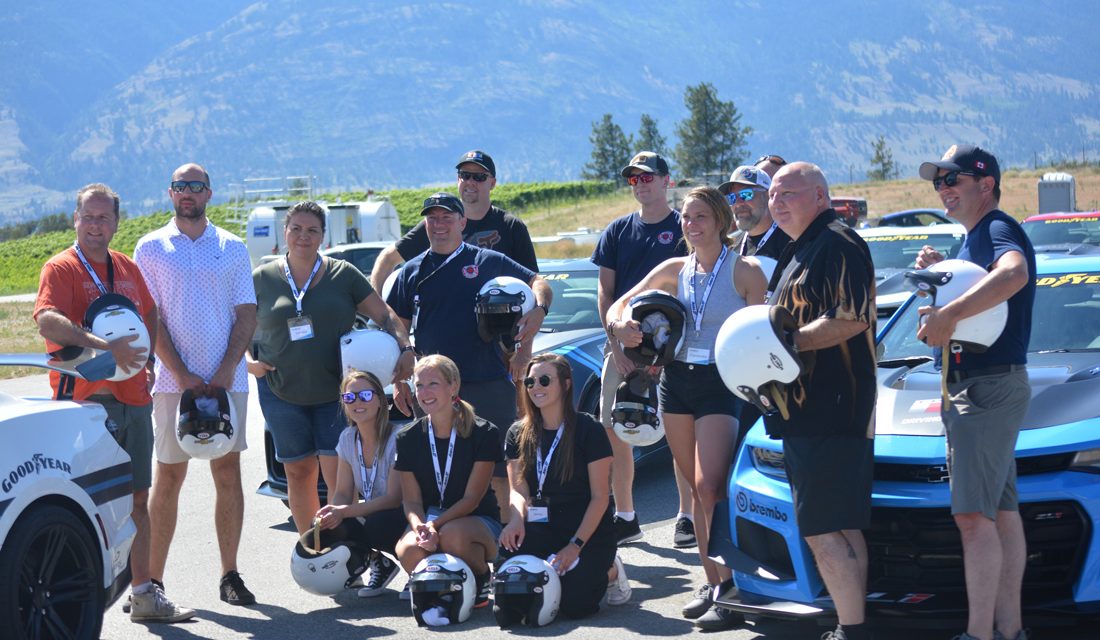
Both companies teamed up to host a local heroes driving event on July 28, when police, firefighters and paramedics were given a Camaro SS1LE for the day.
Chevrolet has a partnership with Area 27 through the Camaro driving academy by providing the vehicles.
“What we decided to do was invite local first responders to experience the academy, to get more people exposed to performance driving,” said Benjamin Trattner, senior account manager with Momentum Worldwide, the marketing agency behind Chevrolet.
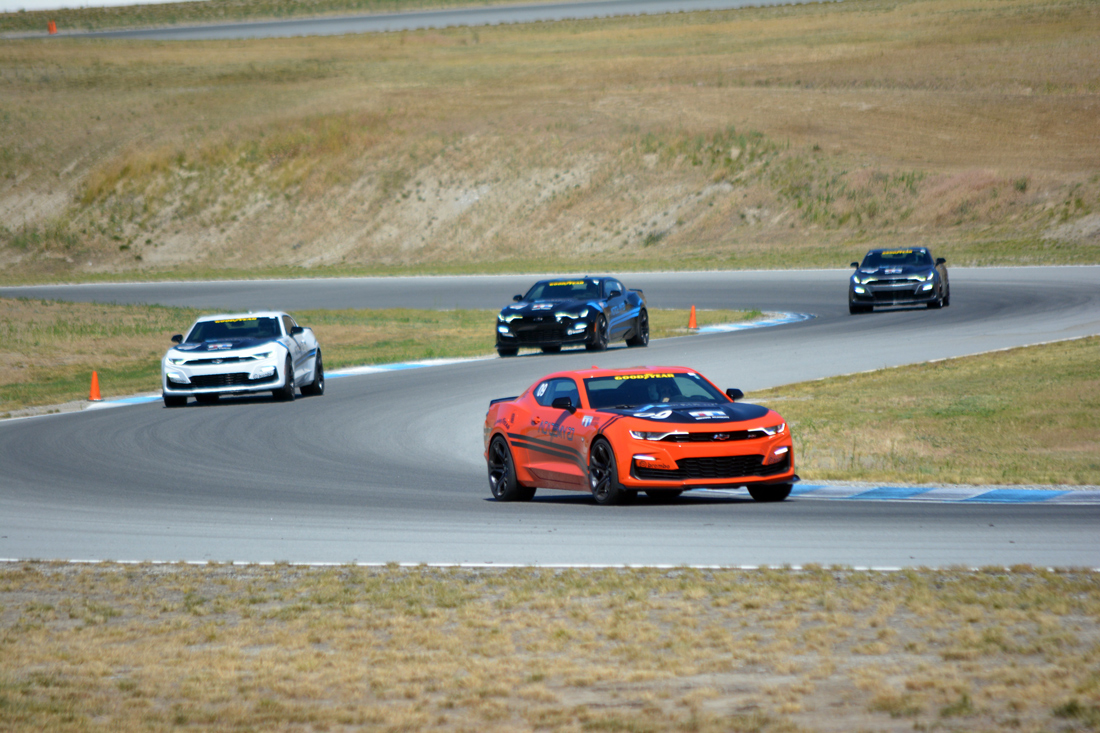
Thirteen local heroes, plus two officials from Chevrolet, took park in the event, which saw three top level driving instructors teach them everything they needed to know. They learned the fundamentals including braking, cornering, and basic handling of a vehicle with 450 horsepower. (The instructors were using 650 horsepower vehicles.)
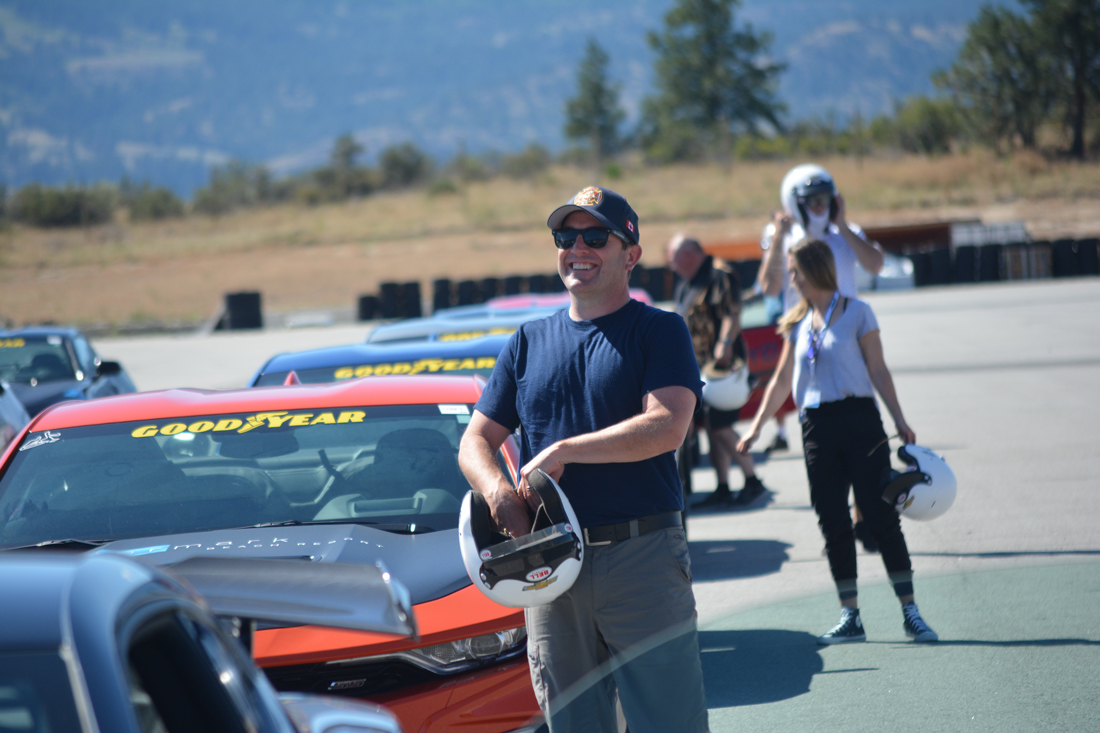
“Part of what I love doing is seeing the smiles,” said Trattner of the drivers who tore around the track like it was their own.
“This is our idea of giving back (to these heroes) and awarding them.”
Bill Drossos, Area 27 president, said first responders in Oliver and Osoyoos have a job that keeps getting tougher, and he appreciates what they do for their communities.
Jenna Abraham, marketing communications manager for Chevrolet, said their goal is to break down the barriers and change the perception that this is only for professionals.
“For me, I had no background, I’ve never done anything like this before. It made me feel so much more comfortable with the vehicle and it gave me the skills that I had no idea I could use,” Abraham said.
Laura Nava, national marketing manager for Chevrolet, said anyone can do this without worrying about skill level. “This is something that everyone can participate in (through the academy).
Sgt. Jason Bayda, commander of the Osoyoos RCMP, said it was his first time on the track at Area 27. He started out slow like everyone else, but by the end of the day he was driving 200 km/h on the straight stretch.
Bayda recalled that his driver training with the RCMP 20 years ago was very similar to the Camaro training.
“Looking ahead, identifying risks . . . a lot of the fundamentals are similar.”
The commander said these cars are super comfortable which makes you feel safe and connected to the road. And with better control and braking systems, you can push them much harder and faster than the average vehicle, he pointed out.
Bayda said the simple fact that he was able to drive super fast without worrying about answering a police radio was just pure fun.
Osoyoos Fire Chief Corey Kortmeyer said he viewed his experience on the track as one of learning and the opportunity to take that learning back to his department as a teaching tool.
“Some of the ideas here on the course will be brought back to the hall to make our responses safer.”
Kortmeyer said one instructor used the analogy of driving a shoe box full of water and how accelerating and cornering can change manoeuvres on the highway to be safe or unsafe.
“Out here in a controlled environment you can really push the physics of car driving to a point where you can lean on that edge to (literally) drive by the seat of your pants,” the chief said.
Kortmeyer has been driving for four decades and learned at least “20 more things today that I haven’t learned in 40 years.”
While driving nearly 200 km/h you don’t trust the brakes as much as you think you should, he said, marvelling at the seconds that get chewed away on the track.
“I have a deeper and healthier respect for race car drivers than I ever had coming into this. After driving for five laps (at Area 27) you are physically taxed; your mouth is dry, you’re sweating. To do this for 500 laps I couldn’t imagine the discipline needed.”
Kortmeyer said there were times when he took corners and thought he was going to “go off into the rhubard.” But you soon realize that these cars are designed to handle these forces.
“If you were doing the same speed in a private vehicle, there would be different outcomes; you would be calling Oliver or Osoyoos fire rescue.”
Oliver paramedic Cassandra Bonn said her “let loose” experience at Area 27 will likely never be replicated.
She too learned a lot that can be incorporated into her own job driving an ambulance, noting there are many windy sections of road from Oliver to Vernon.
“It’s a huge pivotal moment with an ambulance because it’s like driving a giant box. This (event) gives us some skills and tools to use on corners to help patients in the back so it’s not so rough.”
Bonn said her top speed in the Camaro was 195 km/h on the straightaway, while her cornering was done at 80 to 97 km/h.
The paramedic said she and her colleagues are only permitted to drive 25 km/h above the posted speed limit.
“That doesn’t seem all that fast, but in a box that size on some corners it can get a little crazy when we have patients and other paramedics in the back.”
Bonn said driving the Camaro without all the distractions she faces as a paramedic was just plain fun.