By Don Urquhart, Times Chronicle
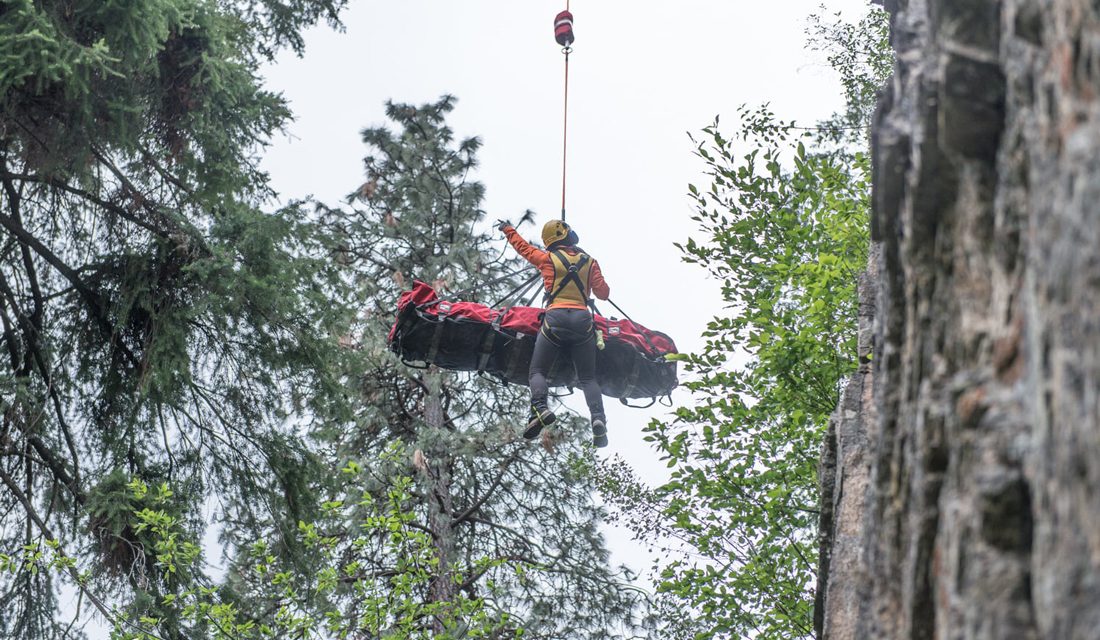
The BC Search and Rescue Association (BCSARA) has assured that the Keremeos area will be fully covered by neighbouring Search and Rescue (SAR) teams following its local closure.
It was a difficult decision by Rose Koehler and Darrell Taylor, a husband and wife team that had been involved with Keremeos SAR since its restart in 2009 who found it impossible to recruit enough members to keep the group running.
“We live in an area with a high number of retired people and, those who are not retired, are often very busy with work responsibilities and family life,” says Koehler. “Being a search and rescue volunteer typically means a significant commitment in time and energy.”
Keremeos will now be covered by the Oliver-Osoyoos SAR along with Penticton and Princeton SARS.
Nancy Argyle BCSARA spokesperson said communities typically feel “more reassured” when there is a local SAR team, but with a very low call-out volume of around five a year, and with the proximity of neighbouring SAR groups, there won’t be much impact.
“You can imagine what it takes for a volunteer team to be qualified, have the credentials, have the training, attend meetings, practice and then to only go out less than five times a year, it’s a lot to ask compared to other teams that are out quite often and have much higher call volumes,” she said.
“It’s one of those regrettable circumstances with demographics, it’s just a town that has lotta retired folks and seniors and the younger people are often like everyone else tied up with family and work and it’s a big commitment to only go out maybe three times a year,” she said.
Kyle Fossett, Ground Search Team Lead and Secretary/Treasurer for the Oliver/Osoyoos Search and Rescue (OOSR) said that “within our region, South Okanagan/Similkameen we’ve got a great working relationship with our neighbouring teams.”
Keremeos saw an average of five call-outs a year in that area, and OOSR was sending its members as mutual aid on most of those calls, he said.
“We probably won’t see much of an impact. As provincial resources, we are as likely to be needed to send specialty trained members to the Kootenays as we are needed to send members to Keremeos.”
“We have split the Keremeos region up amongst the three teams. Depending on the area. If the callout looks like it needs a helicopter response that will be done by Penticton. If it looks like a need for a number of members in quads, it could be Princeton or us.”
“The search managers will make those calls as they receive the details from our tasking agencies. When it comes to specialty skills, we typically run as a regional team with members from all three teams for swiftwater or ropes calls,” he added.
As far as attracting volunteers in Osoyoos, which is also an older population, Fossett said like all volunteer organizations – whether it is search and rescue or a local service club – the number of members could always be higher.
“We will be looking at doing an intake of members in the fall and will advertise this on our Facebook page later this summer. We would love to see more members from Osoyoos, the majority of our team is Oliver based,” he added.
Argyle highlights that there is also a ‘non-response’ element for volunteering “so even if you’re not physically fit or not interested in going out at 2 a.m. on a call-out you can still volunteer for search and rescue. This includes everything from fundraising to social media, administration and data collection.
And then there’s cleaning and caring for equipment, making sure everything’s ready to go for the people that are going to take the 2 a.m. call-out. “There are lots of different things that need to be done in the search and rescue team,” she adds.