By Don Urquhart, Times Chronicle
Canadians who return to Canada from overland visits to the US should consider carefully the potential for items they bring across the border to attract 25 per cent tariffs on top of GST and PST, said the region’s Chief of Operations for the Canada Border Services Agency (CBSA).
Melinda Medland who heads up the Okanagan and Kootenay District Operations Branch for CBSA was at the Osoyoos Committee of the Whole meeting on June 24 where she answered questions on various border issues.
Medland noted that while federal and provincial taxes on goods imported into Canada don’t change much over time, the tariff issue is a different story. “Most goods would attract GST, if not PST and then the tariffs are a new introduction, which is a response to the changing political climate between Canada and the US,” she observed.
As the nature of the tariffs change in response to the whims of the US president it can be challenging to find up-to-date information. Medland suggests checking the CBSA website for accurate information.
“Generally speaking, most goods that are purchased in the United States or originate as a place of manufacturing in the United States are subject to the 25 per cent tariff.
“So that would be something to factor into somebody shopping to see if that’s an item that they would still want to buy, knowing that it could attract 25 per cent tariffs and duties and taxes potentially,” she said.
The CBSA website clarifies further stating that for residents of Canada the 25 per cent surtax only applies to goods exceeding the personal exemptions limit, which is detailed here. These exemptions require a minimum absence of 24 hours at which goods worth up to CAD200 can be brought in duty/tariff free.
The very long list of items that fall under the 25 per cent tariff can be found here .
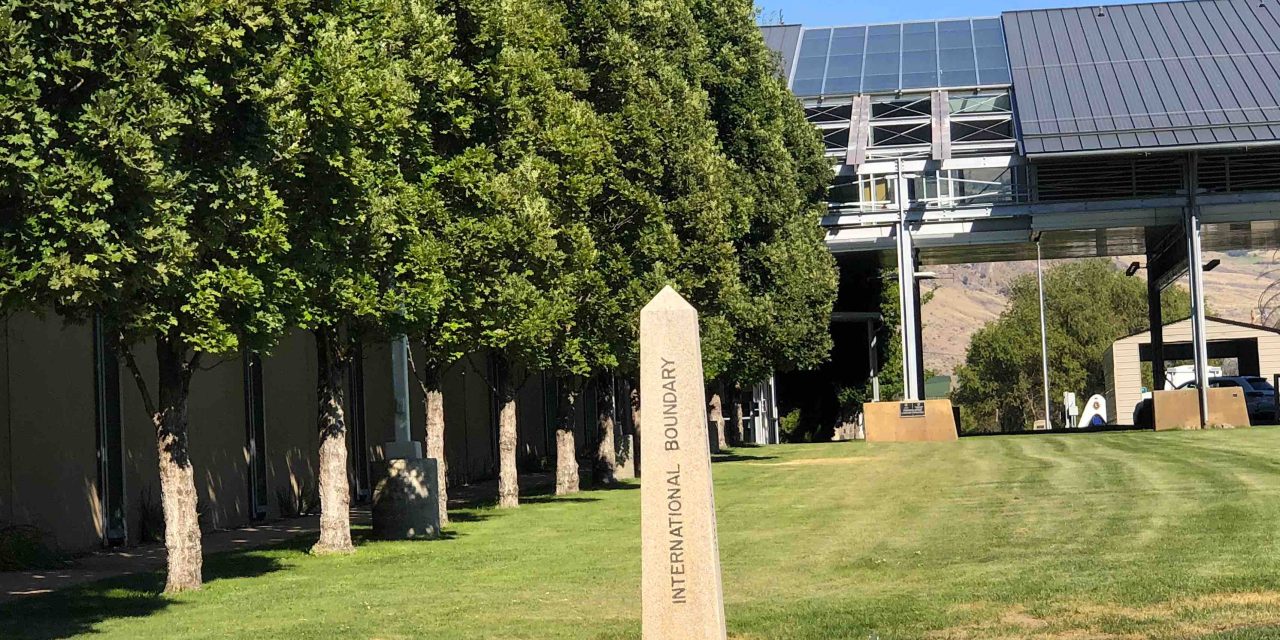
Another key issue raised by Osoyoos RCMP detachment commander, Sgt. Jason Bayda was whether there had been any changes to the longstanding practice on Osoyoos Lake of free access across the water border as long as no landing is made.
Bayda said he is frequently asked this question but given the current Canada-US relations he wanted to clarify.
Noting she could only speak to the boats coming north into Canada, “as long as you don’t make landfall or get off your boat and perhaps go to Veranda Beach (a beach near Oroville, WA) in this example, and then get back on your boat and come back to Canada there’s no need to report inward to Canada Border Services.
“But if you do want to get off in the Orville area, get back on your boat and come back to Canada, you need to report to through CANPASS, and so you would report the vessel information, how long you’ve been gone, anything picked up, and who’s on board.”
She added that likewise, “for our American friends that would like to come up and make landfall in the Osoyoos area or anywhere else along the lake, if they intend to do so, they would have to report in the same manner.”
And to an additional question raised by Bayda, she said the reporting telephone at Starlink Marina is still operational. This is a marine telephone reporting site through which a call can be placed to the Canadian Telephone Reporting Centre at 1-888-226-7277.
Medland was also asked about the important role that CBSA officers now play in combating invasive species from entering Okanagan waters. She noted that there is a joint responsibility between the federal and provincial governments and in BC both provincial and federal laws and regulations are enforced by BC Conservation Officers who are part of the Conservation Officer Service (COS), which operates under the Ministry of Environment and Climate Change Strategy.
When Conservation Officers are not available at the border the CBSA officers assume the responsibility for screening boats entering Canada at the land borders and taking action including disinfection or impounding of vessels.