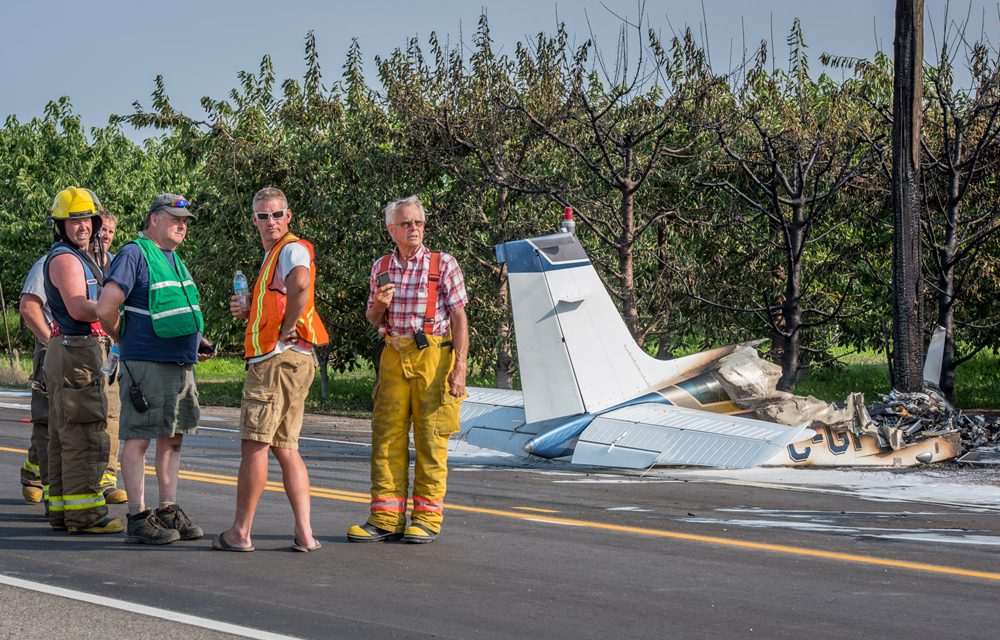

Fire officials survey the scene of a plane crash on Highway 97 near Osoyoos in July of 2015. The pilot survived. The Transportation Safety Board says the cause was likely a vapour lock that starved the plane of fuel. Photo by Richard McGuire
A plane that crashed on Highway 97 north of Osoyoos in July 2015 was likely starved of fuel as a result of a vapour lock.
That’s the conclusion announced recently following an investigation by the Transportation Safety Board of Canada (TSB).
The Beachcraft A36 Bonanza (C-GPDK) force-landed on the highway, struck a truck and a power pole and then burst into flames. The pilot was able to escape, but sustained serious burns.
The accident occurred at 4:45 p.m. on July 7, 2015 when the plane lost engine power.
The privately owned plane had just departed from Oliver Municipal Airport with only the pilot on board for a flight to Boundary Bay Airport.
The investigation determined that the aircraft’s engine was likely starved of fuel due to vapour lock, and lost power as a result.
Vapour lock occurs when fuel, normally in liquid form, changes to vapour while still in the fuel delivery system. This change causes a reduction in pressure to the fuel pump, disrupts fuel flow, and can result in temporary or complete loss of engine power.
The pilot had experienced fuel-flow fluctuations and power losses on previous flights with C-GPDK, but was able on those occasions to successfully regain normal power and engine operation.
Those previous successes in regaining full engine power may have delayed the pilot’s selection of a forced landing area. The nearest airport was then not an option, and Highway 97 was chosen as the next best emergency landing area.
Post-impact fires have been documented as a risk to aviation safety in previous TSB investigation reports. In 2006, the TSB issued a recommendation to reduce the number of post-impact fires in impact-survivable accidents.
C-GPDK did not have, and was not required to have, any of the technologies, materials, or components identified in Recommendation A06-10.
If aircraft are not fitted with crashworthy fuel-system components that retain fuel or with systems that eliminate ignition sources, the risk of injury or death due to post-impact fire is increased.