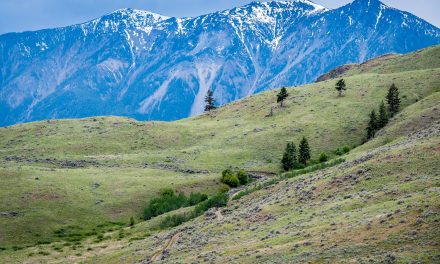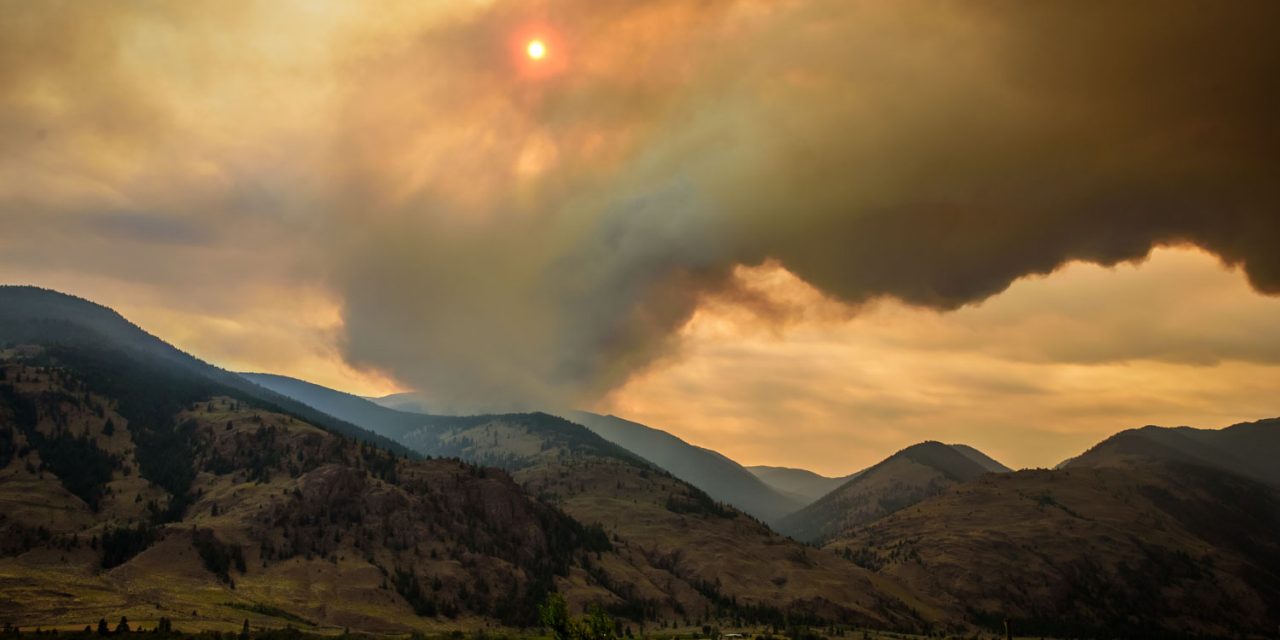

Sunlight filtering through wildfire smoke cast an eerie light over the Similkameen Valley west of Osoyoos last Wednesday afternoon. This fire in the mountains above Cawston, like others in the area, is believed to be caused by lightning. Many fires, were started due to lightning strikes in a storm on July 17 and some of those are still burning. (Richard McGuire photo)
A wildfire burning on Snowy Mountain roughly 14 kilometres south of Keremeos has more than tripled in size since it was first discovered on July 17.
The lightning-caused fire has become a wildfire of note and is currently at 1,530 hectares (ha) and is zero per cent contained, according to BC Wildfire Service.
There are currently no resources and firefighters on scene.
“It’s high up mountain side, extremely steep terrain and the accessibility is quite challenging,” said Ken Juvik of B.C. Wildfire Service.
However, the fire is being closely monitored and a remote camera is being mounted to provide information about growth on this fire.
B.C. Wildfire Service will continue to monitor the fire and send resources as needed.
“It depends if the fire was spreading down slope into a valley bottom with structures and roads,” Juvik said. “Right now it remains remote and very hard to get crews to.”
Fires threatening homes and infrastructure, including the Mount Eneas fire south of Peachland, which is currently classified as out of control, are a priority for fire crews.
With upcoming hot, dry weather, it’s likely the Snowy Mountain fire will increase in size.
“A fire that size, it all depends on the weather conditions,” Juvik said.
“As the season goes along, if there’s a change in the weather, that can have a dramatic effect, or it can increase in size.”
The fire is located in the Snowy Protected Area and B.C. Parks has closed the adjacent Ewart and Wall Creek Trails.
Further west, another lightning-caused wildfire of note is burning on Placer Mountain 37 kilometres south of Princeton.
The fire is 434 ha in size and zero per cent contained, according to B.C. Wildfire Service, but has a crew of 22 firefighters, four helicopters and seven pieces of heavy equipment and industry personnel on site.
Crews are working to control the fire by constructing a wet line around the fire perimeter on the north end moving eastward.
They are also conducting planned ignitions as opportunity arises and developing plans for controlled burns along the south and east fire flanks, B.C. Wildfire Service said.
Last week, crews were able to tame a group of five wildfires burning roughly nine kilometres east of Oliver.
The first of the fires started on Thursday and all were under control by Friday afternoon.
Three of the fires burned in the Wolfcub Creek area and were all less than 1 hectare in size, ranging from 0.01 ha to 0.72 ha.
A fire in the Camp McKinney Road area was 0.01 ha and suspected to be person-caused.
A fifth fire was found at the McCuddy Creek area as well.
A total of 16 personnel were on scene responding to all five fires, as well as fire origin and cause, and compliance and enforcement teams.
The Oliver Fire Department was called to assist by providing a water tender (mobile water tank) and a bush truck, said fire department spokesman Rob Graham.
Crews were on scene from 3 a.m. to 9 a.m.
There is currently no fire ban in the area but the Kamloops Fire Centre confirmed they are working on putting one in effect this week.
VANESSA BROADBENT
Regional Reporter