By Lyonel Doherty, Times Chronicle
A team of medical care providers and municipal leaders are pursuing another idea to address the health care crisis in Oliver and Osoyoos, and they are calling it “integrated solutions.”
Oliver Mayor Martin Johansen said a recent discussion with Oliver hospital interim emergency department head Dr. Grant Innes and his colleagues shed some light on the issue which they hope to broach with Minister of Health Adrian Dix this fall.
According to Johansen, an integrated solutions model will look after the Oliver hospital’s emergency department, in-patient care, and longitudinal (patient-centered) care in both communities. The mayor noted this model is similar to a program in Penticton where a “pooled billing” system is set up to accommodate health care providers in the emergency department, but also those who service “unattached” patients.
But until that happens, Johansen said they are left standing on the dike plugging holes with their fingers.
“If the water comes over the top, we’ve got a collapse of our health care system. Without exaggerating, I think that’s a real possibility, we’re already starting to see it in smaller communities.”
Johansen said very few people have access to a family doctor, noting the “unattached” rate is climbing over the 5,000 mark in Oliver and Osoyoos. “I get calls from people and it’s heartbreaking. There are people with some significant medical issues and it’s tough when you don’t have a family doctor.”
This results in more people attending the emergency department or driving to Penticton to access a walk-in clinic, the mayor said.
“We are already overloaded, so where do you go from there? Basically, at the end of the day you have no access to health care which is ridiculous, it’s unacceptable,” Johansen said.
Mayors tackle health care ‘crisis’
The mayor said the challenge is there doesn’t seem to be any accountability in health care. “The question was asked years ago, ‘who is accountable for keeping South Okanagan General Hospital open?’ There hasn’t been an answer.”
Unfortunately, not everyone is working together, he pointed out. “My wish at the end of the day is to get everyone together and stop pointing (fingers) at the people who aren’t in the room.”
Johansen said these roadblocks must come down so that everyone is part of the solution.
Osoyoos Mayor Sue McKortoff mirrored this concern.
“Our frustration is that each group has its own agenda, and it is difficult to get them to agree on how to proceed.”
She added that local physicians have to be on board with whatever happens, but longitudinal practice is not appealing to family doctors anymore.
McKortoff said talks continue as they try to find a way to move forward.
“We met with Minister Dix and have asked for another meeting with him and MLA Roly Russell.”
Johansen noted that one silver lining is the fact Oliver and Osoyoos have access to the rural locum program that offers respite for longitudinal health care providers. Locums also work in the emergency department.
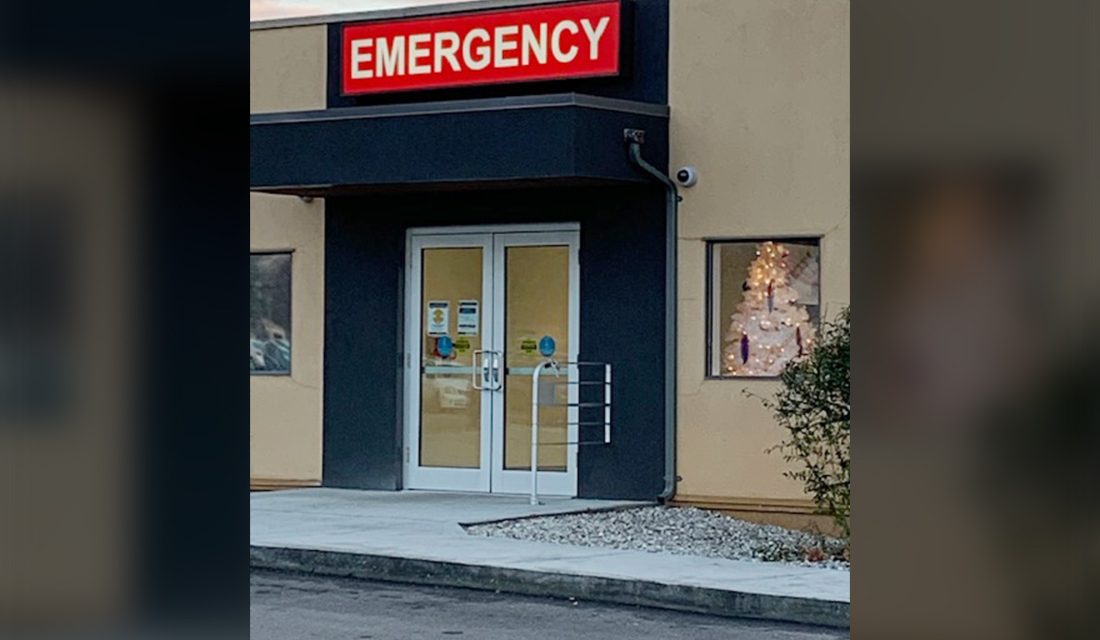
During the past month, Oliver’s emergency department had to divert patients elsewhere due to lack of doctor availability.
“We really need to keep the ER [emergency room] open because people are losing their family doctors and where else are they going to go, especially those who aren’t very mobile to drive to Penticton?”
While funding from the provincial government helps with overhead costs, it doesn’t address work/life balance for physicians who are walking away from their practices, Johansen said.
He noted the next piece of the puzzle is a renewed recruitment and retention model.
“Getting more spaces in schools and getting more doctors isn’t going to necessarily solve the problem because they’re not going into family medicine anyway.”
Johansen said we must find a way to make family medicine more attractive for physicians.
Tracy St. Claire, executive director of the South Okanagan Similkameen Division of Family Practice, said local physicians remain at the table with all partners to seek solutions.
“We appreciate the support of the local municipalities in helping to recruit and retain family physicians in the area.”
Dr. Innes could not be reached for comment by press time Tuesday.