By Madeline Baker, Times Chronicle
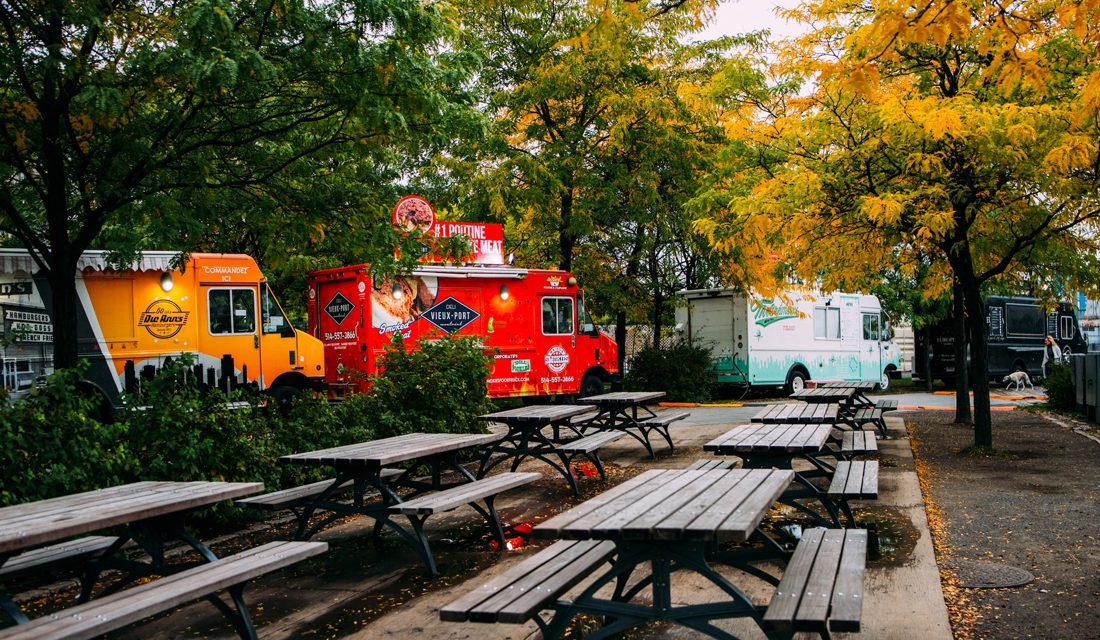
A proposed bylaw amendment that would open the door for food trucks to operate throughout the Regional District of Okanagan-Similkameen (RDOS) was recently approved with no objections or discussion along its stages of proposal: none at the first, second, or third readings, none at the public hearing, and none when it was adopted.
Clearly, the Okanagan Valley is hungry for mobile food options.
So what was blocking the road for food trucks in the first place? As it turns out, “mobile vendor” had no clear definition in any of the RDOS’s bylaws, with the result that a food truck could only be classified as an “eating and drinking establishment.”
Among the various types of zoning within the RDOS where a food truck might choose to operate – agriculture, town and village centre, commercial, tourist commercial, industrial, and parks and recreation zones – this definition only allowed them in parks and recreation zones, severely limiting an operation’s options.
After an online public information meeting in early June, the issue was brought up to the RDOS board of directors at their July 7 meeting in the form of a motion to define mobile vendors within their bylaws and then permit vendors that meet the definition in all of the above mentioned zoning categories within electoral areas A, C, D, E, F, and I.
Under this new definition, “a vehicle intended to be moved from location to location, for the purpose of offering for sale food or retail products” would qualify as a mobile vendor while an eating and drinking establishment would be “a development where prepared foods and beverages are offered for sale to the public for consumption within the premises or off the site.”
With these clarifications in place, food trucks would no longer get ensnared in the restrictions that accompany classification as an “eating and drinking establishment” and, as a result, would no longer require the RDOS to approve every single one individually before they could operate anywhere other than parks.
The first and second readings of this bylaw amendment were approved without comment from any of the directors and, when their August 4 meeting rolled around, the requisite public hearing for such an amendment was attended by no one and received no written comments or concerns. Thus, it received its third reading and seemed ready for adoption later that month.
There was one potential roadblock still to be cleared, though. Between August 4 and 18, the proposed bylaw changes had to be amended because any areas classified as Agricultural Land Reserve would also require food truck operators to apply to the Agricultural Land Commission (ALC) for approval as a “non-farm” use of the land.
Luckily, a simple rewrite gave the ALC jurisdiction to block mobile vendors within their land reserves by defining them as “non-farm” usage that they would not approve, and the bylaw amendment barrelled forward to its easy, uncontested adoption.
After this long but comparatively uneventful journey, food trucks now have an unimpeded path to hungry bellies across the Okanagan Valley.