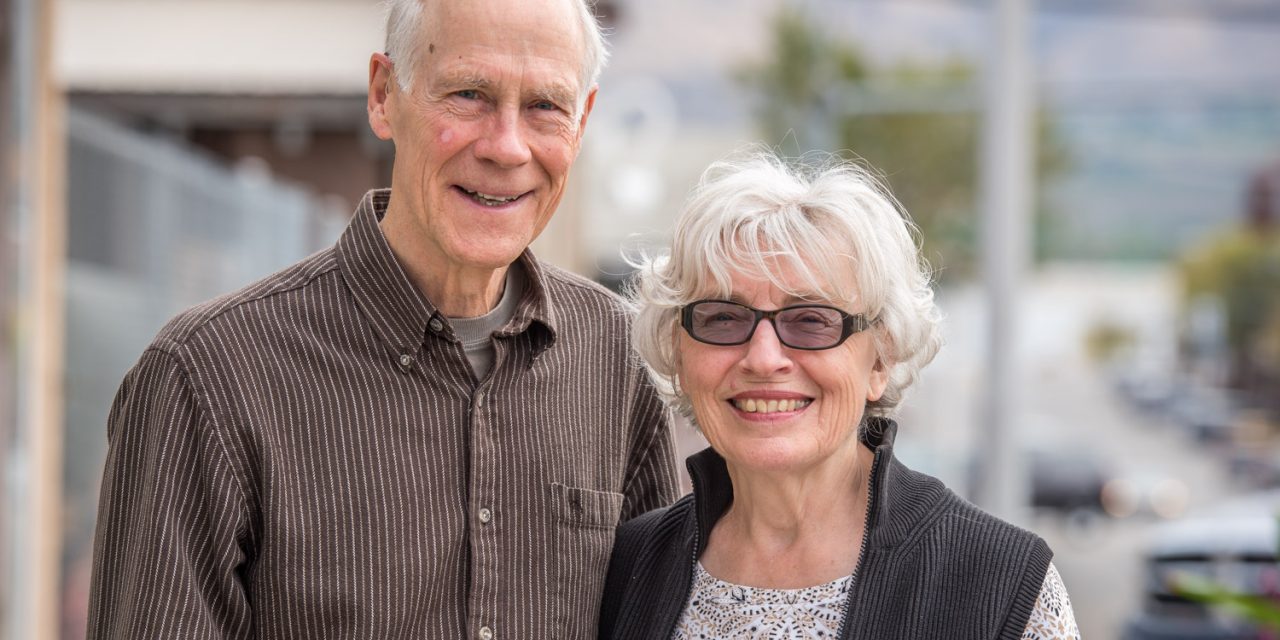
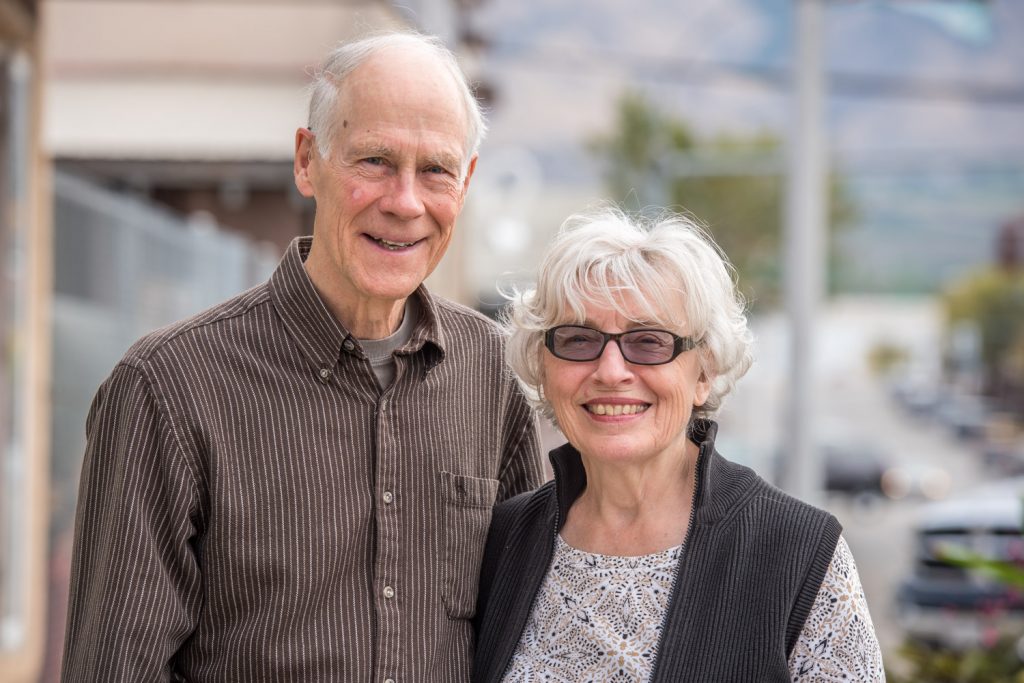
Osoyoos couple Michael and Vera Ryan are typical of the town’s population — senior couples who have become empty nesters — according to 2016 census data released last week. Nationally, however, the largest and fastest growing group is households of one. (Richard McGuire file photo)
One-person households are at their highest level since Confederation in Canada, but in Osoyoos couples with no children are the most common.
Those findings from the 2016 census were released last Wednesday by Statistics Canada in its third release of data from last year’s census.
In Osoyoos, there were 870 households of one person compared to 1,180 households with two people.
Among households classed as “census families,” there were 1,070 who are couples without children and 320 who are couples with children.
The results for Osoyoos are at odds with the national trend largely because this town has one of the oldest populations in Canada. Previously released figures put the town’s average age at 55.4 years.
Nationally, one-person households now make up 28.2 per cent of households, for the first time surpassing couples with children, who dropped to 26.5 per cent of households.
Statistics Canada points out that nationally, the proportion of couples with children has been decreasing for some time.
“This is mostly due to population aging,” Statistics Canada says. “As the large baby-boom generation – people born from 1946 to 1965 – grows older, more and more couples are becoming empty nesters due to their children leaving home.”
In Osoyoos, with a population of 4,630 people aged 15 and older, those married or living common law make up 62 per cent of the population with 2,875 people.
Those not married or living common law make up 38 per cent of the population aged 15 and over with 1,755 people.
The largest group of singles consists of the 675 people who were never married, but the second largest group of singles is the 530 people who are widowed. Among those widowed, three quarters (395) are females.
The higher proportion of female widows is a result of both longer life expectancies for women and the tendency for women to marry older men, Statistics Canada says, however the proportion of senior women living alone has decreased significantly across Canada since 2001.
“Since the 1970s, men have seen larger gains in their life expectancy and this has led to couples living together longer,” Statistics Canada says.
Other single people in Osoyoos include 410 who are divorced and 140 who are separated.
The release of census data last week also included knowledge of languages.
Not surprisingly, English speakers make up most of the population with 4,645 speaking English only and 275 speaking both English and French.
Only five people are listed as speaking French only and 55 speaking neither English nor French.
It should be noted, however, that Statistics Canada rounds its numbers to the nearest five in order to make it harder to identify individuals. This skews categories with low numbers.
The mother tongue – the first language learned in childhood and still understood – is also overwhelmingly English at 4,005.
There were 115 people speaking French as a mother tongue and 810 speaking non-official languages.
The number of people living within the Town of Osoyoos and speaking an Aboriginal language as a mother tongue is listed at zero, however the Osoyoos Indian Reserve is not included in the figures for the town.
Even on the reserve, 690 people spoke English as their mother tongue compared with 25 speaking Okanagan.
In Osoyoos, the most prevalent non-official mother tongues are Punjabi (180), Portuguese (140), German (140), Spanish (35) and Ukrainian and Italian (25).
But the numbers also suggest that many people now speak English at home rather than their mother tongue.
Of the 305 people speaking a language other than English or French at home, nearly half (145) speak Punjabi.
Portuguese (65) and Spanish (20) are the only other non-official languages still spoken in significant numbers in the home.
RICHARD McGUIRE
Osoyoos Times